HOW THE JFK 50 MILE BECAME AMERICA’S PREMIER ULTRAMARATHON
By Robb Helfrick
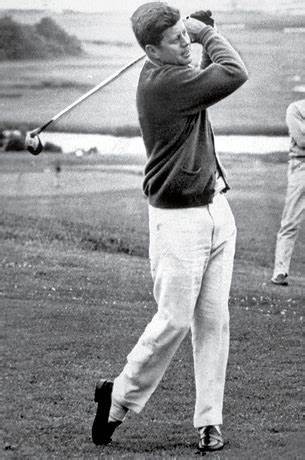
President John F. Kennedy issued a physical fitness challenge in 1963. He asked his military service members to prove their athletic preparedness by covering 50 miles on foot.
Kennedy’s idea traced back 55 years earlier to another U.S. President: Theodore Roosevelt. Roosevelt grew up sickly, but physical exertion helped him become a robust adult. Roosevelt issued a Presidential Executive Order in 1908 for his Marine officers: hike 50 miles in 20 hours, spread over three days.
Kennedy discovered this old decree after he became president. But he increased the challenge, shortening Roosevelt’s timeframe to a single day.
With his announcement, Kennedy also kick-started a civilian tradition that continues to the present day. The epicenter is a celebrated annual event in Washington County, Maryland, the John F. Kennedy 50 Mile event.
Back in ’63, Kennedy thought the military’s fitness example would inspire citizens, but he never asked the American public to undertake a 50-mile hike.
An interesting twist occurred when the president’s fitness challenge was accepted by a notable person within his administration: his brother, Attorney General Robert F. Kennedy.
Robert decided to lead by example. On February 9, 1963, RFK put on Oxford dress shoes and started walking west from Washington, DC, on the C&O Canal Towpath.
Accompanied by four staffers and shadowed by his 100-pound Newfoundland dog, RFK accomplished his goal despite snow and slush on the trail. After 17 hours and 50 minutes of walking, he covered the entire 50-mile distance. None of his staffers finished.
RFK was sore and blistered from the hike, but still took his children ice skating the next day. His athletic feat inspired Americans, and a new fad called the “Kennedy March” began.
Soon, 50-mile walks/hikes/runs were organized nationwide. Scores of ordinary citizens departed on long-distance walkabouts.
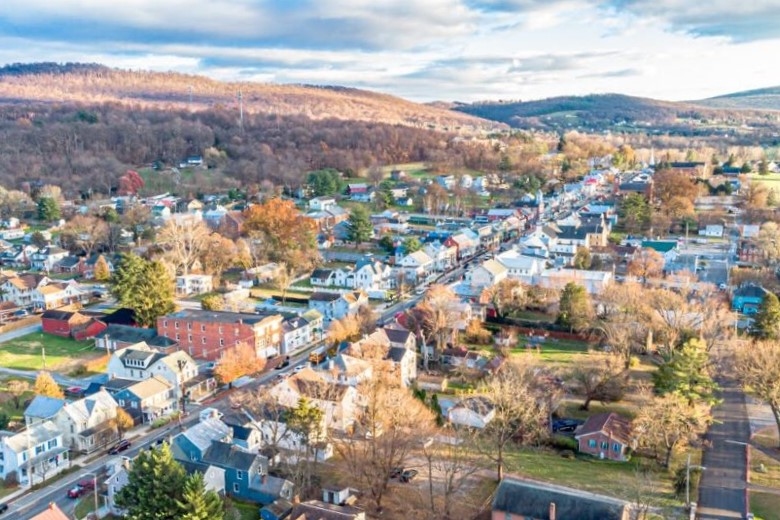
On March 30, 1963, eleven members of the Cumberland Valley Athletic Club set out on their own 50-mile course in Washington County, Maryland. One of those members was William “Buzz” Sawyer.
Sawyer, an accomplished 36-year-old runner, had been an Olympic hopeful before injuries derailed his career. He designed a local course to challenge himself and his friends. The adventure began in downtown Boonsboro and immediately climbed 1000 feet to South Mountain’s summit.
On top of the mountain, Sawyer’s route grew more challenging as it followed the Appalachian Trail. This AT section was a rocky pathway and required the runner’s complete attention to avoid a bone-breaking fall. Thirteen miles later at Weverton Cliffs, the course steeply descended on switchbacks where the AT dropped 1000 feet in elevation to reach the Potomac River.
The next course segment required a full marathon on the C&O Canal towpath- mimicking RFK’s earlier route- but on a section that was further west.
Those 1963 runners completed the final eight miles on hilly roads that led to a finish at St. James School in Hagerstown. Four men finished this original 50-mile course.
Sawyer was among this athletic quartet, joined by three 16-year-old high school students. Those finishers never considered it a race, but later said they wanted to answer a simple question: “Can we do it?”
Eight months later, John F. Kennedy was assassinated on November 22, 1963. Sawyer and his CVAC friends decided to repeat their feat in the spring of 1964. Sawyer named the event the John F. Kennedy 50 Mile Hike to honor the slain president.
A few years later, the race was changed from March to a November date to avoid late winter storms. Other 50-mile events around the country soon faded away, despite RFK’s earlier inspired hike.
Eventually, the JFK event was the only race that survived, but it thrived. During the 70’s running boom, a record 1724 runners started the race in 1973.
As the race garnered national attention, its stellar reputation was built on Buzz Sawyer’s shoulders. As the Race Director, he believed in a strict amateur code, a common practice during that era.
The event offered no prize money to finishers. But a handsome plaque, emblazoned with a JFK medal, was a treasured keepsake. Sawyer managed the race on a shoestring and often paid expenses from his own pocket.
The JFK 50-mile entered the 1990s still running smoothly in Sawyer’s capable hands. But after thirty years in control, it was time to pass the baton. But who could match the founder’s love and passion for the event?
Lucky for Sawyer, and for the race’s future, he had met the ideal person ten years earlier.
Mike Spinnler fell in love with the JFK race as a 12-year-old. Mike looked up to his oldest brother, a gifted athlete, who announced he was not only competing in the JFK 50-Miler, but he was running to win.
Back in 1971, kids could run the race with their parents’ permission, but it was an endeavor designed for grown-ups. Anyone who finished the first third of the course earned a certificate; Mike Spinnler decided he’d shoot for that target. His father, a four-sport athlete in his youth, signed off on the whim, thinking Mike would likely go no further.
On race day, Spinnler’s brother didn’t complete the course, but Mike did, finishing the event in 14 hours, 19 minutes, and 23 seconds, placing 129th of 150 finishers. The winner that day recorded a time of 6:15:42, beating Mike by eight hours. Spinnler never forgot that winning time.
The next day, Mike’s Dad beamed when telling friends how his son finished a 50-mile endurance competition. Twelve-year-old Mike grinned and told his father, “Someday, I’m going to win the JFK 50.”
In 1972/73, teenage Spinnler ran the JFK again with consistency, finishing in 14:04 and 14:09. However, the race was growing, and Spinnler’s placement in the field slid backwards- first 249th, then 547th for those two years. By 1973, the JFK was the largest running event in America, hosting a field larger than the Boston Marathon.
Spinnler came into his running maturity with a 7:46 in 1975. By cutting his race time almost in half, Mike became a serious competitor and finished 16th. In 1977, at age 19, he decided to go for broke and led from the start. Spinnler faded at the end and finished 10th. However, he had improved his time to 6:57, and his confidence grew.
Mike eventually entered Frostburg State University and made new running contacts, which elevated his training. Soon, he was running 140 miles a week and envisioning future success at the JFK 50. “I dreamt of winning the race,” Spinnler said. “I’d visualize it- coming down the last straightaway, I’d see the finishing banner. Sometimes I’d wake up disappointed that it was just a dream. Then I’d get up to do my morning run to pursue that dream.”
Spinnler met another runner, Greg Shank, an accomplished JFK competitor, who became his coach. One day, Mike confessed his recurring dream to Shank. The coach was the first to tell Spinnler his goal was achievable.
Finally, in 1982, Spinnler was ready. He ran the Boston Marathon in April in 2:28. In November, on the morning of the JFK race, Mike Spinnler knocked on his dad’s bedroom door and told him, “Be at the finish line today.”
Mike Spinnler won the 1982 JFK 50 Mile in a record time of 5:53:05. His father greeted him at the finish line with tears streaming down his face.
Spinnler won the JFK again in 1983, and on the winner’s podium, quipped to Buzz Sawyer that if he ever needed someone to take over as Race Director, he was ready and willing to step into leadership. Sawyer smiled and said, “You got it, young man.” Ten years later, Sawyer remembered that promise and handed the reins to Spinnler.
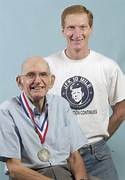

A new JFK era began in 1993 when Spinnler took over as Race Director. He secured corporate race sponsors, and the race paid its first prize money.
Leading the event into the modern age, Spinnler recruited more volunteers to assist at nine aid stations, sponsored scholarships for runners, and even added GPS tracking for each participant.
Soon, more international and national-class runners came to race the JFK in Maryland. Women competitors became more significant participants in the race, and their winning times dropped dramatically.
Over the next 30 years, Spinnler nurtured Sawyer’s JFK creation and improved it. In late 2018 and early 2019, Spinnler endured the deaths of Buzz Sawyer and coach Greg Shank within a few weeks’ time. Losing two men who had profoundly shaped his life and career made Spinnler realize that he, too, would someday hand over the JFK to the next generation.
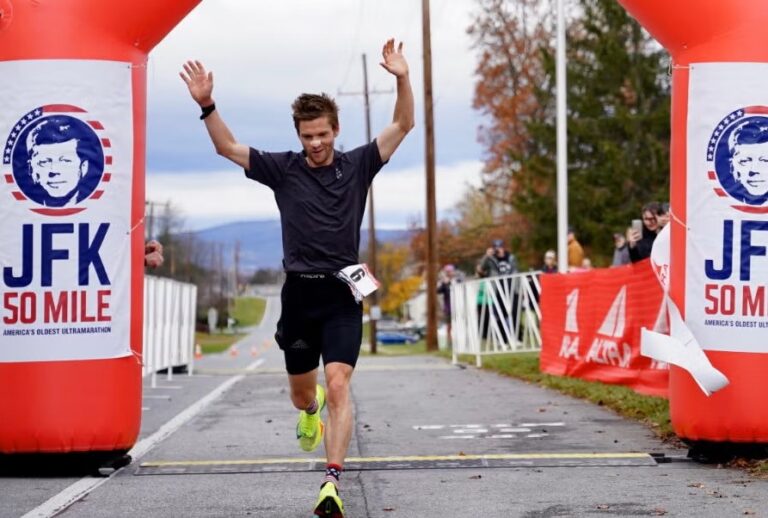
In 2025, the JFK 50-Mile hosts its 63rd race, with Mike Spinnler still at the helm. He has now surpassed former race director Sawyer’s tenure. The competition is considered the premier ultramarathon in the United States and one of the most respected 50-mile events worldwide.
An astounding percentage (often higher than 90%) of JFK starters typically complete the 50-mile course. This statistic attests to the rigorous training regimens that prepare these athletes, as well as the professional race direction that ensures highly organized events.
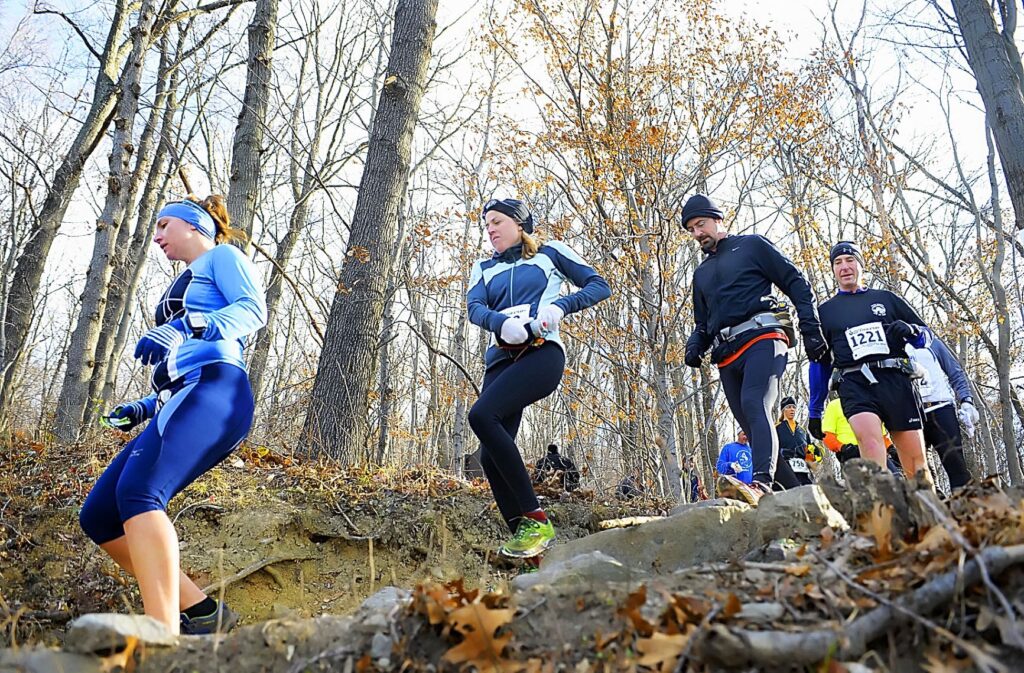
Runners have run the JFK in rain, sleet, and snow, but they return each year to brave the elements and to test the limits of their physical and mental capabilities.
Recalling the JFK 50-Miler’s history, two prominent names are typically recognized first- Sawyer and Spinnler- celebrated for their race directing careers, for creating traditions, and for their running accomplishments. Sawyer completed his last JFK at age 75. Spinnler, always a competitor, later had a successful cycling career.
However, many other men and women have achieved notable athletic feats at this annual competition.
Kimball Byron has finished an incredible 49 JFK 50 Milers. Duane Rosenberg once ran 38 consecutive races, also a record. Thirteen runners have completed the event more than 30 times, an amazing feat of athletic consistency.
Maintaining the spirit of John F. Kennedy’s original challenge, the race conducts a yearly competition among military teams and also recognizes its top service-member finishers.
When the gun goes off on November 22, another group of dedicated runners will challenge the scenic yet difficult course, which has changed little over the years (it now finishes in Williamsport). Last year, new course records were established for men by David Sinclair (5:08:27), and for women finishers by Rachel Drake (5:57:33).
Also in 2024, local runner Carolyn Showalter ran 12:17:27 to set a Super Veterans (over 70) Women’s record. She also holds the record for most female finishes (37) and is tied for women’s victories (with Donna Aycoth) with 6.
Carolyn’s brother, Linden Showalter, will attempt to complete the JFK 50 Mile in 2025, 50 years after his first successful finish in 1975.
After the race, all participants will become a part of JFK’s storied history. They will feel pride knowing they are continuing a tradition that began with John F. Kennedy’s physical fitness challenge in 1963. They will also gain the personal satisfaction of achieving an athletic feat that stretches the boundaries of human endurance.