GREEN HILL CEMETERY CELEBRATED ARBOR DAY WITH A TREE TOUR AND HORTICULTURALIST EXHIBIT
By Robb Helfrick
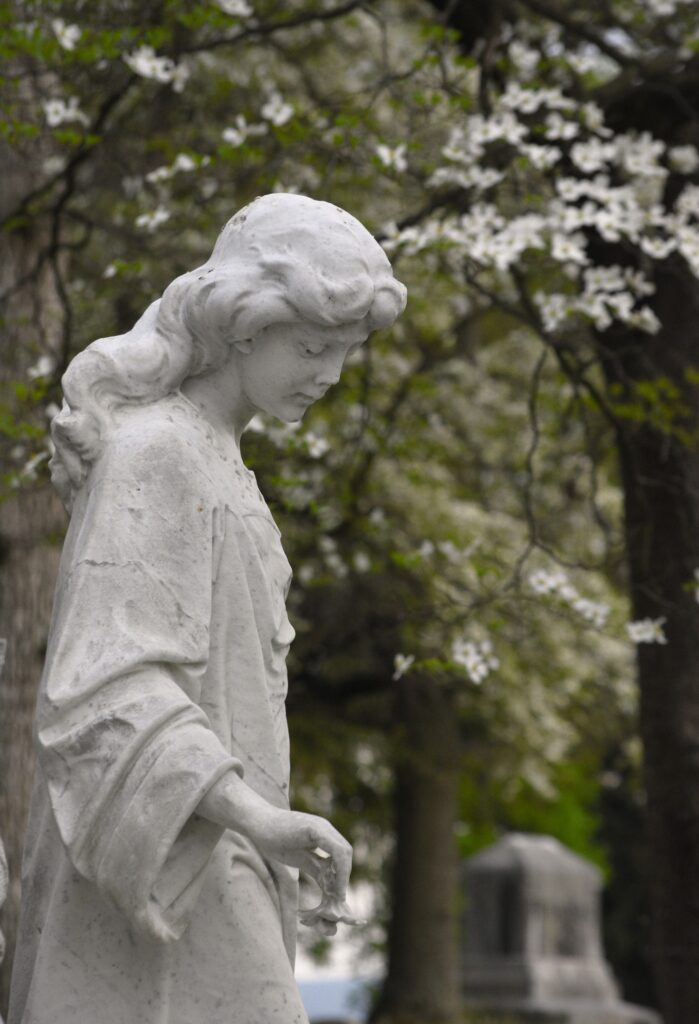
Green Hill Cemetery presents a serene landscape, beautiful in all seasons. The trees that grow there are one of its prominent assets. They cast shadows on the lawn and frame the stately monuments that honor past Waynesboro lives. Their presence is a comfort on a property that serves not only as a burial ground, but was once the community’s first park and is now a historic time capsule.
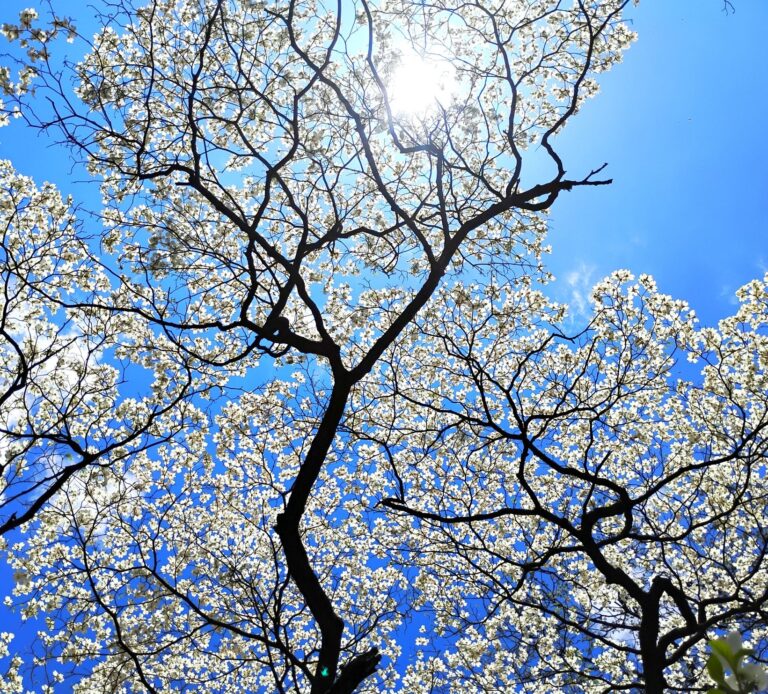
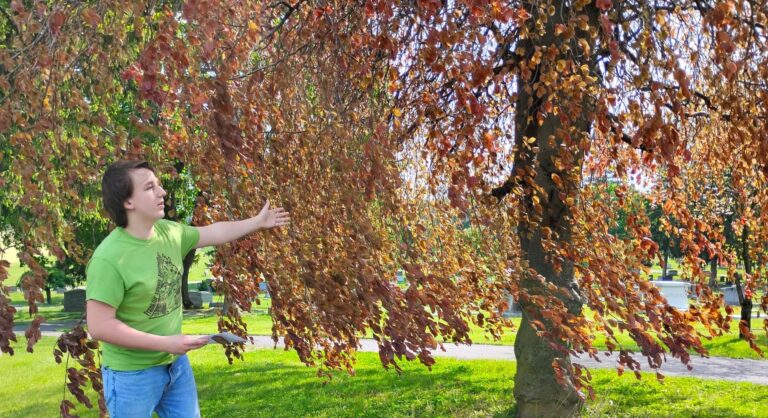
On Arbor Day 2026, Green Hill hosted a tribute to its trees, now leafing out with springtime hues and colorful blossoms. Quinn Coulter, a WASHS sophomore, led a tour of the grounds, highlighting some of the significant species that thrive there.
Green Hill’s leadership also designed a complementary indoor exhibit that remembered four notable horticulturalists. This quartet helped beautify Waynesboro in bygone days, and now they rest at Green Hill. Combined with some old-fashioned hospitality, these programs were an informative and enjoyable way to commemorate Arbor Day.
Coulter was an excellent choice to lead the tree tour. He represents a new generation of environmental stewardship, serving as a Keep Pennsylvania Beautiful Young Ambassador.
This articulate student discussed his activism before the tour. “I enjoy taking what I’ve learned and going out into the community to spread that knowledge through education and information,” Coulter said. His admiration for Green Hill grew as he prepared for the tour. “This is an amazing place, the trees here are absolutely beautiful.”
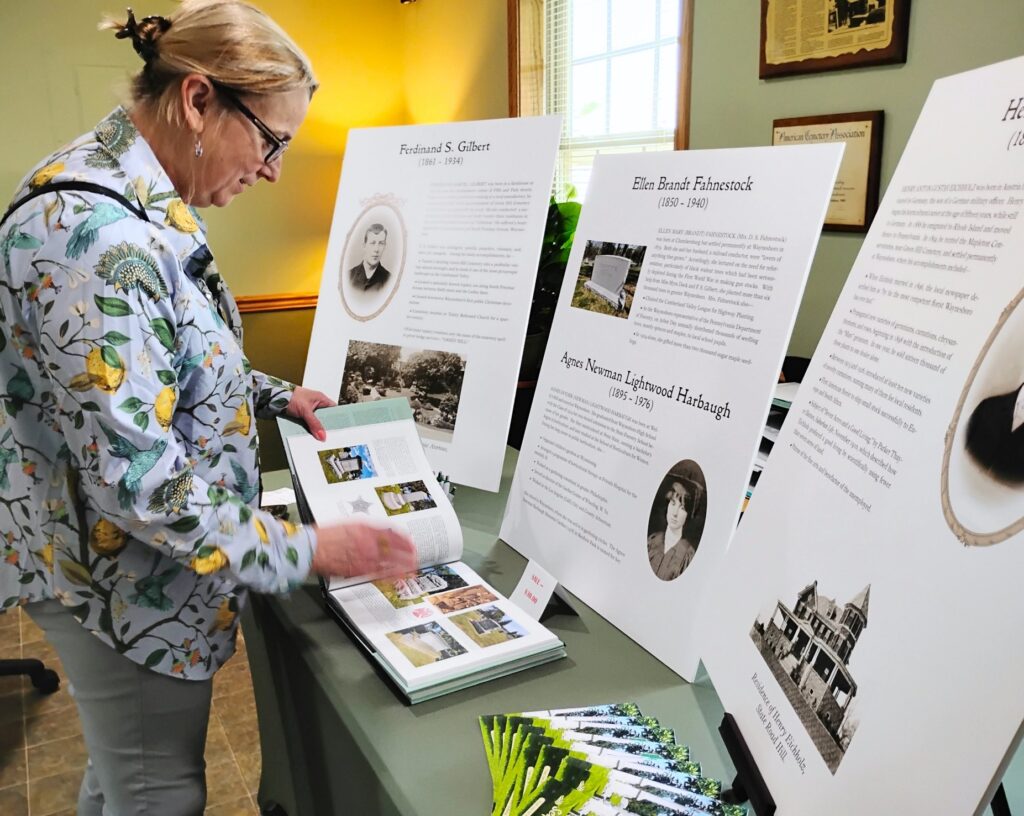
Inside the visitor center, Green Hill exhibited storyboards featuring the horticulturalists. For people who know Green Hill history, perhaps the most familiar of these talented folks is Ferdinand Gilbert. His work at the cemetery is legendary. Gilbert (1861-1934) was a superintendent here for 46 years, representing almost a third of Green Hill’s history.
Despite his year-round responsibilities at the cemetery, Gilbert managed to create a topiary zoo, a whimsical attraction that grew beyond Green Hill’s boundaries and onto Potomac Street. People traveled great distances to see his renowned work.
Two of the horticultural honorees were women who led lives of public service. Ellen Brandt Fahnestock (1850-1940) was a lover of “anything that grows.” She lectured on the need for reforestation and planted more than 6,000 trees around Waynesboro. During past Arbor Days, Fahnestock distributed thousands of tree seedlings to local school students.
Agnes Newman Lightwood Harbaugh (1895-1976) graduated from Waynesboro High School in 1914, but was denied entry to the State Forestry School because of her gender. Undaunted, she later graduated from Penn State University with a degree in horticulture.
Harbaugh excelled in her chosen field. She organized children’s gardens, designed a horticulture therapy program for a hospital, served as a gardening consultant in Philadelphia, and worked at the Los Angeles Arboretum.
The fourth exhibit honoree was a man whose last name is still spoken within Waynesboro’s horticulture and floral community. Henry Eichholz (1864-1939) was born in Austria but later settled in Waynesboro.
Called “the most competent florist” the town ever had, Eichholz propagated new varieties of flowers, including geraniums and carnations. He was the first American florist to successfully ship his flowers to Europe. The florist shop he founded, Eichholz Flowers, is still in business on Main Street.
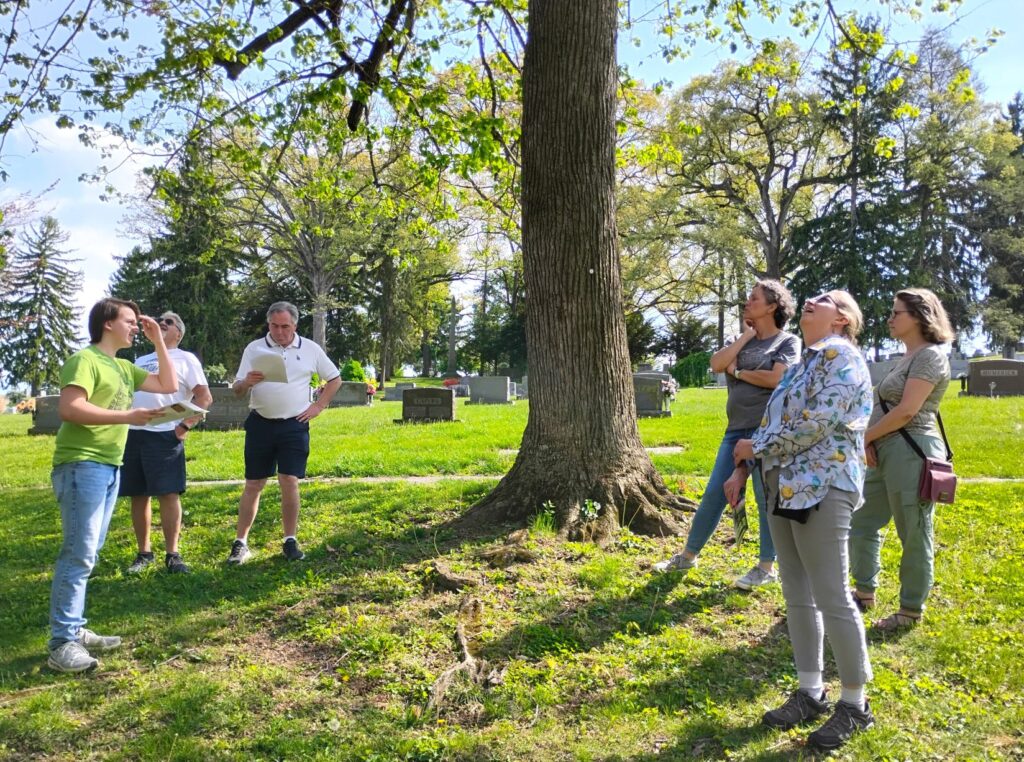
When the outside tree tour commenced, one of the first species that Coulter discussed was privet. Used commonly for ornamental hedges, privet is native to southern and eastern Asia. At the cemetery entrance, “Green Hill” is spelled out in privet lettering, offering the last vestige of Gilbert’s topiary work at the cemetery.
On a warm spring day, the tour wandered amongst the trees and monuments. Coulter gave a brief description at each stop. A silver medallion marked each tree, which corresponded to an online “Arborscope” map. This innovative feature describes a tree’s species, location, and condition, easily accessible on a smartphone or computer.
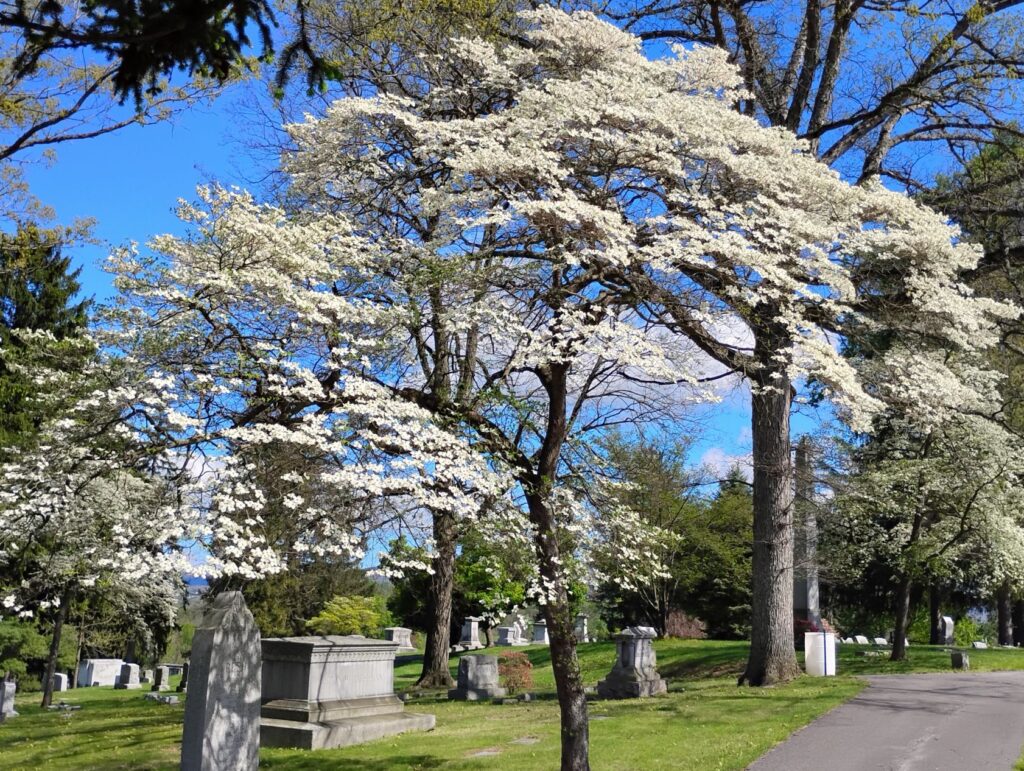
Included in Green Hill’s impressive arbor collection are Flowering Dogwoods, Eastern Redbuds, Sugar Maples, White Spruce, Northern Red Oaks, White Ash, and Eastern White Pines, which keep Green Hill green in all seasons.
Several other species stood out during Coulter’s tour. The Yew is a fascinating tree that grows slowly and is known for its durable, elastic wood. Its wood was traditionally used for making bowls, and its bark is used to produce an anti-cancer drug. Yews are also associated with immortality, so it’s an appropriate species for inclusion at Green Hill.
Tulip trees, also known as Yellow Poplars, are a species native to Eastern North America. They grow exceptionally straight and thrive in the Appalachians. Some specimens reach massive proportions. The Tulip Tree that Coulter highlighted was a giant and is considered one of Green Hill’s most valuable trees.
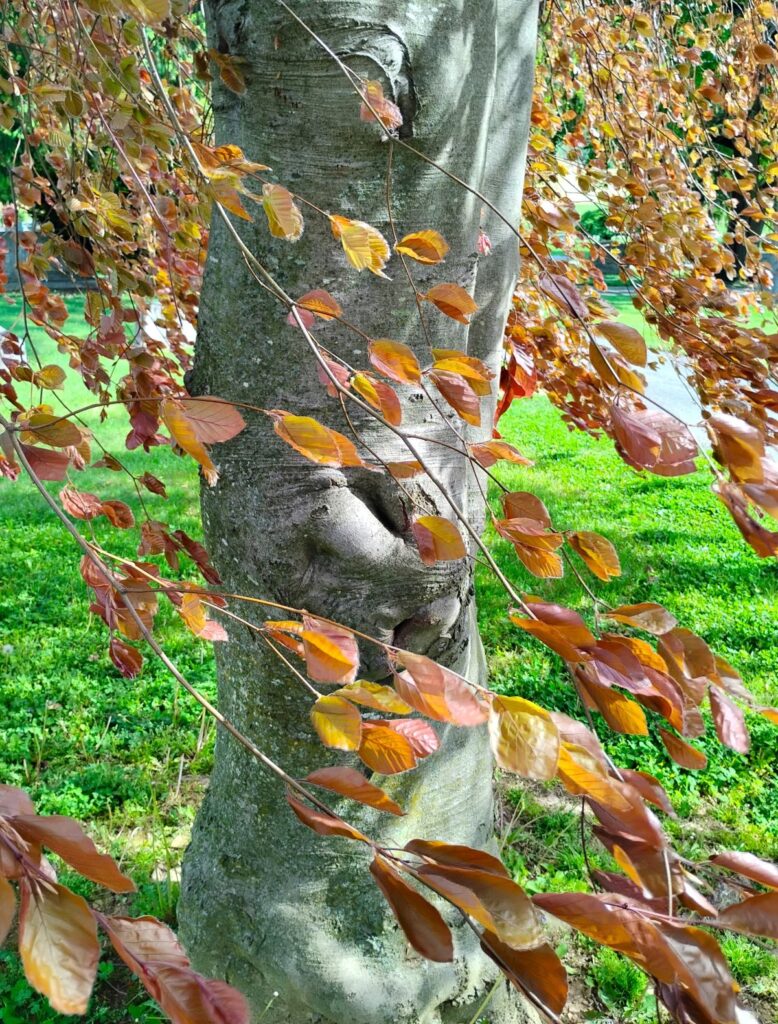
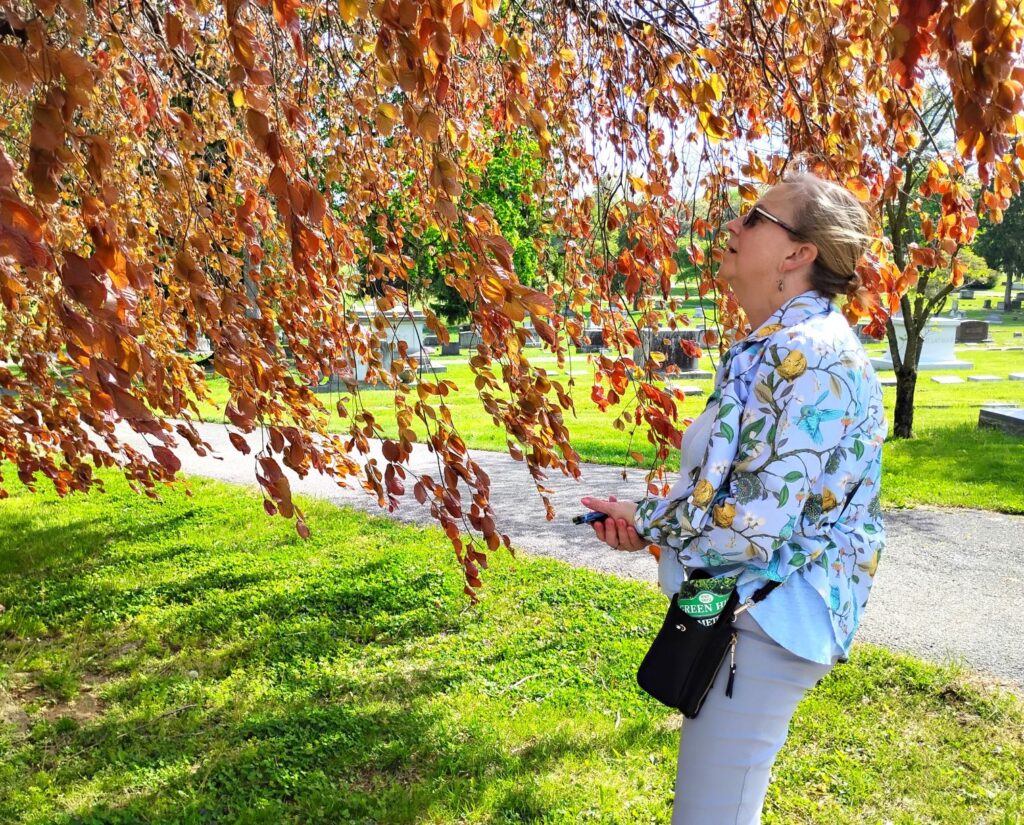
The European Beech was another interesting tree pointed out during the tour. This species has silvery-gray bark, which resembles an elephant’s skin. In spring, its newly formed leaves have more of an autumn hue. Green Hill has invested in treatments for Beech Leaf Disease, which is caused by a microscopic worm-like nematode.
Throughout the tour, various trees sported an orange ribbon tied around their trunks. These markings signified individual specimens that are being treated for various diseases or receiving protection from potential threats. While on the tour, the groundskeeper mentioned that maintaining healthy trees is a full-time job. Clean-up after storms is an ongoing battle.
When the tour stopped in front of a Maidenhair Tree (Gingko Biloba), Coulter described it as a “living fossil.” This type of tree is the only surviving species of an ancient lineage predating dinosaurs. The Maidenhair is virtually indestructible, as it resists disease, pollution, and insects. This species famously survived the Hiroshima atomic bomb blast in 1945. In autumn, these trees’ leaves turn a vibrant yellow.
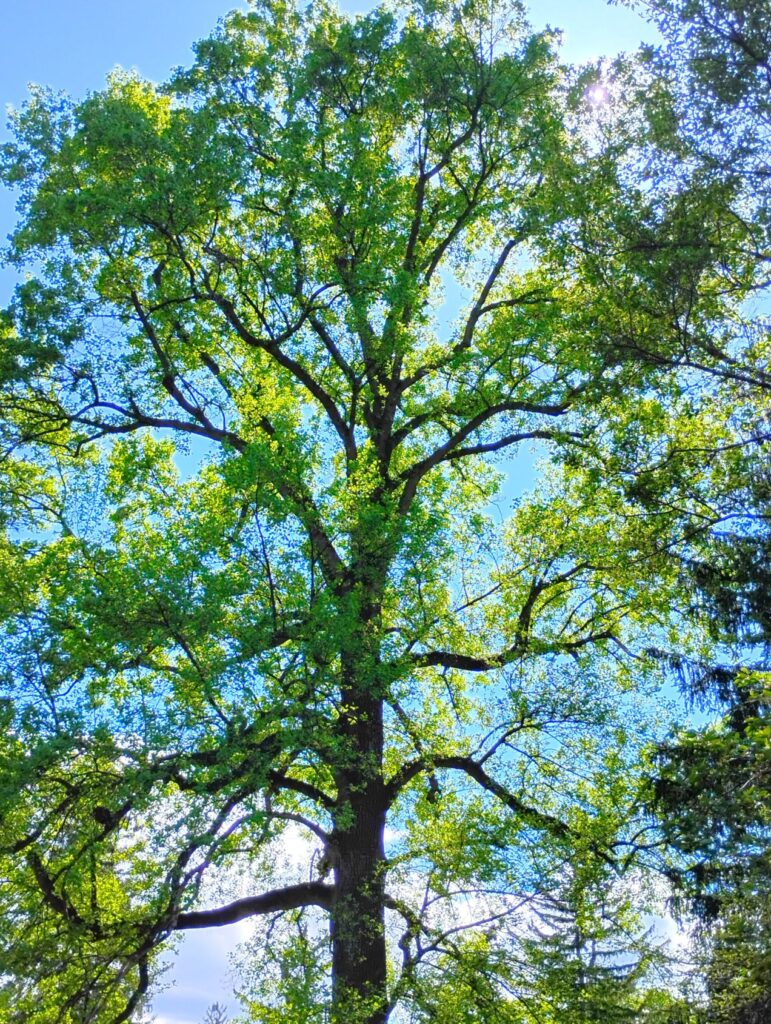
Throughout the informative tour, guests craned their necks to gaze upward at the most impressive species. Coulter pointed out that some trees were so ancient that they predated the cemetery’s founding in 1873. As the walk circled the cemetery, flashes of white dogwood petals swayed in the breeze, and crimson azaleas bloomed beside granite monuments.
The touring visitors inquired about how the trees were maintained and what criteria the cemetery used when choosing new ones. Green Hill is now applying for arboretum status, as the grounds have more than enough species to qualify for that designation. During one tour stop, a visitor said that the word “truth” originated from the word “tree.”
The tour ended in front of Green Hill’s signature tree. Norway Spruce is native to northern Europe, but also thrives in North America. This hearty species can live up to 300 years, but doesn’t produce cones until it reaches four decades in age. These large trees can grow up to 4 feet a year and reach 100 feet tall. Green Hill hosts 116 Norway Spruce trees, which comprises 18% of the cemetery’s collection.
Back inside after the tour, Superintendent Todd Dorsett and Board Member Ritchie Warner answered questions about the cemetery’s upcoming plans and showed a landscape design for a cremation garden. The hosts also offered delicious tree-shaped cookies and chocolate buckeyes, served with lemonade.
As Green Hill has demonstrated on other celebratory days (they host annual Veterans Day and Summer Solstice programs), the event was an intelligent presentation. It showed how the cemetery not only honors the memory of the dead but also celebrates the culture and history of the living.
On Arbor Day, Green Hill honored its trees. This ever-changing collection of flora symbolizes the cemetery’s commitment to providing serenity, peace, and natural splendor. That is a concept worth celebrating every day of the year.