MOTHER SETON OVERCAME PERSONAL TRAGEDY TO BECOME AMERICA’S FIRST SAINT
By Robb Helfrick
Mother Seton faced a life marked by tragedy and loss, yet each successive test revealed a woman with incredible strength and courage. Those trials led Seton on a remarkable journey of faith and service.
Seton’s destined course brought her to Emmitsburg, Maryland, in 1809. During her twelve years there, Seton created a lasting heritage of education and charity that inspired the community and the Catholic Church.
Fifty years ago, 154 years after her death, the Catholic Church canonized Mother Seton as America’s first Saint.
Born Elizabeth Ann Bayley in New York City on August 28, 1774, Seton was the second child of a prominent couple, Richard and Catherine Bayley. Richard was a surgeon, and as Chief Health Officer for the Port of New York, he attended to the health of immigrants disembarking from ships. Richard Bayley later became the first Professor of Anatomy at Columbia College.
Elizabeth’s mother was the daughter of a Church of England priest, but she died when Elizabeth was three years old. Elizabeth Bayley was raised in what would become the Episcopal Church.
Richard Bayley later remarried, and his second wife was initially a benevolent influence on young Elizabeth’s life, taking her on charitable rounds to visit the poor and help distribute food. But after that marriage ended, Elizabeth’s stepmother rejected her. When her father travelled to London to further his medical studies, Elizabeth found herself living with an uncle.
Grieving the loss of a second mother, Elizabeth turned inward and started a journal. In her writings, which she practiced her entire life, she reflected on her love of music, nature, and poetry. Elizabeth was an accomplished piano player, an able horsewoman, and reportedly fluent in French.
In 1794, at age 19, Elizabeth Bayley married William Seton. Seton was six years her senior and a wealthy importer. The couple moved into a fashionable residence on Wall Street in New York City and worshipped at Trinity Episcopal Church. A prosperous life seemed destined for the Setons.
As a married woman, Elizabeth Seton continued her former stepmother’s ministry as she nursed the sick and dying in her community. She became a charter member of The Society for the Relief of Poor Widows with Small Children and served as the organization’s treasurer.
Meanwhile, William’s father died, and the Seton family took in William’s six younger siblings. Elizabeth and William had five children of their own, born between 1795 and 1802.
Misfortune continued for the Seton family when a dispute between America and France resulted in a blockade and shipping losses for William’s business. William Seton filed for bankruptcy, and the family lost their home. William also suffered from tuberculosis, and with the financial stress, his condition worsened.
In 1803, doctors sent William to Italy for rest in a warmer climate. Elizabeth and her eldest daughter Anna Maria accompanied him. On arrival at the port of Leghorn, due to a yellow fever scare, the Setons were quarantined in a converted prison. For 40 days, they were held by Italian authorities, and William’s health declined further.
A few weeks after their release, 34-year-old William Seton died on December 27, 1803.
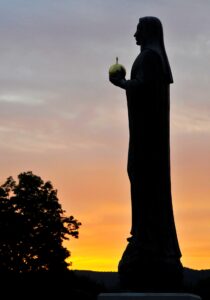
At age 29, Elizabeth Seton was a widow with five children under the age of nine. Fortunately, her late husband had business contacts in Italy. A compassionate family took in Elizabeth and her child and introduced her to their Catholic faith. Elizabeth, anxious to see her other children, returned to America in 1804. She converted to Catholicism a year later.
To support her family, Elizabeth started an academy for young ladies in New York. But after news of her religious conversion, many parents withdrew their children from that school. Frustrated by their snub, Seton considered a move to Canada.
Fate intervened once again when Elizabeth met a visiting priest, Father DuBourg. He was a French member of the Sulpician Fathers, a sect that took refuge in Maryland from religious persecution.
DuBourg was the President of Baltimore’s St. Mary’s College. He told Seton of plans to establish the first Catholic seminary in the United States.
Dubourg invited Elizabeth Seton to join the effort, and in 1808, she agreed and moved to Baltimore. A year later, she made her final move to Emmitsburg. There, Seton found her true calling, progressing from a seeker to a servant of God.
Emmitsburg was founded in 1785, but settlements named “Silver Fancy” and “Poplar Fields” preceded the town. The seeds of Mount Saint Mary’s University were sown around 1805, when Father John DuBois bought land in Emmitsburg. The school was chartered in 1808. Elizabeth Seton lived briefly on the Mount St. Mary’s campus until her new enterprise, St. Joseph’s Academy and Free School, was built.
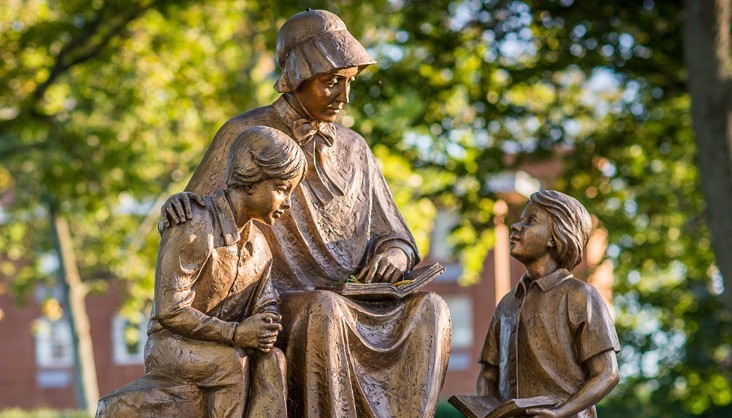
The St. Joseph’s Academy was the first free parochial school in the United States. Seton wrote the textbooks and taught her Catholic sisters to become teachers. All female students were accepted, regardless of social or economic standing.
Financial support for the Academy came from a wealthy benefactor named Samuel Cooper. Seton’s school was the modest beginning of America’s parochial school system.
Shortly after, Seton established a congregation of religious sisters, dedicated to caring for the children of the poor. This group was named the “Sisters of Charity,” and this organization was also the first of its kind in the United States.
Seton and 18 fellow sisters took a vow of poverty and re-dedicated their lives to serving the poor. They renewed that vow yearly. Leading this sect, Elizabeth Ann Seton became forever known as “Mother Seton.”
A familiar health nightmare resurfaced in Seton’s life when, in 1812, her daughter Maria died of tuberculosis. Daughter Rebecca would perish from the same disease in 1816.
Despite these tragedies, Seton was known for her good humor and kindness, and once said that tenderness was the language that children understood best. She put her entire focus and faith into helping people in need. A grieving widow and mother grew into a visionary leader.
Wanting to pass on wisdom to her only surviving daughter, Catherine, Mother Seton gave her a red book filled with thoughts to live by. “Be sure that simplicity should be your only rule,” Seton advised, “it makes a lovely woman more lovely.” Catherine Seton would follow her mother’s teachings, become a Sister of Mercy, and live to the age of 90, almost as many years as her parents and two departed sisters lived combined.
Mother Seton might have considered her own legacy when she also wrote in that red book: “The day past should not judge the day present nor the present the past… there is but the last day which judges all.” Sadly, tuberculosis was not finished with the Seton family. Elizabeth Ann “Mother” Seton died from TB on January 4, 1821. She was 46 years old.
A fruitful life inspired by a divine calling was complete, but the story of Mother Seton was not finished. In the late 1880s, church authorities began examining her legacy, which included her spiritual writings.
The cause for eventual sainthood was officially opened in 1940 when she was given the title “Servant of God.” Two miracles of intercession (prayers offered to Mother Seton) were credited to her when a child was cured from leukemia, and another man recovered from deadly meningitis.
In 1963, the Catholic Church “beautified” Elizabeth Seton, the first step to becoming a saint. Twelve years later, Pope Paul VI canonized her at St. Peter’s Square in Vatican City. The Pope said about the church’s newest Saint: “Elizabeth Ann Seton was wholly American. Rejoice for your glorious daughter. Be proud of her. And know how to preserve her fruitful heritage.”
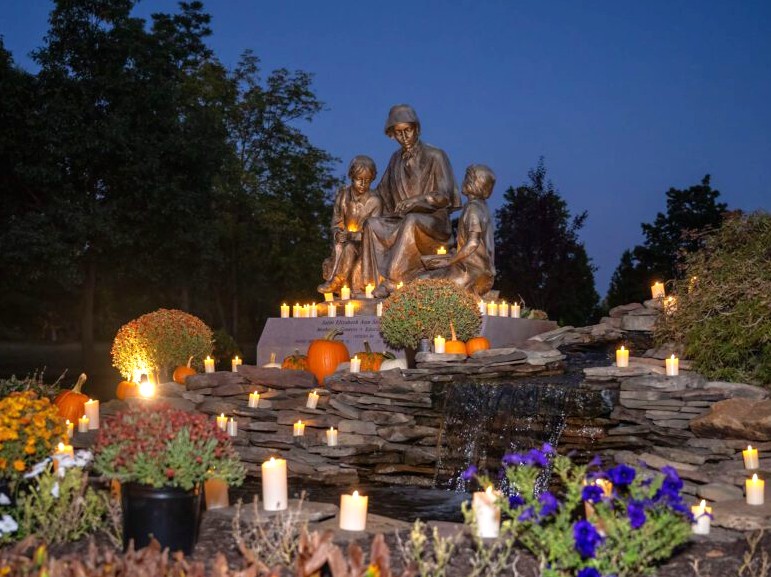
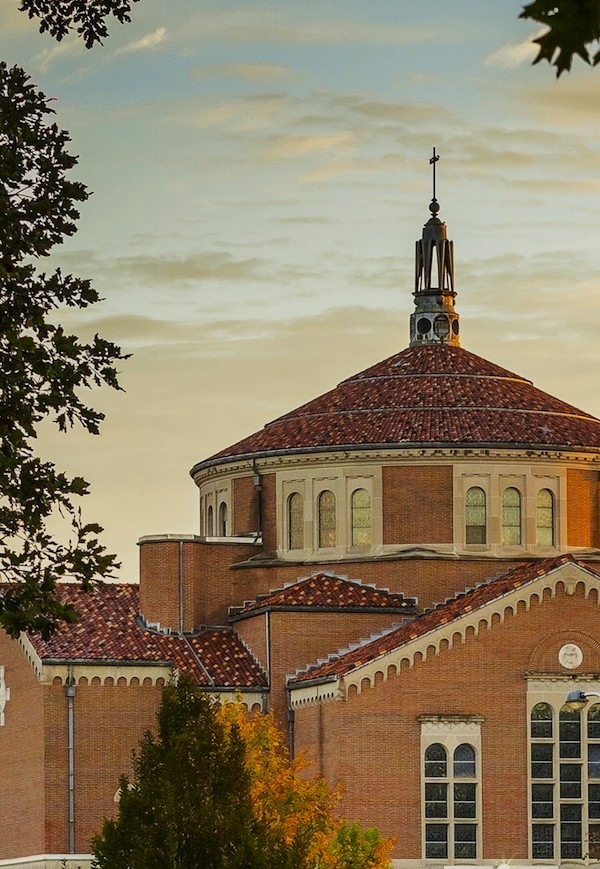
Today in Emmitsburg, the memory of Mother Seton is faithfully observed. The Seton Shrine includes a Basilica (built in 1965; Seton’s remains are entombed there), historic cemetery, museum, and an old stone house where Seton once lived. The National Shrine Grotto offers a lovely outdoor setting, once enjoyed by Mother Seton, for worship services and quiet reflection on Mount St. Mary’s University’s campus.
This past September, the Emmitsburg Shrine held a candlelight concert, a 50th Anniversary Mass, and held a festival to mark the half-century milestone of Seton’s canonization.
Mother Seton is the patron saint of widows and seafarers. Today, 204 years after her death, she remains a significant figure in American history.