Waynesboro's National Register Properties: Historic buildings fulfilling new functions
By Robb Helfrick
Waynesboro boasts deep historical roots. The town has attained diverse accomplishments throughout its illustrious and industrious past. Today, Waynesboro maintains a variety of buildings harkening to its founding era, and some are listed on the prestigious National Register of Historic Places. This achievement is a testament to Waynesboro’s constant preservation efforts.
The National Register of Historic Places (NRHP) is a U.S. federal program that recognizes five categories: buildings, structures, districts, sites, and objects. Among this quintet, properties are judged worthy based on various criteria. This includes whether the property was tied to a historic event or person, has design or construction significance, or possesses important information potential that helps interpret and preserve local history.
Waynesboro and neighboring Washington Township have 12 official designations on the NRHP, with an impressive array of histories. To add perspective, nearby Fulton County has 7 NRHP listings within the entire county.
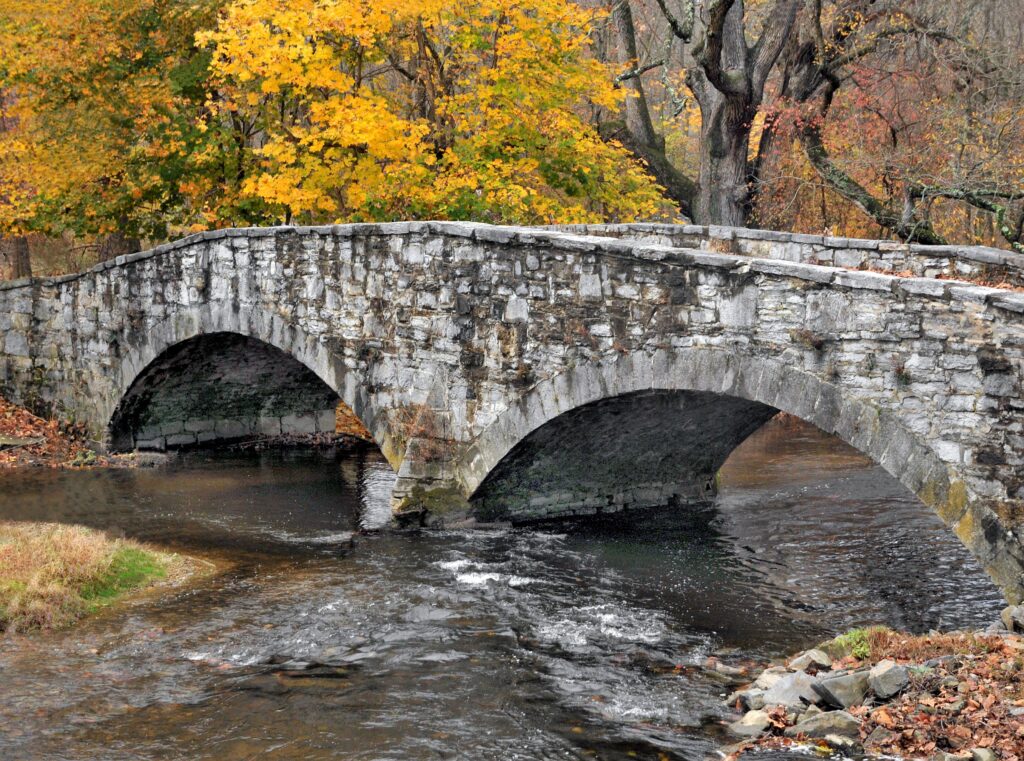
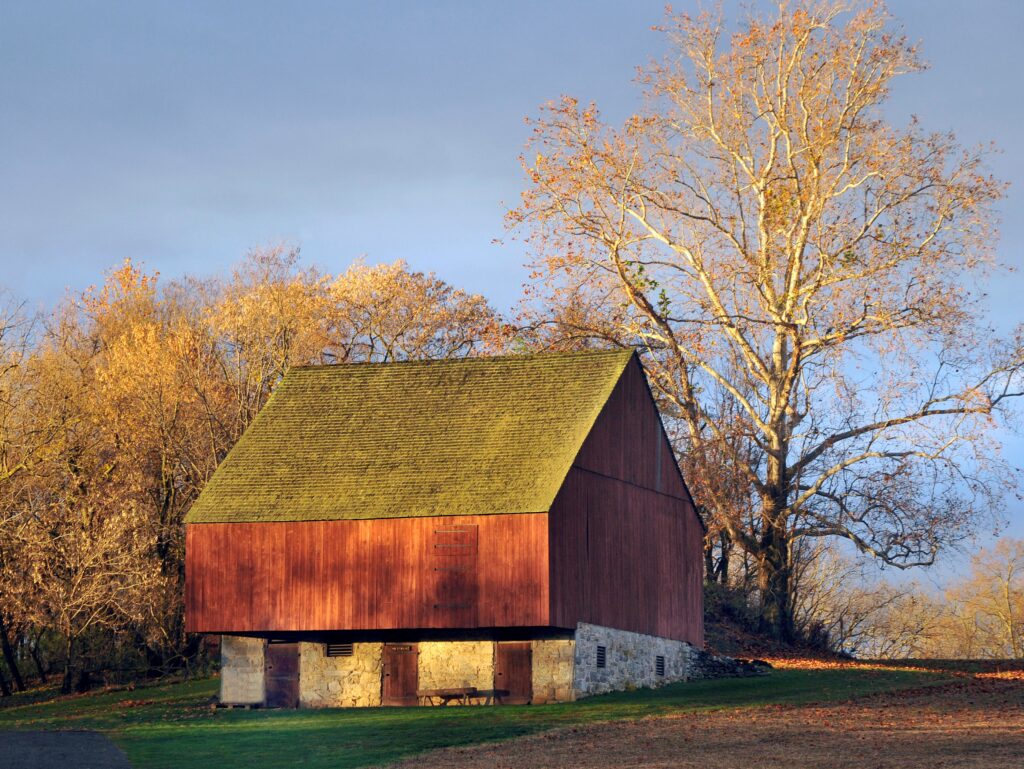
Included in the Waynesboro area’s group are historic homes, an armory, a church, a grist mill, farms, a former Academy of Music, a handsome double-arched stone bridge, and two historic districts. However, one surprising omission exists in Waynesboro’s impressive NRHP collection.
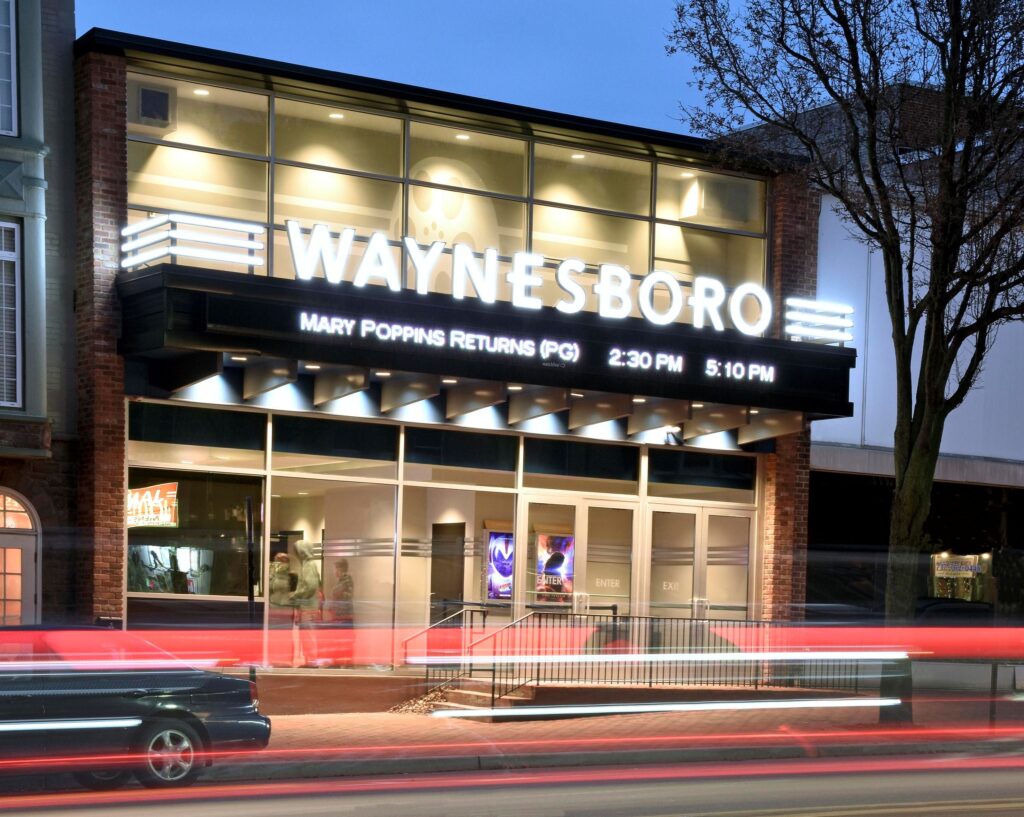
Waynesboro’s Historic District is the newest NRHP designation, awarded in 2020. This encompasses the downtown area, including three National Register structures. Today, Waynesboro’s commercial center bustles with activity as Main Street Park hosts seasonal events, and the Waynesboro Theatre was recently renovated.
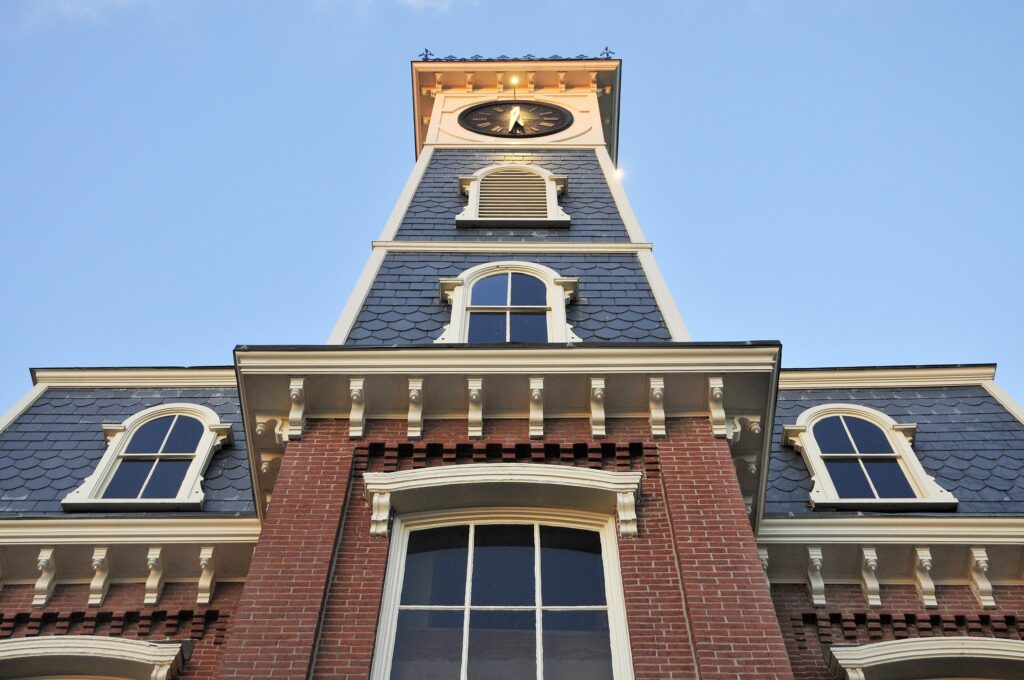
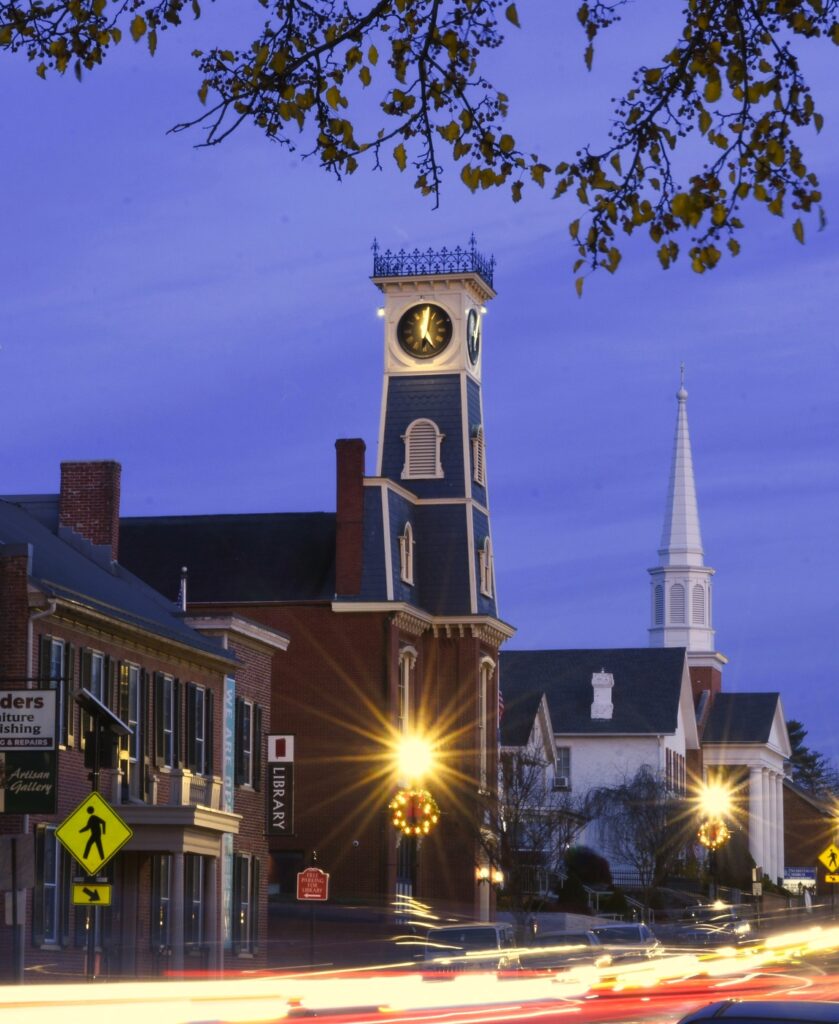
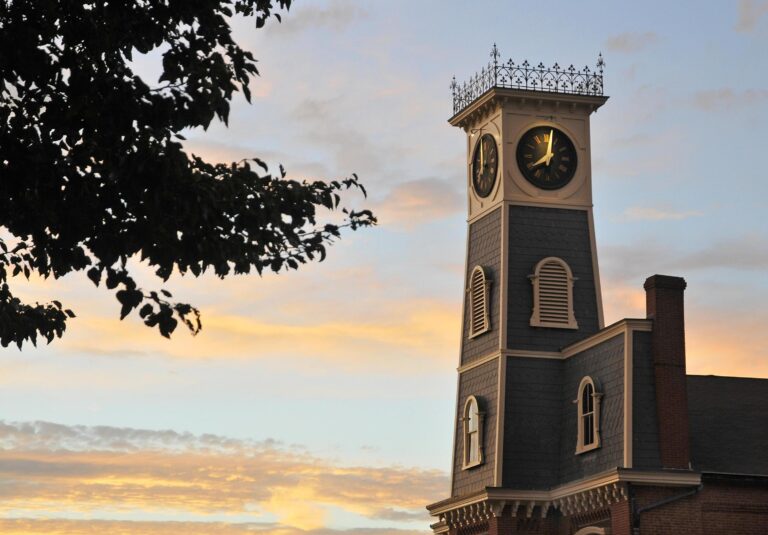
Waynesboro’s symbolic centerpiece is Borough Hall. This handsome Second-Empire-style building is a local architectural icon. Most know it as the home of Waynesboro’s municipal government offices and police department, but the building had colorful former tenants. Built in 1881 as the Academy of Music, the structure was originally designed as a dual public safety and entertainment space.
Waynesboro’s early firefighters housed antique hand-pulled equipment in the building. Later, a community market occupied the ground floor. In subsequent years, the Waynesboro Free Library moved into second-floor quarters in 1929.
In 1955, a new endeavor formed, reimagining the building’s original purpose. The ‘Little Theater’ production company performed the plays of Agatha Christie and Tennessee Williams, receiving popular acclaim. A congratulations telegram was once sent by First Lady Mamie Eisenhower. The Wayne Band, now in its 126th season, also practiced in this upstairs entertainment space.
The theater company disbanded in 1967, and several years later, this distinct civic building was threatened with demolition. The Borough of Waynesboro made a wise decision and saved the property, eventually adding a new wing to house municipal offices. The Borough Hall gained NRHP status in 1980. This revered landmark, with its familiar four-faced clock still chiming every hour, has faithfully served the Waynesboro public.
Once only a few houses distant from Borough Hall, the Alexander Hamilton House is another NRHP property honored in 1980. This particular Hamilton was not the founding father whose face graces the ten-dollar bill. This Hamilton was a Chester County wagonmaker, blacksmith, and later land speculator who arrived in Waynesboro in 1817. A local legend suggests Hamilton came into town with all his belongings wrapped in a handkerchief.
But Alexander Hamilton prospered in Waynesboro and later bought this brick Georgian-style mansion in 1841. The 16-room home, built in 1814, remained in the Hamilton family for over a century. In 1943, a family descendant named Jane Yost owned the home. Perhaps knowing the Free Library had run short of space at Borough Hall, she bequeathed the Hamilton property to Waynesboro, in honor of her relative, to be used for a new public library christened the Alexander Hamilton Memorial Free Library.
With public support, AHMFL enjoyed continued growth. The building has undergone several renovations (the first in 1955, another in 1978) to house its expanding catalog. The most recent addition in 2014 added 6700 square feet of space, created new amenities for children, and added tutoring and meeting rooms. These multiple improvements closed the original land gap between the library and Borough Hall, so today the two buildings’ walls adjoin, like a friendly handshake.
Reviewing the original National Register application forms for these sister properties is a peek into history. Borough Hall’s 1979 submission highlights its unique architectural features (mansard roof, arched double doors, eyebrow-like window heads) and also shares stories of past events. In 1906, the first motion picture shown in Waynesboro occurred there.
The Hamilton NRHP application also presents its architectural qualifications, saying the building is a “rural representation of the 5 bay Georgian Style, common to the Pennsylvania valley. The structure is an example of architecture popular during the community’s inception. Waynesboro was incorporated on December 21, 1818, and this property signifies the community’s founders.” The submission also states that oil portraits of Alexander and his wife Jane, painted by their son, John, still hang on interior walls.
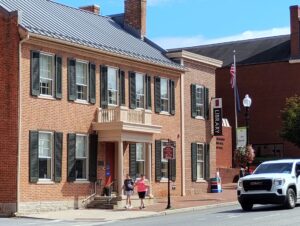
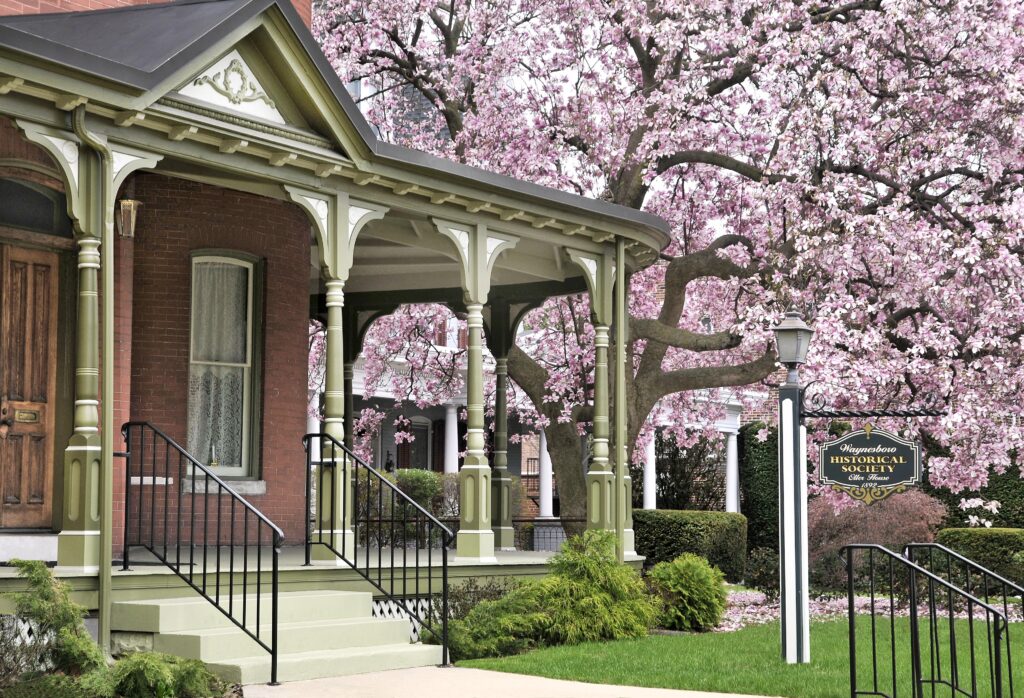
The Oller House is the third NRHP property in downtown Waynesboro. This lovely Queen Anne-style home was owned by the Oller family and eventually bequeathed to serve as the Waynesboro Historical Society’s headquarters.
Today, WHS honors the Oller’s legacy with numerous community events. The Society also houses the impressive Ringer photo collection and hosts the extensive Gembe Genealogy Room and Calimer Library archives, which encourage scholarly research into Waynesboro’s families and landmarks.
WHS owns and protects two other NRHP properties, Harbaugh Church and Welty’s Bridge. The latter, a stone arch bridge, has been celebrated on vintage postcards and memorabilia; a rustic treasure symbolizing Waynesboro’s genteel past.
North of downtown, on a spacious lot at 410 North Grant Street, the Waynesboro Armory stands at attention. Completed in 1938, partly with funds from the federal government’s Depression-era Public Works Administration, this building was built as a home for Troop F, 104th Cavalry of Pennsylvania’s National Guard. The solid masonry I-plan structure includes sections for a mess hall, firing range, drill hall, and stables for horses.
Over the years, the property accommodated military exercises, including tank training, but also hosted community events such as circuses, dance nights, and driver’s license instruction.
Like many historic buildings sitting on valuable land, the Armory faced encroaching development. The property gained NRHP status in 1989, but that distinction didn’t guarantee its survival.
In 2014, Pennsylvania’s government sold the property to a private investor, and the new owner parceled off some acreage. Local Real Estate professional Darwyn Benedict stepped in and purchased the building (with the remaining 5 acres) in 2015, determined to preserve its heritage.
All these properties have illustrious pasts, but most have assumed new roles serving Waynesboro. Thanks to generous benefactors, dedicated owners, and community support, they are preserved relics representing important eras in town history.
Surprisingly, no Waynesboro industrial site has been honored to date with a NRHP listing. Several potential locations deserve consideration. An old Frick Company Power House still stands on Johnson Controls’ campus. Inside this small brick building, gigantic coal-fired flywheels once turned, powering the entire plant.
The former Landis Machine and Landis Tool complexes include various buildings and objects that could potentially qualify for NRHP designation due to their historical significance.
Waynesboro is well represented by preserved architecture. NRHP status isn’t necessary to appreciate these properties fully, but a listing helps identify which ones might need future protection and local support. Like aging humans, preventative care keeps these properties healthy and vital, benefiting the entire community.