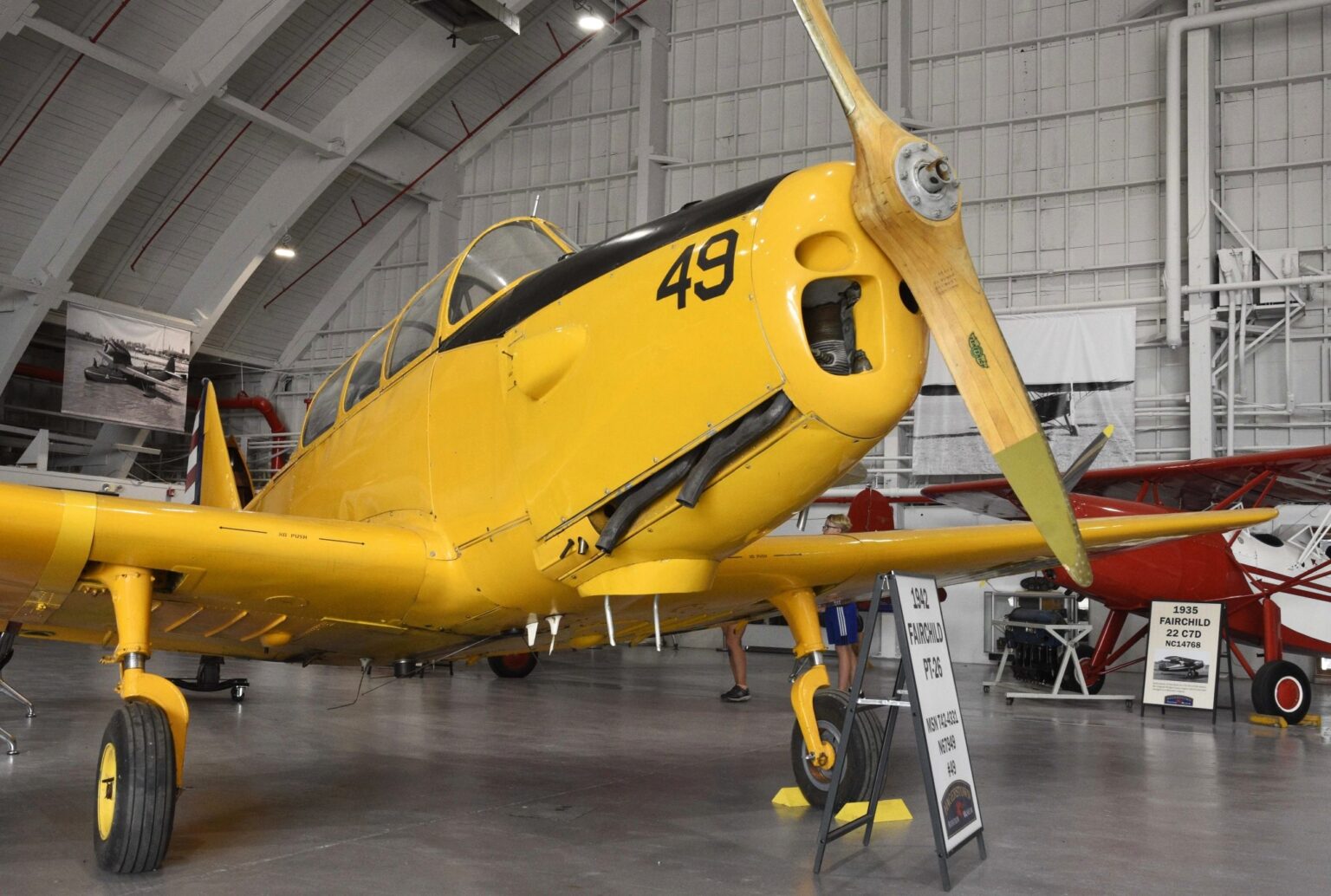
HAGERSTOWN’S AVIATION MUSEUM CELEBRATES A PROUD FLYING LEGACY
Article and photographs by Robb Helfrick
With ongoing technological advancements and unwavering courage, the aviation industry has inspired wonder and amazement for over a century. Yet the brief thrill of seeing a plane zoom overhead seldom captures the true awe these planes deserve.
Sometimes, it’s equally exciting to see these flying marvels sitting idle to view their forms up close. To see their rows of rivets, or trace the shiny metal of a perfectly curved wing, is equally thrilling. It’s fascinating to inspect the fine wood grain of an ancient propeller, or sneak inside a cockpit and be amazed by the intricate dials and switches that guided planes safely across the sky.
That sensory experience is heightened by viewing these splendid aircraft inside the architectural wonder of a restored hangar. Mix in the well-told history of clever entrepreneurs and their dedicated workforce that created a local aviation dynasty. Next, chat and learn from a group of intelligent boosters and volunteers whose enthusiasm for airplanes is contagious. Then, the preflight checklist for Hagerstown’s Aviation Museum is complete. Ready for takeoff, but for visitors, leaving the ground won’t be necessary.
The seeds for Hagerstown’s Aviation Museum were sown nearly thirty years ago when a group created a compelling documentary about Hagerstown’s flying heritage. One of those individuals was John Seburn, now Executive Director and Board President of the current museum. “We had a showing at a local theatre and 600 people showed up,” Seburn said. “We realized that you have to tell the stories first, and then people get excited. The enthusiasm for this museum started there.”
Within the group involved in that acclaimed film production, which included Seburn, Kurtis Meyers (who narrated the film and is now the current museum’s VP), and Kent Mitchell, they envisioned creating a permanent contemporary museum to tell Hagerstown’s aviation story. But at first, without an indoor home, they towed their vintage airplanes to different spots around the airport to accompany other events. Fulfilling their ultimate mission would require several decades, but they eventually discovered the perfect ingredients to make their goal a reality.
Back in 1916, Hagerstown’s early aviation pioneers began their groundbreaking work. An Italian immigrant named Giuseppi Bellanca started training pilots and flying airplanes at local grass airstrips. Bellanca was hired by Maryland Pressed Steel Company to help design new aircraft, with models later named in his honor. This company advertised its products with flair, saying its two-seater biplane was “built like a gun and as graceful as a gull.”
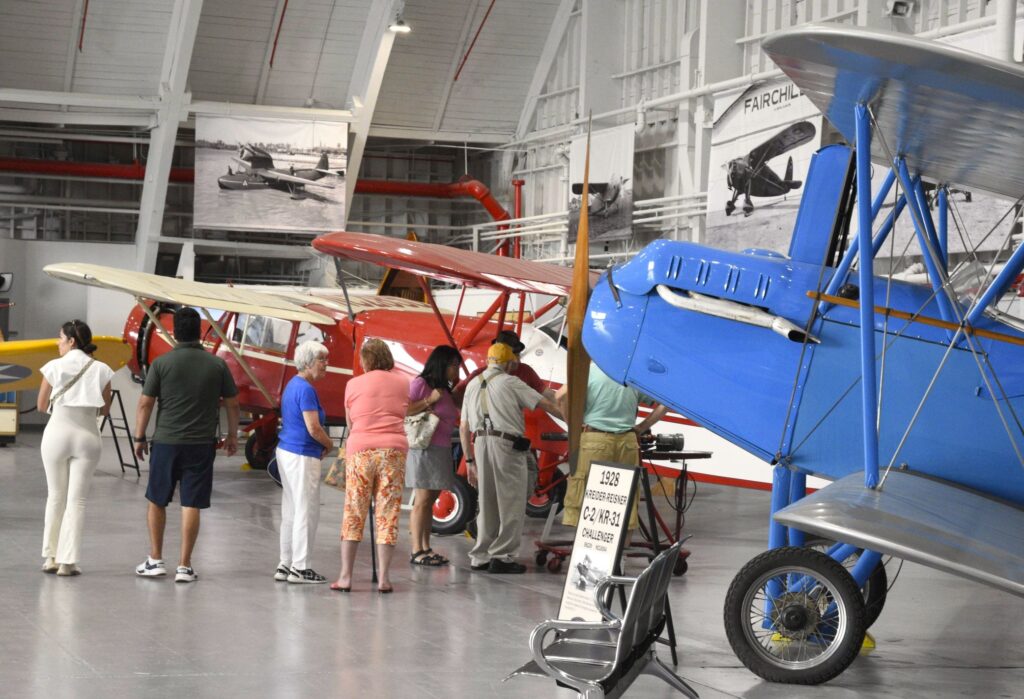
Ammon Kreider and Lew Reisner soon followed and went a few steps further. Their partnership created Kreider-Reisner Aircraft Company in 1925, and their enterprise quickly developed a reputation for quality and innovation. As their business grew, they purchased a parcel along Route 11 north of Hagerstown. This land would become Hagerstown’s future airport site.
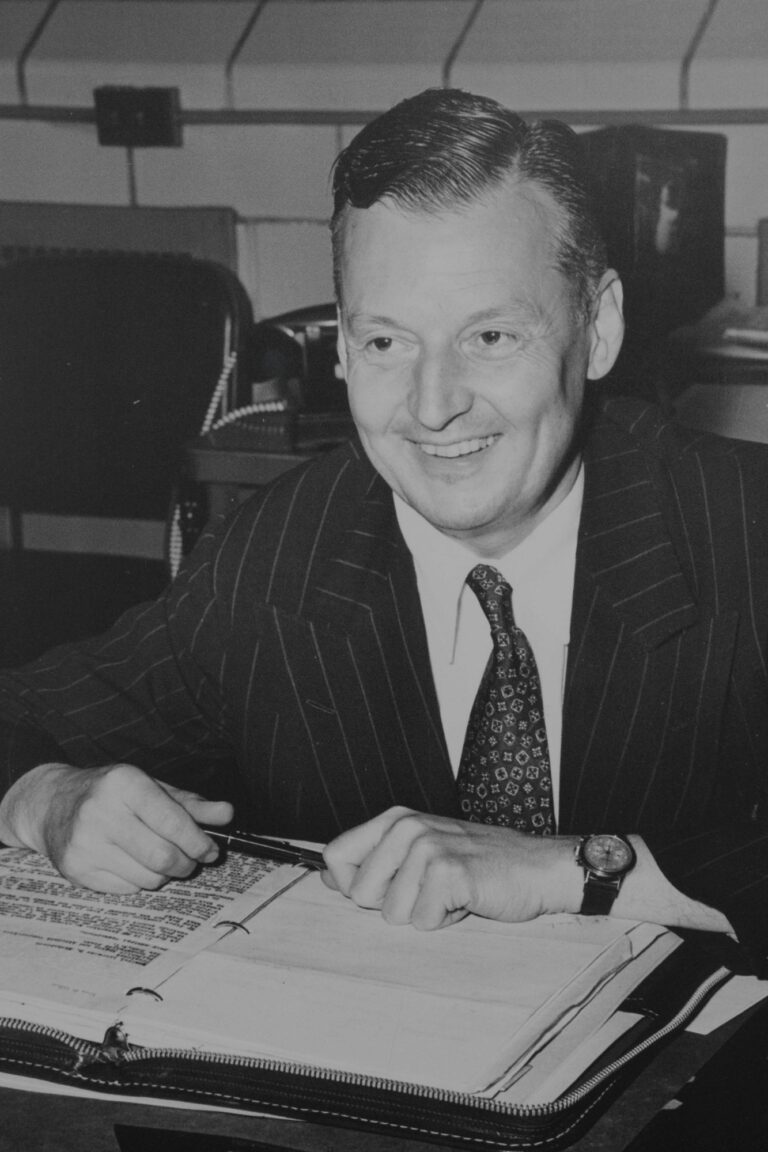
As the aviation industry advanced after World War I, another man became fixture in Hagerstown aviation: Sherman Fairchild. Fairchild (1896-1971) was a man with tremendous drive who created over 70 companies during his career. His first business venture was in aerial photography equipment, but he was determined to be a bigger player in the aviation world. In March 1929, Fairchild bought a controlling interest in Kreider-Reisner Aircraft.
As the roaring ‘20s ended, Fairchild’s newly purchased company seemed poised to reach greater heights. But on April 13, 1929, only a few days after he was announced as company President, Ammon Kreider was killed in a Detroit air collision. Six months later, the stock market crashed.
The Great Depression stalled Fairchild’s grand aviation plans. Fairchild’s Kreider-Reisner subsidiary sold planes to civilians, and few had the money to afford one as the world’s economy collapsed. However, with patience during the 1930s, Fairchild eventually rebuilt his empire and found the formula for growth by targeting a bigger customer: the United States military.
Fairchild developed a new trainer aircraft, a low-wing monoplane called the PT-19. In 1939, Fairchild’s company employed 200 Hagerstown workers. But after America was drawn into World War II after the sudden 1941 Pearl Harbor attack, the military placed a large order for the PT-19.
Hurled into national wartime prominence, but with no time to build a huge production factory, Fairchild Aviation needed to improvise. What resulted was “The Hagerstown System,” a community effort that included homegrown non-aviation industries that participated in crucial wartime airplane production.
Hagerstown’s Moller Pipe Organ Company employed skilled woodworkers, and their talents were shifted to create aircraft wings. Several local furniture manufacturers utilized their workers to craft other PT-19 components. Metal workers machined parts for those planes. Hagerstown was also an important railroad hub, a boost for transporting supplies. This collective group of local workers and resources helped Fairchild produce planes that the military desperately needed. Approximately 1200 Fairchild PT-19s were built each year from 1941 to 1944.
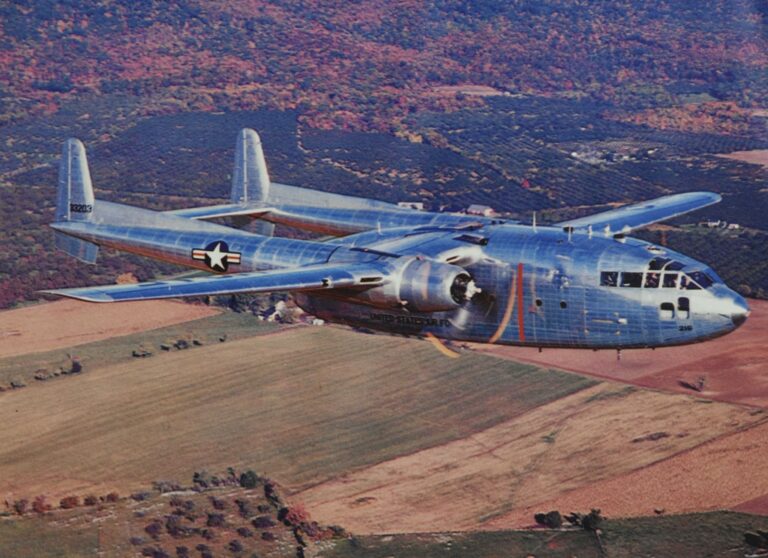
By 1943, Fairchild Aviation had 8000 workers in Hagerstown. When production on the PT-19 trainer wound down, they designed a new category of aircraft: the cargo plane. The first C-82 flew near the end of the war. This airplane, with its distinctive twin tail booms (one attached to each wing) and large capacity to ferry troops and equipment, soon became a vital transportation machine.
Also during this era, with many men fighting battles in Europe, Fairchild employed women in their Hagerstown factory. Not only did their female workforce help build planes, but they also flew finished aircraft to training bases. These capable women came to be symbolized by a fictional character named “Rosie the Riveter”. Their wartime efforts brought acclaim to Hagerstown’s women and also instilled pride nationwide.
After World War II, Fairchild modified its original cargo plane, creating a better-engineered model called the C-1119A. This newer aircraft had increased engine power, allowing larger cargo hauls, and it flew during the Korean War. With the hauling capacity of a large railroad car, this model became affectionately known as the “Flying Boxcar.”
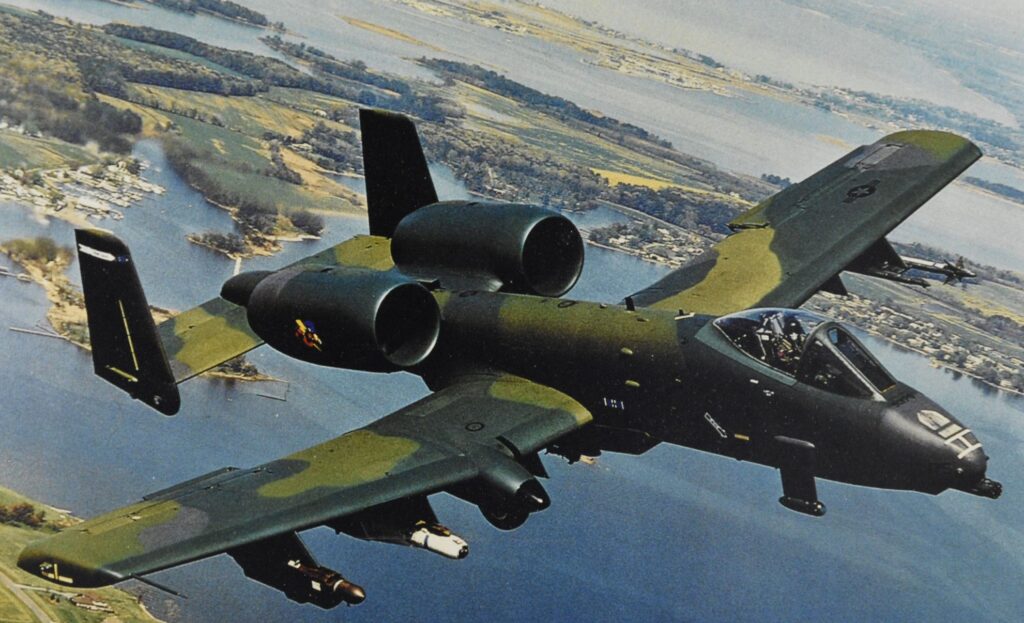
As Fairchild continued into the 1970s, the company produced another significant military airplane called the A-10. Nicknamed the “Warthog,” this fighter jet was commissioned by the US Air Force, and final assembly and flight testing occurred in Hagerstown. The first completed plane rolled off the line in March 1976, and production continued for another eight years, with 713 A-10s assembled. The contract to produce the A-10 eventually ended, and Fairchild ceased operations in Hagerstown after nearly 60 years.

During many years of the Fairchild era, another man made a name for himself in Hagerstown aviation. His name was Richard “Dick” Henson, a native son who became the chief test pilot for Fairchild. Henson (1910-2002) later started an aviation service company and managed operations at the new Hagerstown Airport.
Henson’s airborne career took off and lasted many decades. He recognized a need for a local air service to shuttle passengers to larger airports in Baltimore and Washington. From the 1960s through the 1980s, Henson built the third-largest commuter airline in the country. Henson’s stature grew, and the modern Hagerstown Airport was eventually named in his honor.
As the new century dawned in 2000, it seemed the area’s aviation glory years might be remembered only by passing references to names like Henson and Fairchild. However, when looking back to that period, when Seburn, Meyers, and the other museum boosters searched for a permanent home for Hagerstown’s aviation legacy, another story unfolded. Working nonstop over several decades, the museum backers maintained intense focus on their ultimate goal.
Eventually, with help from a state grant arranged by former Maryland Governor Larry Hogan, the group purchased an old Fairchild Hagerstown hangar in 2022. The wooden structure was restored to pristine condition. Then, several vintage planes were donated, and together with years’ worth of other collected artifacts, the modern-day Hagerstown Aviation Museum was completed and now enjoys a permanent home, ready for visitors.
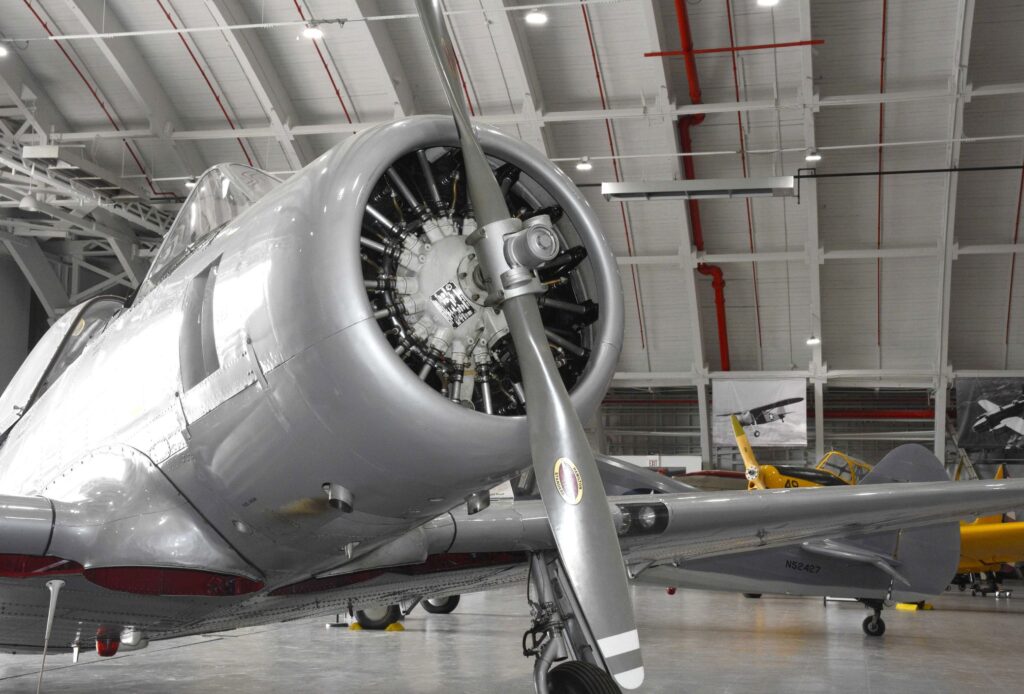
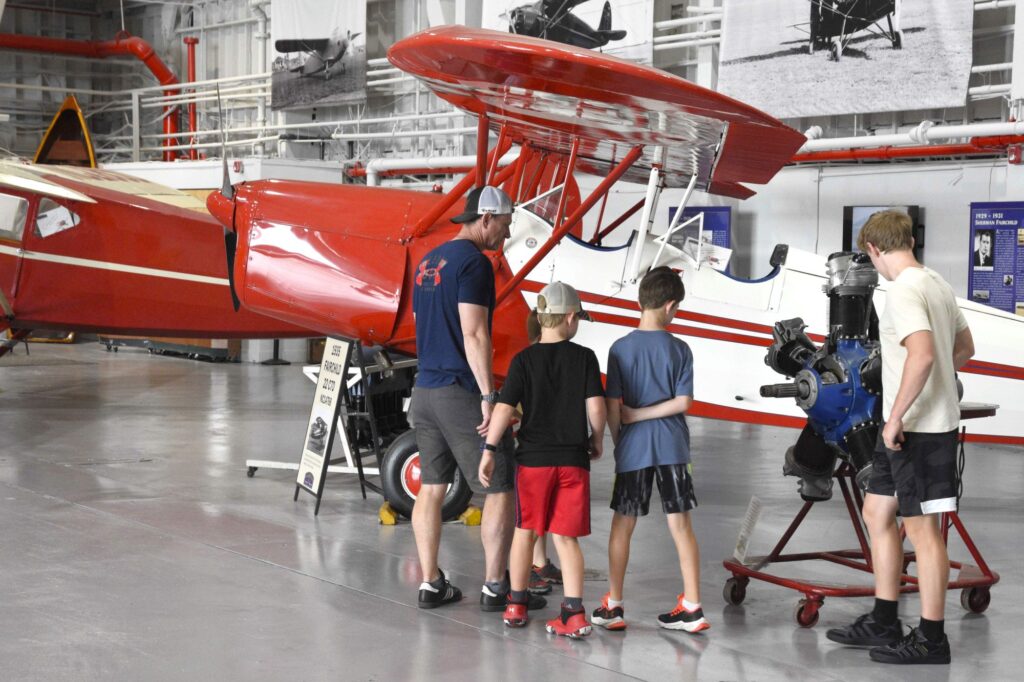
The delights that await, inside and out, are a testament to the founder’s dedication and industry passion. After a brief introductory film, visitors stroll into the spotless hangar, nicknamed the “Dome”, and are immediately transported to a glorious period of local history. A parade of polished and colorful aircraft, all looking like they just rolled off an assembly line, chronicles the century-long journey of Hagerstown-made airplanes.
Knowledgeable volunteers detail the highlights of each plane. Bradley Overcash is one guide. Overcash not only knows Hagerstown aviation history; he lived it. He worked at Fairchild Aviation from 1967-68. This reinforces a theme experienced during a trip to this museum. Both visitors and staff members celebrate many prior connections to Fairchild Aviation. By the 1950s, the company employed its peak of 10,000 workers.
One retired museum patron, visiting from Florida, remarked, “My Dad worked at Fairchild in the 50s.” The man smiled. “I wish he could see this place now, but this museum brings back a piece of him.” Another couple rushed toward the planes, the man tugging his partner by the hand, who trailed a few steps behind. “You’re like a kid in a candy store,” she said.
On special occasions, museum visitors receive a bonus as all planes are open for interior views. This is especially interesting when visitors walk outside the hangar and inspect the larger cargo planes, including the famous Flying Boxcar. Adults and kids alike marvel at the intricacies of cockpit instrumentation and the cavernous cargo holds that once transported men and materials inside giant workhorse aircraft.
Each plane at Hagerstown’s Aviation Museum has a story to tell, with too many to mention here. However, their most recent aircraft acquisition is a fine example since it encapsulates many aspects of the museum’s attention to detail. The Fairchild XNQ-1 is a striking airplane. The sleek silver machine was a concept airplane and only two were ever built. At first glance, it seems a shame that a plane this perfect was assembled only twice.
This prized museum aircraft is the sole survivor. A benefactor in Dallas recently donated the XNQ-1 as a memorial to her departed husband, who’d piloted it. The antique plane was flown from Dallas to Hagerstown in June 2024. During its last flight, the Hagerstown museum had the plane photographed as it flew low over the local airfield, where it was built back in 1947. The photographer captured a stunning image of Hagerstown’s past and present on that occasion.
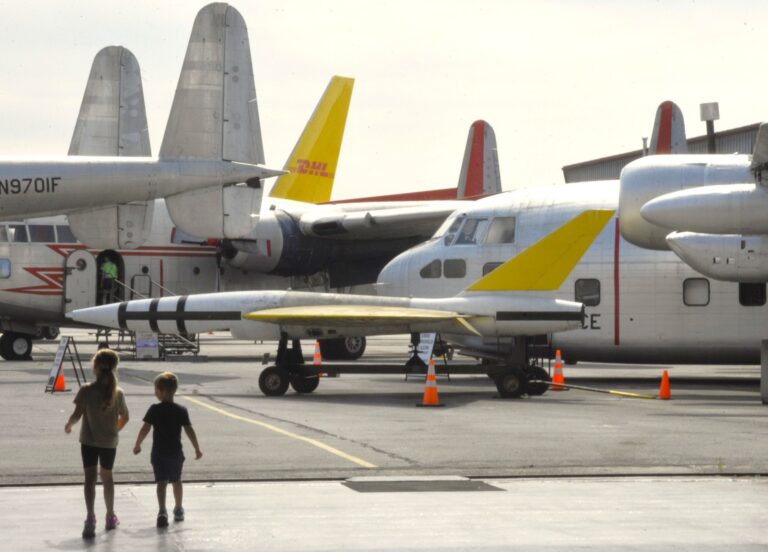
However, this museum is not only about Fairchild aircraft, but also the sense of accomplishment that Hagerstown still feels for a 70-year manufacturing legacy that shaped and transformed this community. It is a heritage worth sharing, and this museum shares it well. Another chapter in the Hub City’s modern development recently borrowed one of Fairchild planes’ nicknames as a nod to local aviation pride. The baseball team is called the Hagerstown Flying Boxcars.
In September 2025, an A-10 “Warthog” made its last flight, ending at Hagerstown airport. The plane is now decommissioned and will thrill future museum visitors.
The Hagerstown Aviation Museum is located at 18450 Showalter Road, Building 8, in Hagerstown, MD (adjacent to the Henson Regional Airport) and is open Fridays and Saturdays from 10 am to 4 pm. Call 301-733-8717 or visit the museum’s website (hagerstownaviationmuseum.org) to learn about special events, admission rates, fundraising efforts, and other facets of this compelling aviation museum.