THE WAYNESBORO HISTORICAL SOCIETY HOSTED “REMINISCING THROUGH PICTURES,” REKINDLING MEMORIES FROM BYGONE DAYS
By Robb Helfrick
March 21, 2026
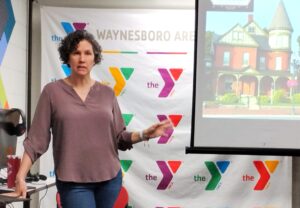
During the Waynesboro Historical Society’s “Reminiscing Through Pictures” event at the YMCA, attendees shared fond memories as vintage photographs appeared on a screen before them. Those well-chosen pictures from WHS’s Ringer Archive showed vestiges of Waynesboro society and culture from the mid-to-late 1900s.
WHS Treasurer Sheila Eyler led the event. After introducing each image with a sketch of the subject matter and the time period it was taken, Eyler solicited comments from the audience. Many heads nodded when she asked if anyone had memories or recollections from their interaction with a place or event depicted.
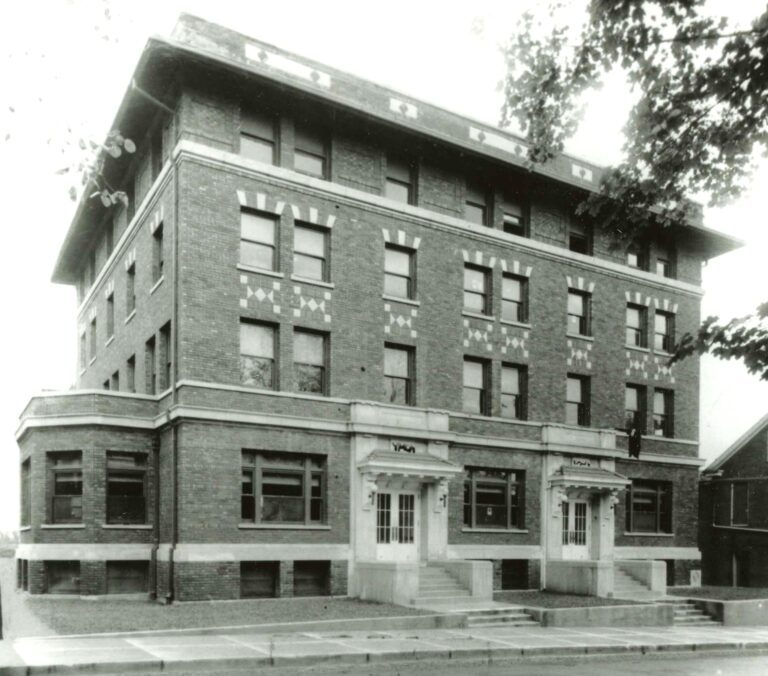
To illustrate perspective from past to present, Eyler started the presentation with an image of the former YMCA on N. Potomac Street, which was built in 1915. That building served the community until the mid-1970s, when the current YMCA building was erected on East Main Street. That old YMCA structure was later razed; Trinity House Apartments now occupy that location.
A woman in the audience recalled the aroma that always greeted her nose when she walked in the YMCA’s front door. “I remember the smell of chlorine from the pool in the basement,” she said.
During the presentation, the images were mostly black-and-white renditions, as was the custom of photographs taken before the mid-1900s. However, a few pictures popped with lively hues. One such view was from Pryor’s Tire Store, photographed during the 1950s.
“I love the colors in this photograph,” Eyler said. A person explained how Pryor’s sold more than tires: his family bought their first color television at that store on S. Potomac Street. The building survives; it now hosts a dog-grooming business.
The Shank-Moore Ford dealership once stood at the opposite corner of S. Potomac Street, now occupied by Rutters. The prior auto business was represented during the presentation by a black-and-white image from 1947, with cars from that era parked out front.
Later, Eyler shared an aerial view of the same area, which included the Brake Pontiac dealership, West Junior High, and a doomed Potomac Street house hit by a crashing single-engine plane in the 1990s. All three structures have been lost to history.
Several gas stations were highlighted in the program, including the Gulf gas station at the corner of 2nd and Potomac. Guests speculated about the cost of gasoline in bygone days. Eyler said she thought it was 11 cents per gallon in the late 1930s.
Another school highlighted was the old Fairview Avenue school. Built in 1928, the grounds behind it served as a play space for local schools, but it also hosted Waynesboro Tigers football games and Fourth of July fireworks. “I saw the Tigers play at that field in the 70s,” one man said. The school was destroyed by a fire in 1974, and a new school was built on the same site.
Another historic structure that has vanished is the Foltz’s Meadow railroad trestle on Price’s Church Road. Several people remembered braving childhood walks across that span- when no trains were visible or audible around the bend. The picture that Eyler presented showed a bright-yellow Grove crane ferried on an outbound railroad car.
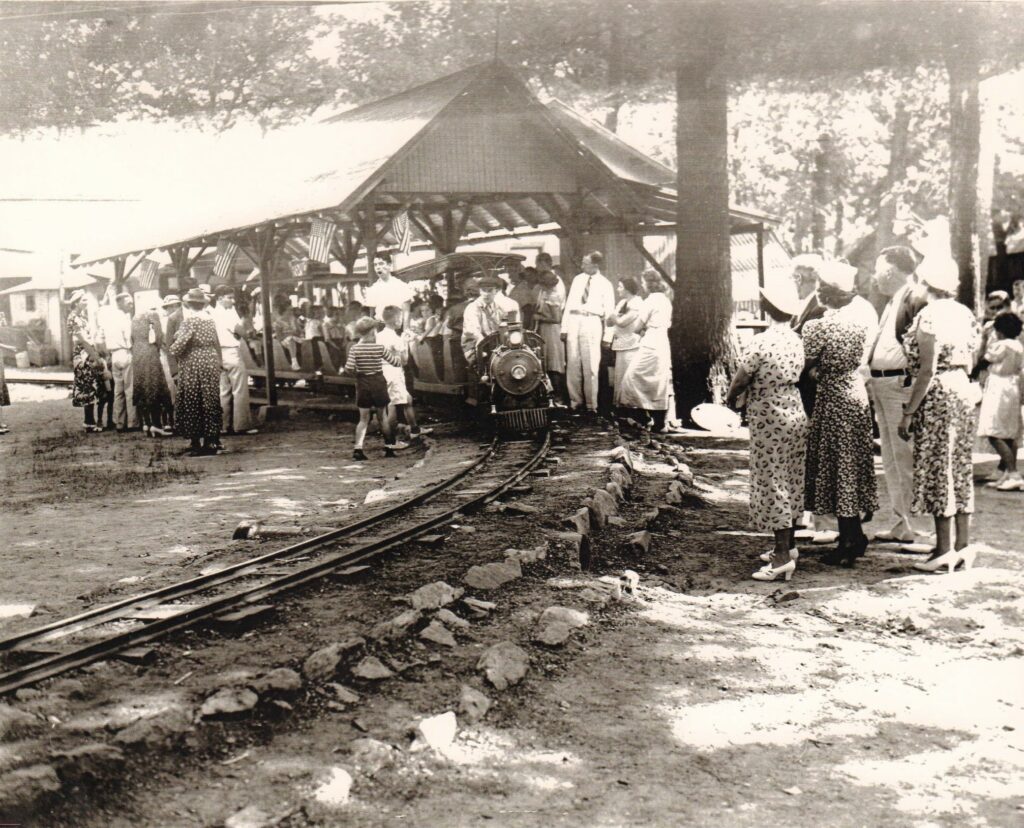
The program highlighted Cold Spring Park next- it was a popular summer retreat located just outside the town limits, created by a trolley company in 1904. Pictures of kids chasing a greased pig in Antietam Creek and riding a miniature train recalled Cold Spring’s glory years.
Guests reminisced about the park’s skating rink, with its leaky roof that allowed rain inside, which eventually warped the floor and created a wobbly skating adventure. One guest also remembered that the park’s swimming pool (fed by the creek) lived up to the name of Cold Spring. “Your lips turned blue in that pool,” he said.
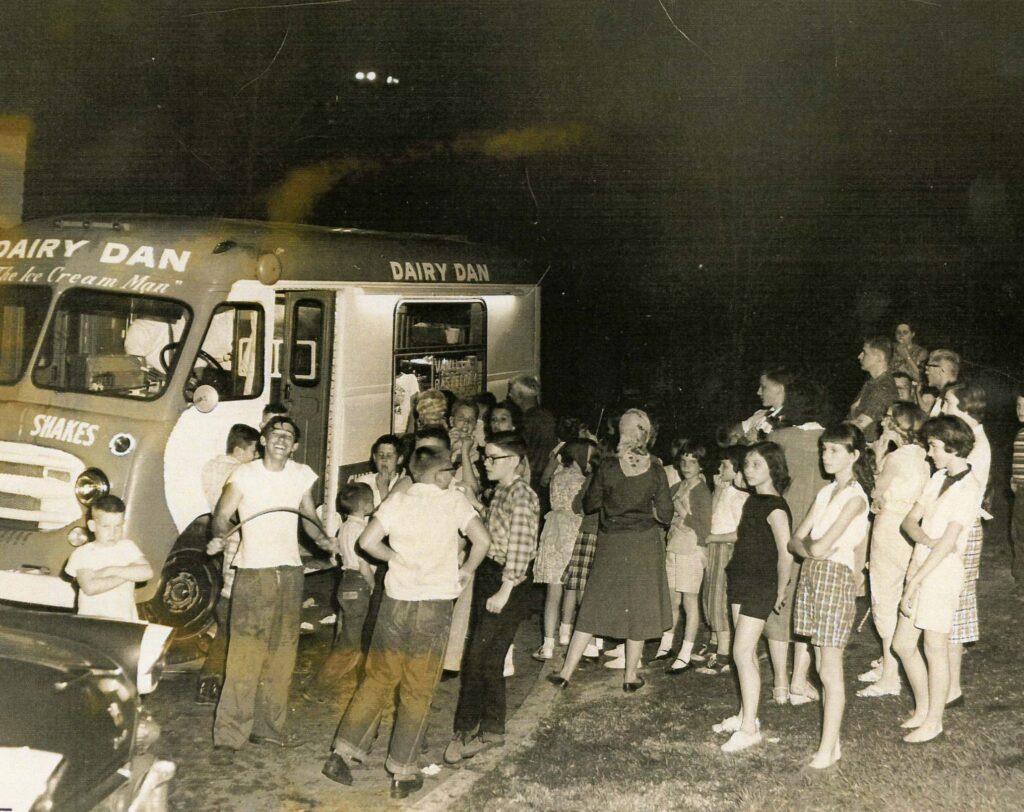
Another rite of summer was Dairy Dan ice cream, and a picture of kids waiting in line for a cone brought back childhood memories.
Waynesboro’s industrial heritage was explored by an aerial view of Frick Company, now Johnson Controls. Frick’s former rail operations and office building are now gone. The latter suffered the same fate as Fairview Avenue school- lost to a major fire. Several attendees mentioned grandparents who worked at Frick during its heyday.
Other borough landmarks were featured during WHS’s presentation, including the Beck & Benedict Hardware building and the Arcade Theatre. The theatre had the largest stage east of the Mississippi River when it opened in 1916. However, the building eventually fell into disrepair and was demolished in the 1960s.
The Beck & Benedict business is also gone, but the handsome building remains, still distinctive with its bay windows fronting the Main Street facade. Both buildings were signature projects of contractor A.R. Warner.
Memories of Waynesboro’s early transportation days were highlighted by views of the Toll Gate House and Welty’s Bridge. Both structures survive, and WHS owns and maintains the old stone bridge, built in 1855.
The borough of Waynesboro owns the Toll Gate House, and it has been restored to its original brick appearance. The ancient photograph of that structure showed two steep hills in the distance headed east on Main Street, which appeared unrecognizable to some, based on modern-day appearances.
Only a few steps away, the site of the former Waynesboro High School/East Junior High building now sits vacant. A picture showed its former grandeur, with a distinctive cupola topping the structure. The cupola is the only part of the building that survives, as it stands in a nearby park. Several attendees mentioned that their relatives were involved in preserving that piece of Waynesboro architectural history.
In total, the images presented at the WHS event showcased a rich snapshot of Waynesboro’s heritage. They also reminded viewers that vintage photographs have a magic all their own. Eyler thanked the audience for their participation and said their support “helps us get the word out about what we do and supports our mission.”
By preserving and documenting those photographs, WHS rekindles old memories. These images are a sentimental record of the buildings, events, and people who have vanished, but are not forgotten.