SHARING JOY AND CREATING YARN AT SUGAR HOLLOW ALPACA FARM
By Robb Helfrick
When Kathy and Jay Brown approached retirement, they considered options for their golden years. Jay had been a professional percussionist in the U.S. Army band during his career. Kathy worked as an ICU Nurse and a school librarian. The couple previously lived in suburban Washington, DC.
The Browns never suspected that Kathy’s love of knitting and a chance encounter with a South American mammal would change their lives. But that is how Sugar Hollow Farm originated, as her hobby led them to start a farm business in Waynesboro.
Kathy described the beginning of their retirement journey: “It started with yarn.” The couple visited the Luckett’s Fair in Virginia and stopped at a yarn vendor. They discovered the unique qualities of alpaca-made yarn that day. “It was lovely, soft, and irresistible. We bought enough to knit a wrap with plenty left over.”
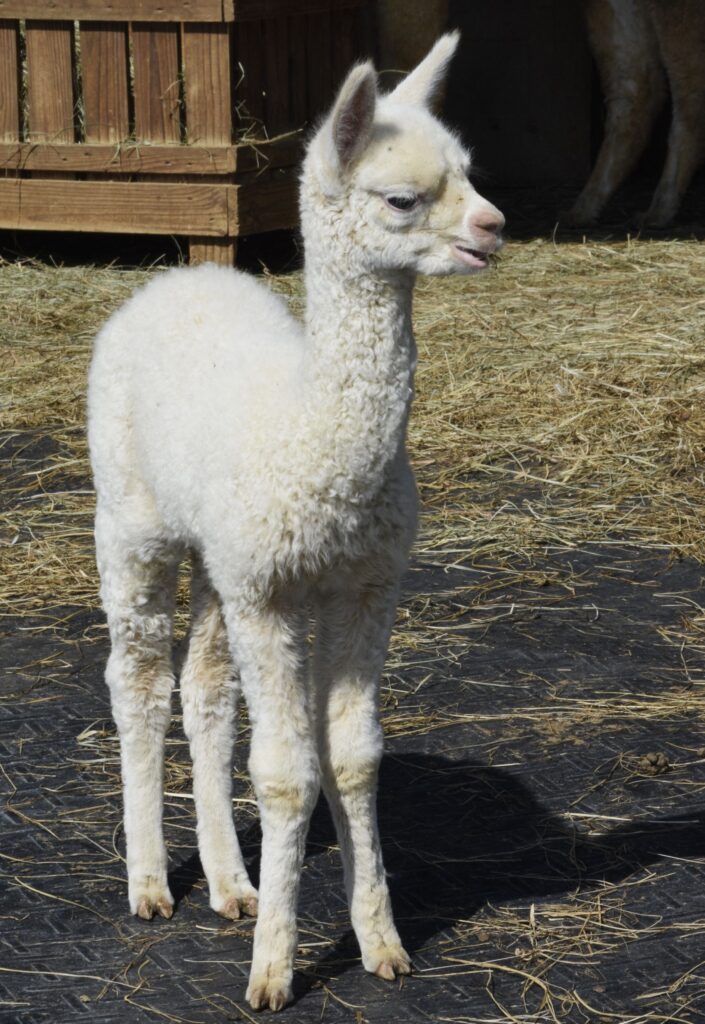
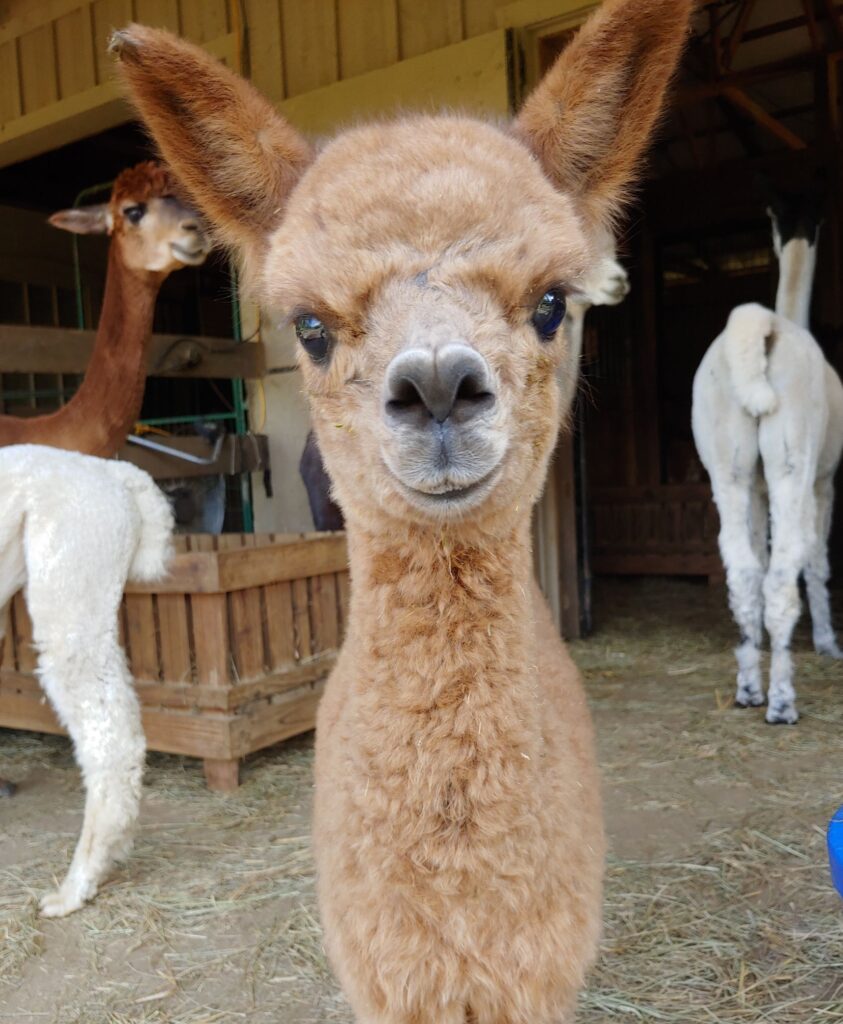
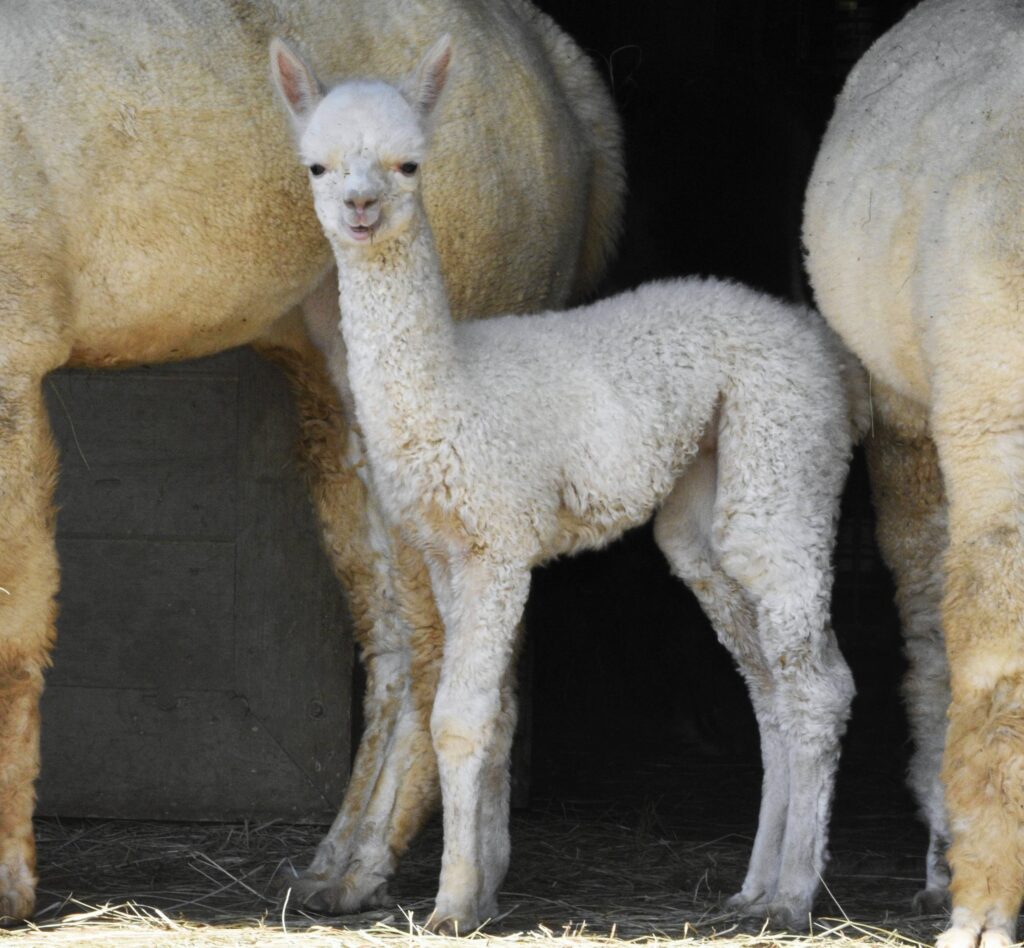
The couple also saw photos of crias (baby alpacas) and were smitten. The next weekend, driving home from their weekend place in West Virginia, they saw a sign for an alpaca farm. They shopped at the store and met the owners, who introduced the Browns to their alpaca herd. Kathy and Jay didn’t realize it at the time, but they had found their ideal retirement venture.
A short time later, they purchased their first alpaca in 2009. Living in an urban area, the Browns weren’t able to bring that alpaca, named Macaria, home to live with them. They boarded her and acquired other alpacas. In 2015, they realized they wanted a permanent country home for themselves and their growing herd.
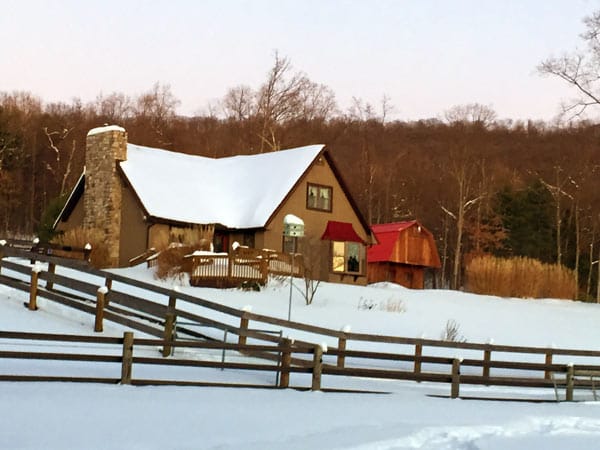
Jay Brown had family ties in York, so the couple began looking in the Gettysburg area for the right property. When that search came up empty, they looked further west. Attracted by Franklin County’s pastoral landscape, they bought a Waynesboro property on Masters Road in 2015. After renovations, the Browns moved in the next year.
Alpacas are native to Peru, Bolivia, and Chile. This South American camelid was traditionally kept in herds to graze on the highlands of the Andes Mountains. They typically grow to 150-175 pounds, produce 3-8 pounds of fleece per year, and have a 20-year lifespan. While they are often confused with llamas, alpacas are smaller and bred for their wool, while llamas serve as guardian or pack animals.
In the 1980s, importers brought alpacas into the USA, and more people discovered the high quality of their fleece, used for making ultra-soft apparel. For a period, alpacas were considered exotic and were extremely expensive. Kathy Brown said prices thankfully declined as more alpacas made their home in the States.
The quality of an alpaca is judged by several factors, including its body confirmation and fleece characteristics, such as density and length. From the beginning, the Browns had a singular goal with their alpaca herd: “We want to produce the softest, brightest alpaca yarn we can.”
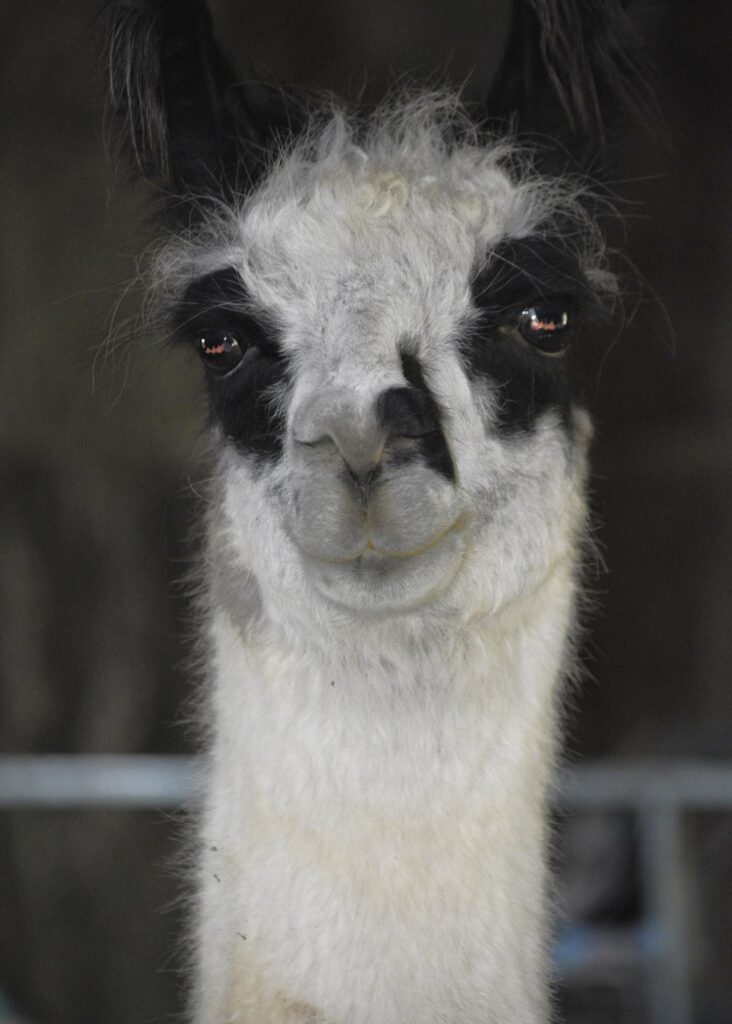
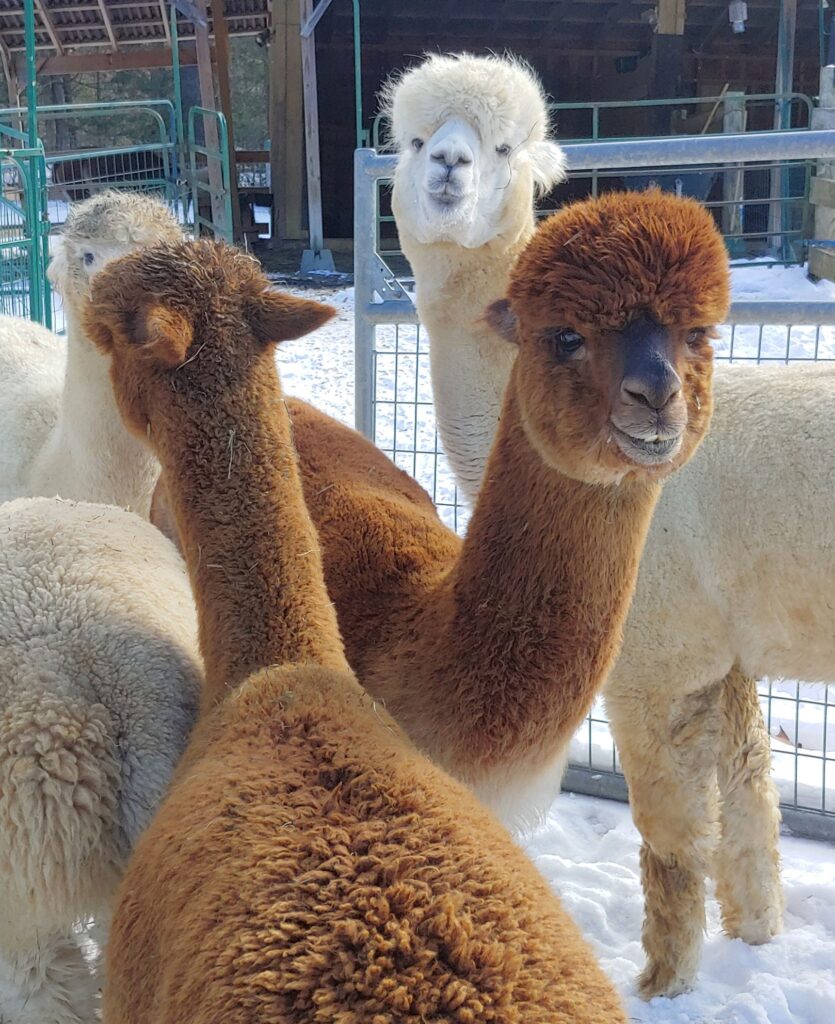
The Browns’ alpaca herd grew to 16 animals, and they also own 2 llamas, who serve as farm guardians. Sugar Hollow is also home to dogs, chickens, cats, and a pig. One aspect of the farm that is evident to visitors is that its human hosts adore their animals and enjoy sharing them with the community. “We’re quite happy with our herd,” Kathy said.
Sugar Hollow hosted three events in recent months, which included National Alpaca Day, an artist tour of local venues, and a holiday open farm. The Browns are also regular exhibitors at Waynesboro’s Market Day event. “People always smile when they see our alpacas.”
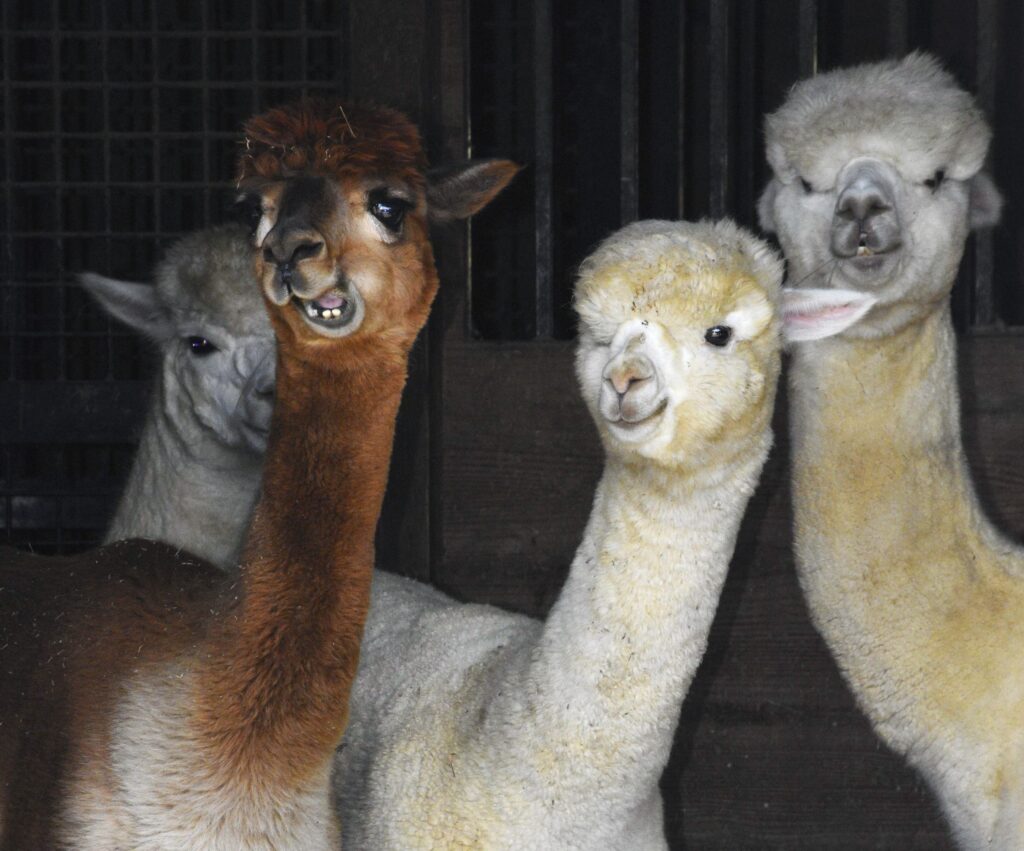
Although alpacas appear cuddly with their soft wool coat, they are normally shy creatures who must warm up to humans. They are typically gentle, intelligent, and observant animals. At Sugar Hollow, the matriarchs of the herd, Gwen and Georgie, are sociable with visitors, and Dottie and Susie are also a favorite mingling pair.
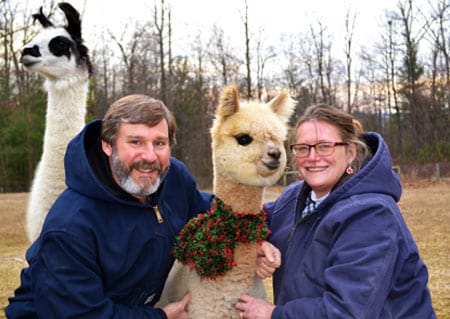
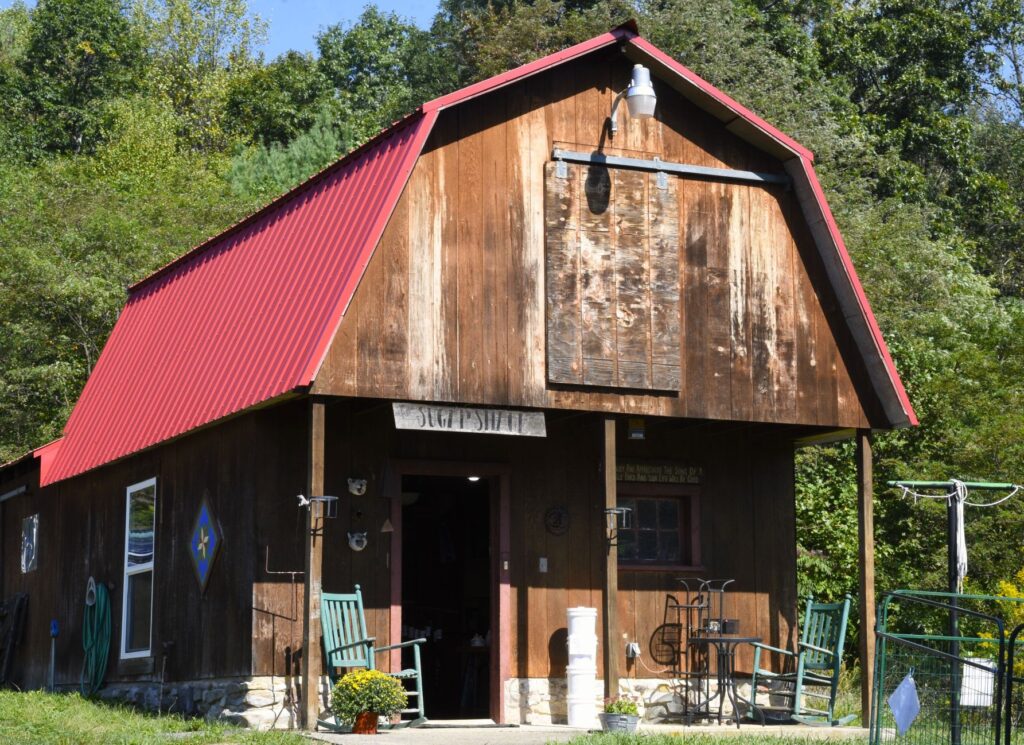
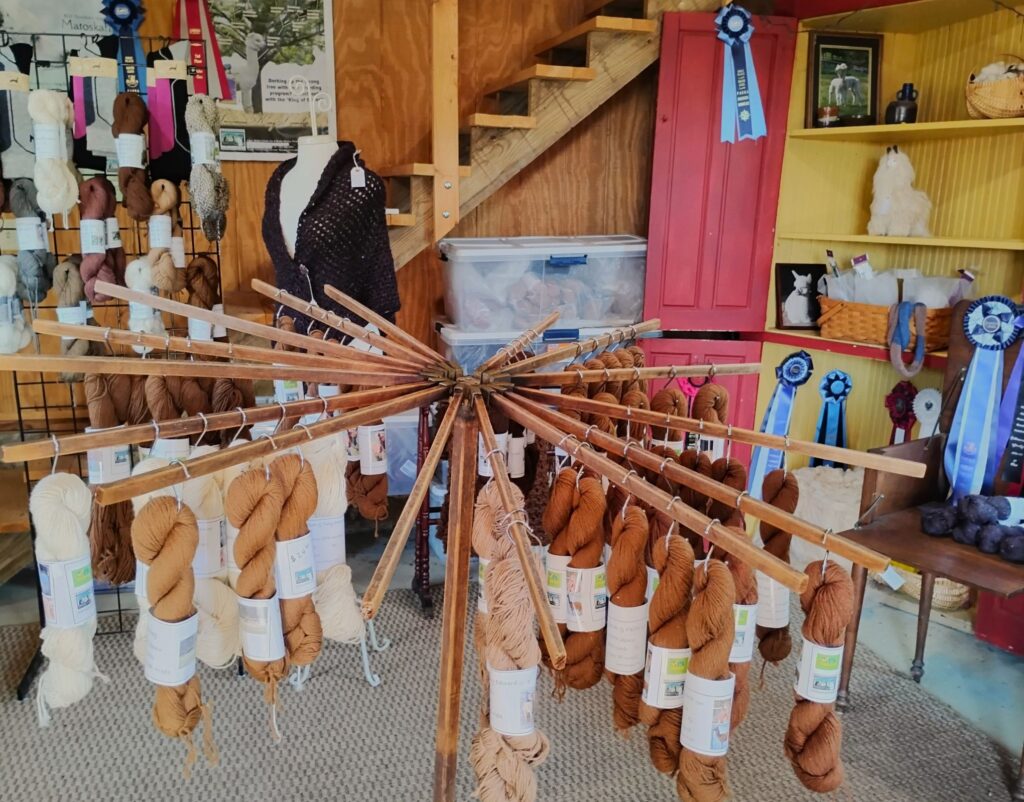
Sugar Hollow Farm is tucked away on a private lane, and the Browns own 26 acres, which gives them plenty of space for pasture, a barn, and the “Sugar Shack,” where Kathy sells her yarn products. She has also learned to hand spin and uses a loom to weave shawls and rugs.
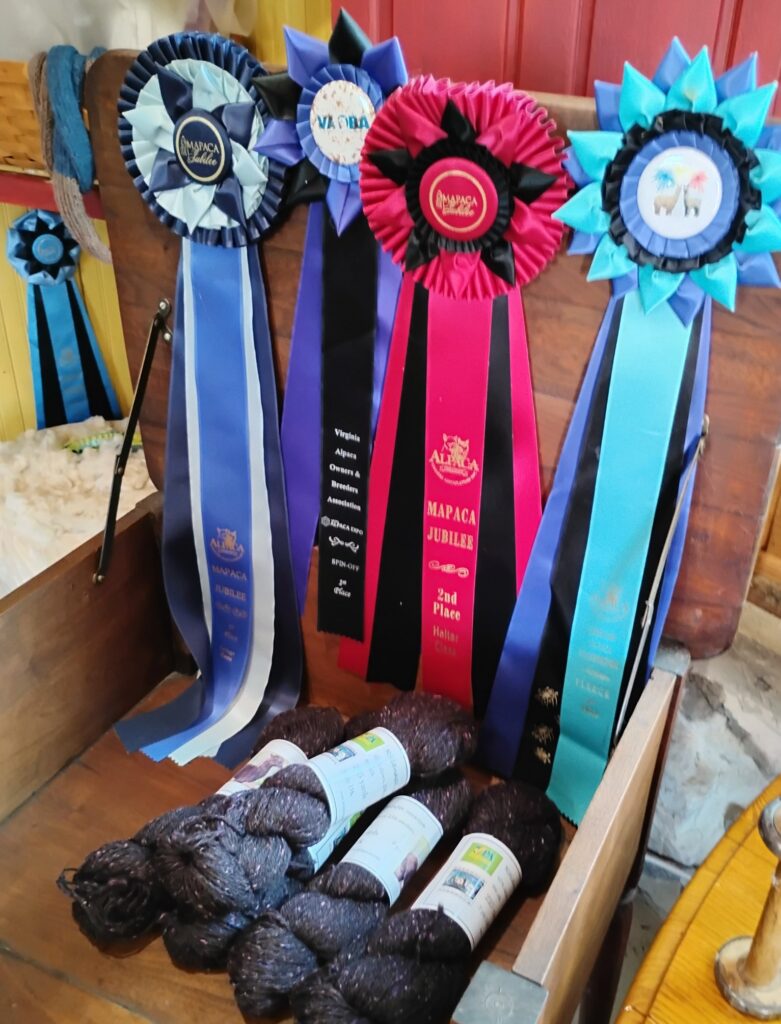
The farm offers 100% alpaca yarn and yarn blends. Harkening to Kathy’s library career, the Browns also wrote a children’s book on alpacas, titled “The Alpaca-bet, ABC’s of Alpacas.”
The farm breeds and sells its alpacas, but always has yarn for sale. Spring is an active season, when the animals are shorn by professional shearers (they can finish their work in as little as 8 minutes), and afterward the fleece is sent to a local mill for processing into yarn. Spring is also when crias are born, and four babies are expected at Sugar Hollow in May 2026.
To date, the Browns run the enterprise themselves and have found a rhythm that allows them to sustain the business on a comfortable level. “We don’t want to work that hard,” Kathy said, reminding herself that the couple is retired.
Sugar Hollow alpacas have competed in shows and won numerous ribbons, but the Browns have scaled back on those competitions. Traveling stresses the animals, and they want to concentrate on producing yarn.
The couple’s long-term goal is to “Be here with the alpacas as long as we can.” Kathy concedes that their business is a “little eccentric,” but the Browns are clearly enjoying life at Sugar Hollow Farm. “It’s an adventure,” Kathy said.
The farm’s hosts welcome the community to their property to share their joy for these gentle South American mammals. “Come visit and learn about alpacas,” Jay Brown said. Explore the Browns’ unique enterprise further at: shfalpacas.com.