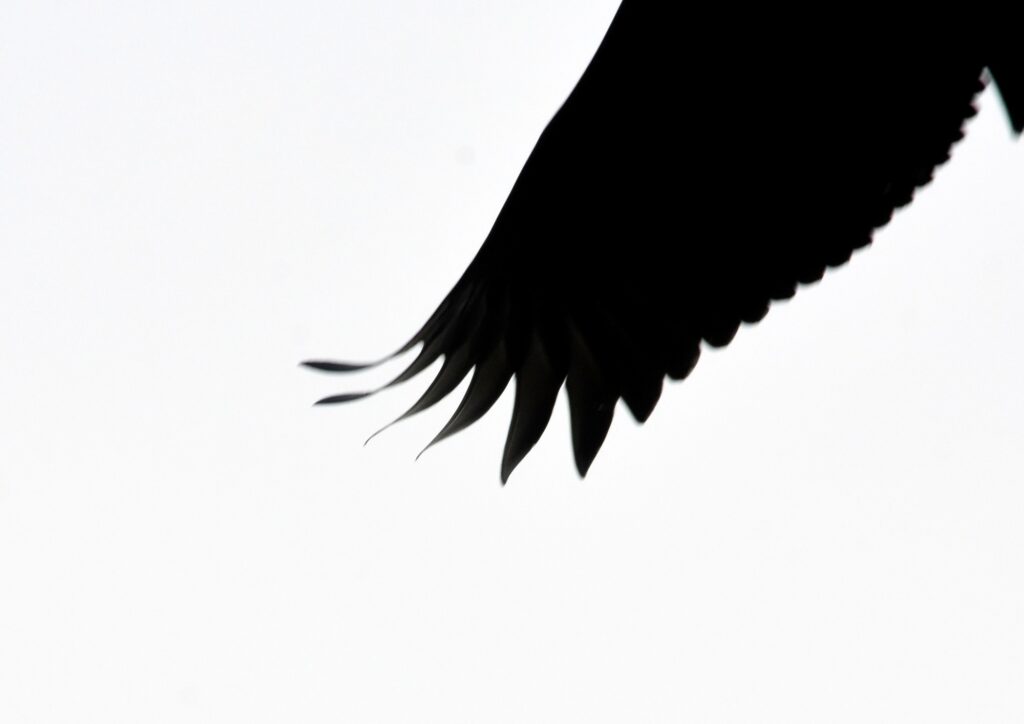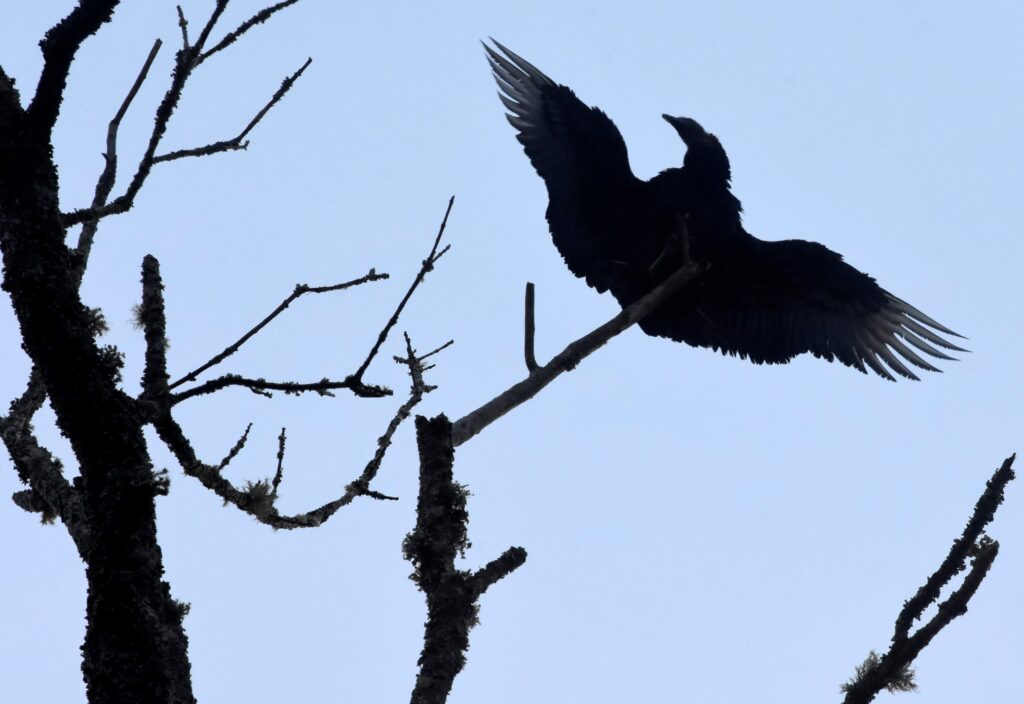
VULTURES: A GHOULISH REPUTATION, BUT THESE BIRDS PERFORM A VITAL ECOLOGICAL SERVICE
Article and Photographs By Robb Helfrick
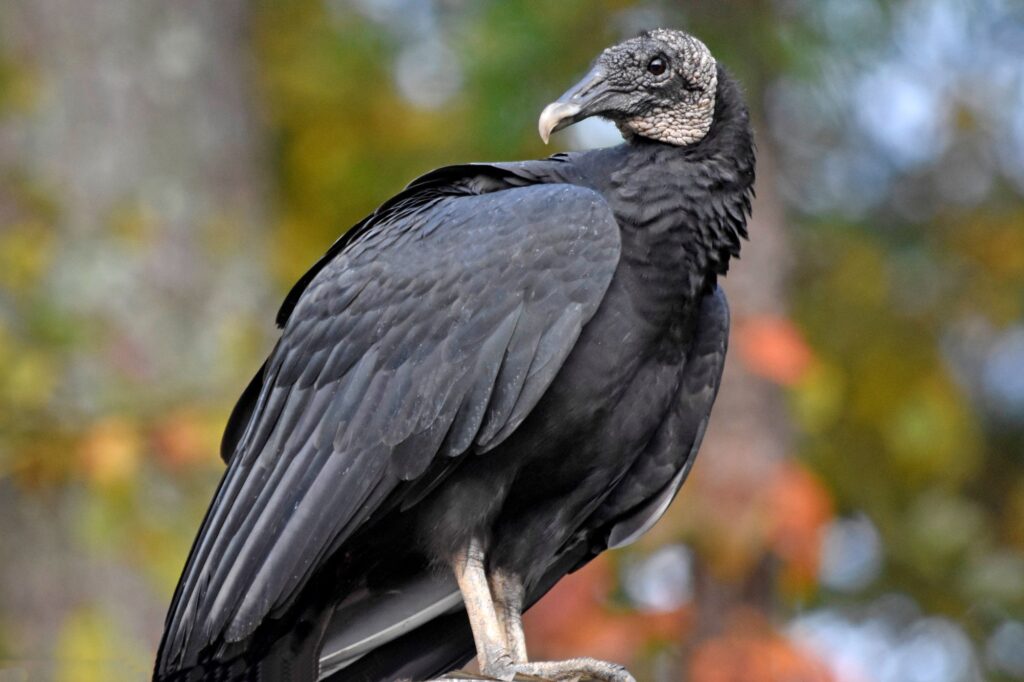
Halloween is an appropriate time of year to consider the vulture. These scavengers are the denizens of death. Vultures congregate on corpses and then dine on decay. They don’t require a costume as these black-colored birds appear spooky enough with their unfeathered skulls, hooked beak, and cold eyes.
In human culture, vultures can symbolize predatory and opportunistic traits. They are often associated with death, decay, doom, and disaster in modern literature and popular myth. This is a bird that circles overhead, searching for dead bodies.
When on the ground or perching overhead, vultures urinate on themselves to cool their bodies. This species is not one of nature’s most darling creatures.
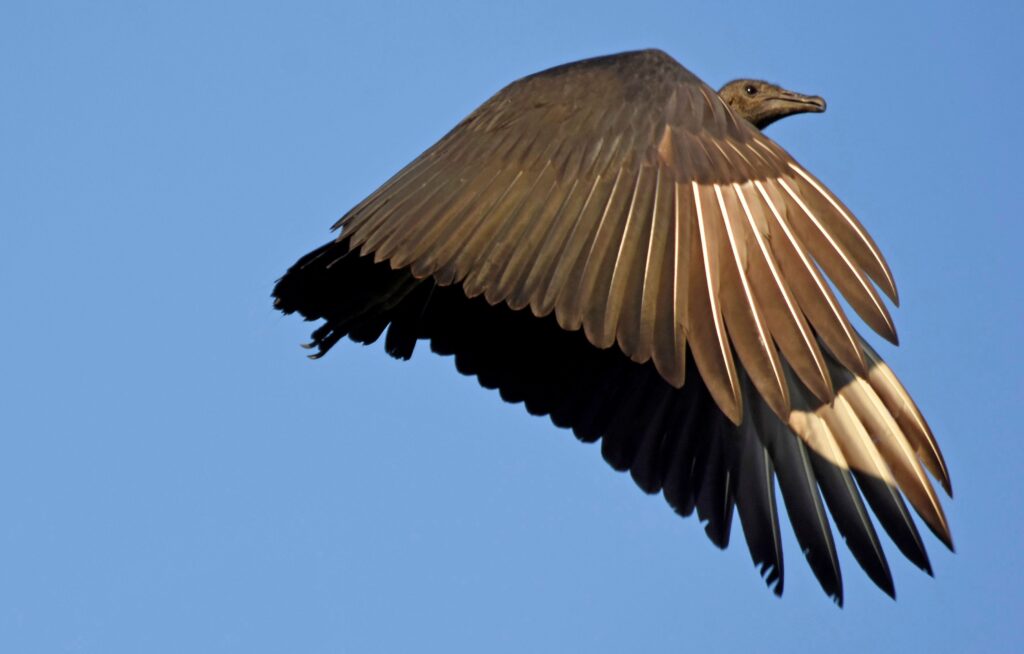
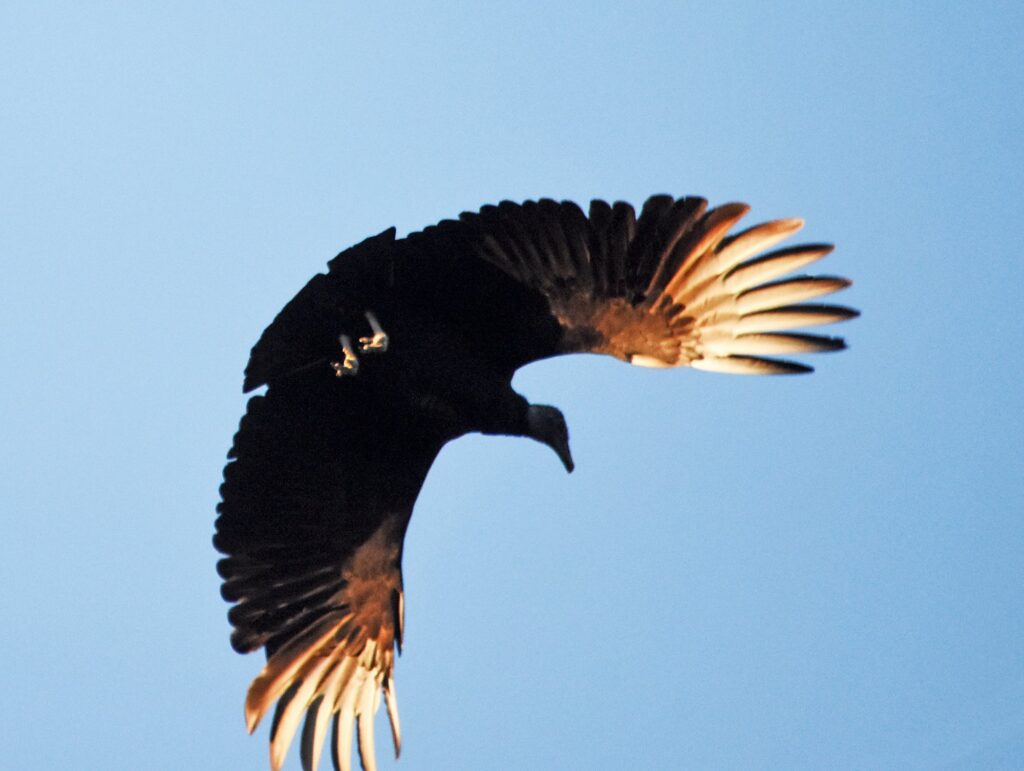
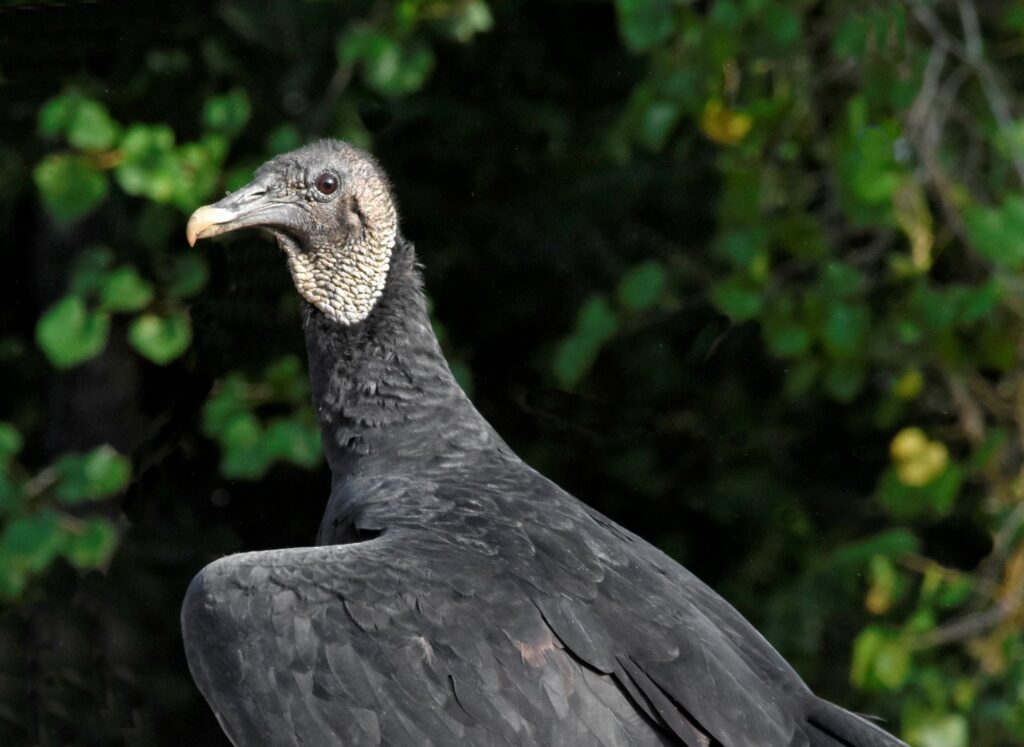
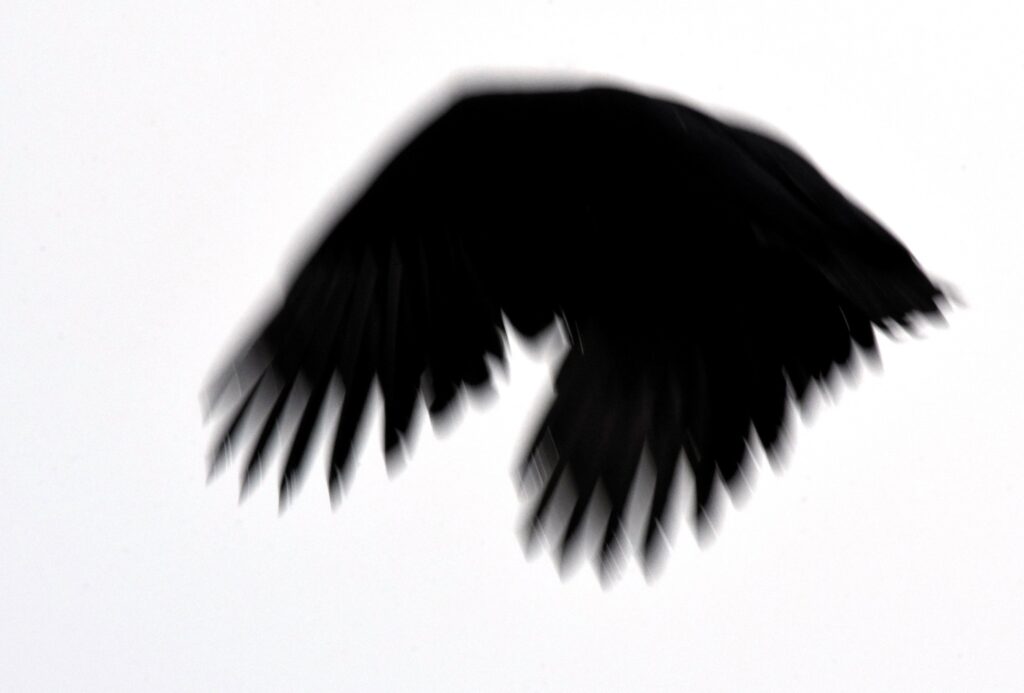
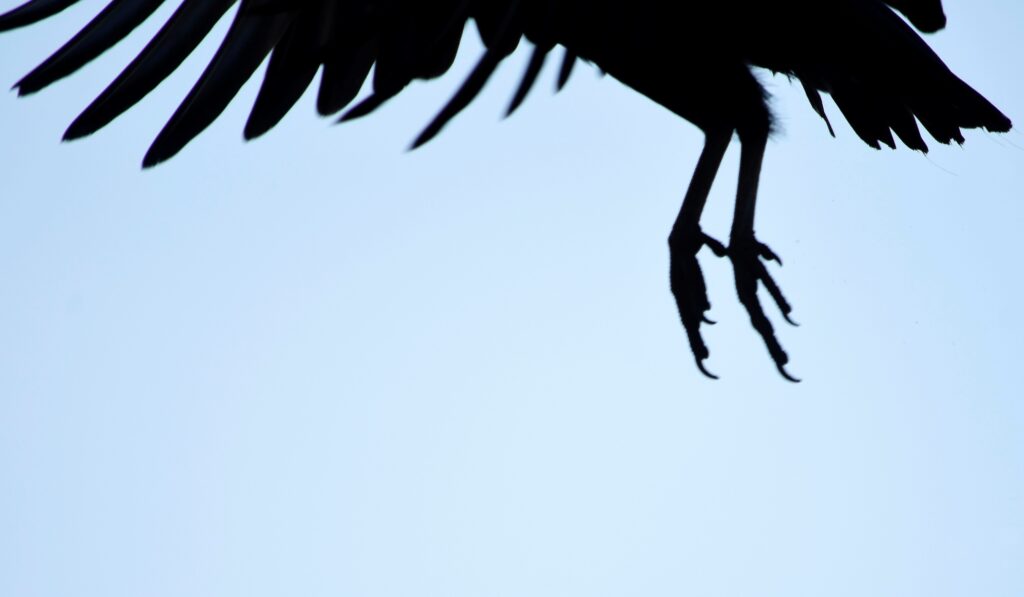
However, despite their gruesome diet, nasty hygiene, and scary appearance, vultures exhibit many fascinating characteristics. Watching them soar overhead on thermals (which they seem to enjoy immensely on the windiest of days) is a treat, as this species has up to a 5-foot wingspan.
Throughout the world, 23 species of vultures exist (which includes condors) and seven make their home in the America’s. In the local area, black vultures and turkey vultures, often referred to as “buzzards,” are common sights.
Vultures have a unique and powerful digestion system, which allows them to eat the worst cuisine nature has to offer. The bird relies on extremely corrosive stomach acid to consume putrid carcasses that are often infected with various toxins and bacteria (such as anthrax and hog cholera) that would kill other scavengers. Vultures play a crucial role in maintaining ecosystem health.
Vultures have a certain decorum, as they rarely attack healthy animals; they simply wait for a life to end. Then, using keen vision and possibly some auditory signals, they locate and assemble on a corpse. A group of feeding vultures is appropriately called a “wake.”
Sometimes, vultures will wait for larger scavengers to feed on a thick hide that their beak cannot break open. In other instances, they will challenge larger competitors for a seat at the dour dinner table. To add to their allure, vultures often vomit when approached or threatened, but this practice doesn’t include projectile vomiting, as rumored by sources.
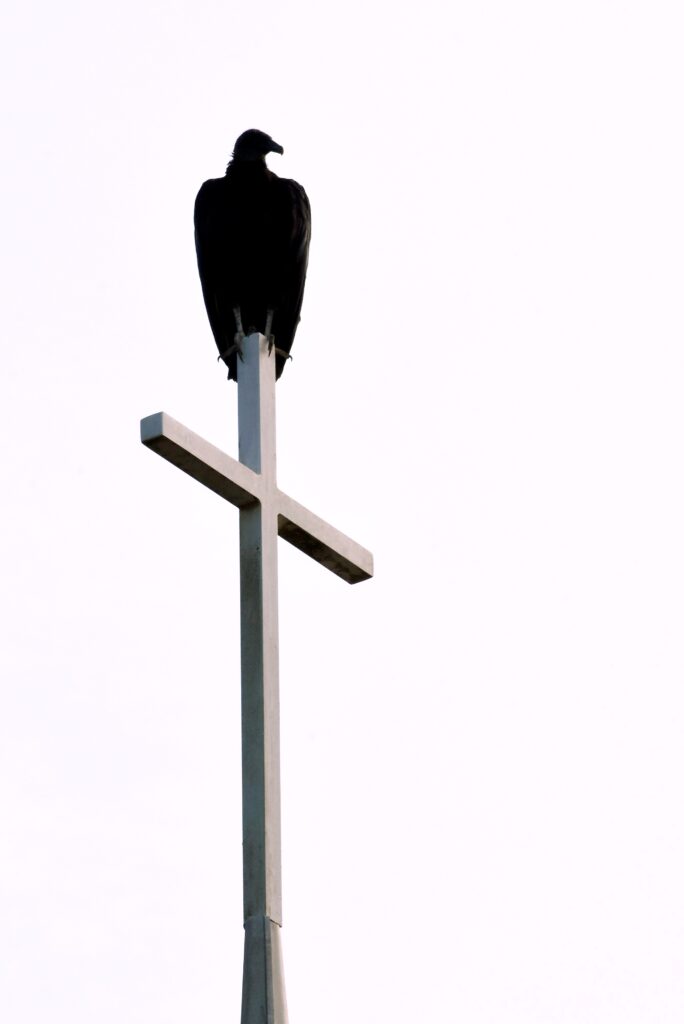
Vultures are social raptors that often congregate in communal roosts on power lines or anywhere with a lofty view. They aren’t picky about where they perch and are often seen on church steeples. When not feeding, a group of roosting vultures is called a “committee,” and a flying squadron is called a “kettle.”
Unlike crows and ravens, two squawking Halloween-themed black birds, vultures cannot sing. They lack a syrinx, the vocal organ that songbirds possess. However, vultures will hiss and grunt if agitated or fighting for food.
Vultures are hearty creatures, and can live up to 30 years in the wild. Their continued longevity is threatened by habitat destruction, poisoning, and hunting.
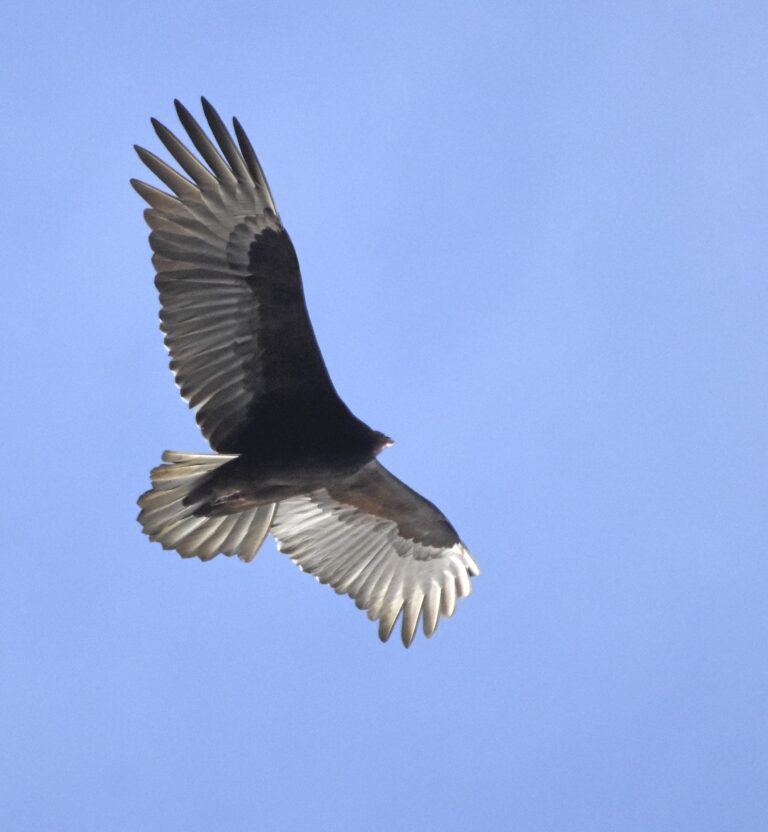
Despite their association with death and dreadful appearance, some cultures actually celebrate the vulture. They consider it a guardian being that guides souls into the spirit world, acting as a symbol of renewal and rebirth.
By performing their primary task, vultures are nature’s avian recyclers. They provide a vital ecological service by removing carcasses containing harmful bacteria that would otherwise become breeding grounds for diseases.
Vultures are a unique bird species that deserve a better reputation. They are often shamed by unfair comparisons to despicable human traits. Vultures are simply performing a gory, yet vital task that nature designed them to do.