Ian Dawson delivered an interesting lecture on Waynesboro industry titan Peter Geiser
By The Daily Boro Staff
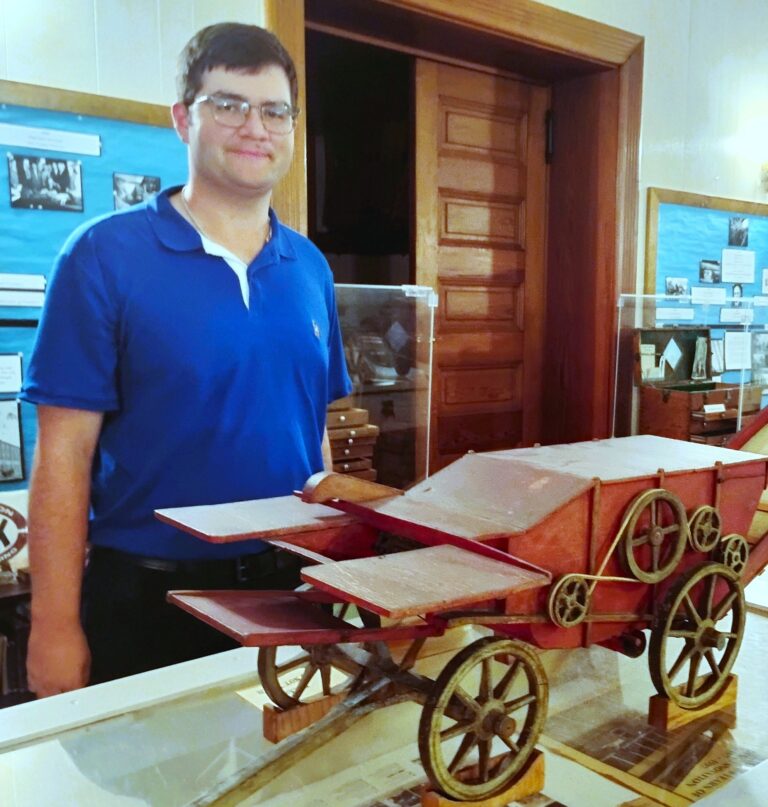
Peter Geiser helped revolutionize threshing equipment, making 19th-century farmers more productive while creating a Waynesboro industry giant. Ian Dawson presented a lecture on Geiser’s life on September 17. The Waynesboro Historical Society sponsored the talk, and the Waynesboro Industrial Museum hosted the event.
Dawson is a Smithsburg Historical Society board member and grew up in the area. “I’ve always been interested in history,” Ian said after the presentation. The 21-year-old spent 6 months researching Geiser and has a personal connection to the inventor’s early life.
Peter Geiser was born on a Smithsburg farm 200 years ago, and Dawson traced his origins, describing a child who tinkered with woodworking. However, young Geiser’s main responsibility was doing farm chores. He grew frustrated with the mundane methods of 1830s threshing, which included leading a horse in an endless circle to trample and separate grain.
With an inventor’s mindset, Peter decided to create a mechanical method to thresh grain. Dawson’s talk guided the audience through a series of events (including his education and apprenticeships) that led Geiser to achieve a patent for his grain separator design in 1852.
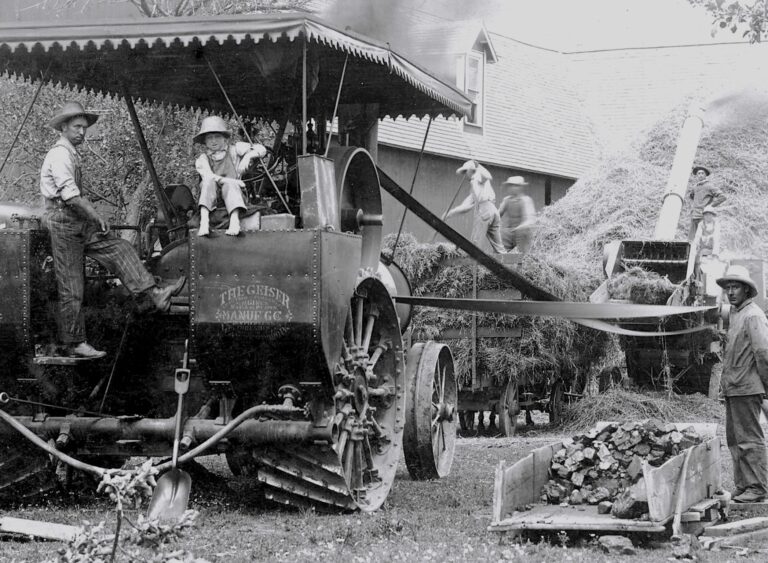
Geiser’s business development proved to be challenging, but with help from his brother Daniel, the enterprise grew steadily after the Civil War. Geiser was committed to quality products. “The first thresher worked wonders,” Geiser recalled in his memoir, but he made continuous improvements to the grain separator. As business prospered, Geiser opened a facility in Waynesboro.
Dawson’s lecture highlighted how Geiser partnered with three other talented men- George Frick and the Landis Brothers (who first came to Waynesboro to work for Geiser)- and they all became local industry titans.
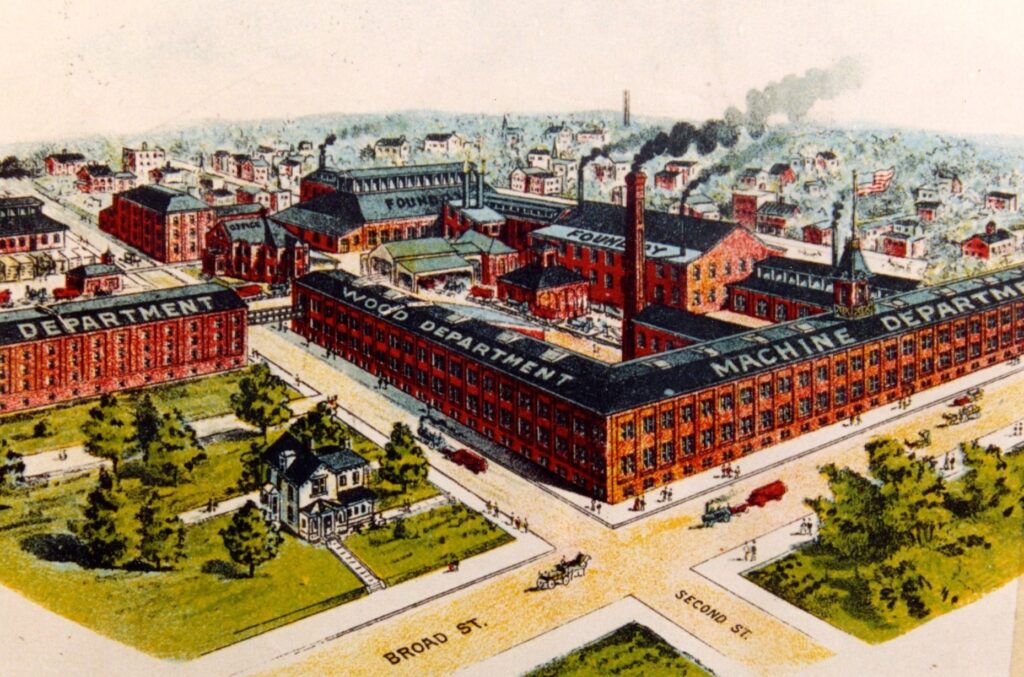
Geiser’s persistence led to a centralized manufacturing facility and his first assembly line in Waynesboro. “Geiser wanted to have a system where the right man at the right time combined with the right materials at the right place,” Dawson related.
Geiser called the assembly process “The Train,” and by 1869 they sold 400 machines annually. Dawson’s thorough presentation showed photographs of Geiser’s first Waynesboro facility, described the assembly process, and explained how the machines worked.
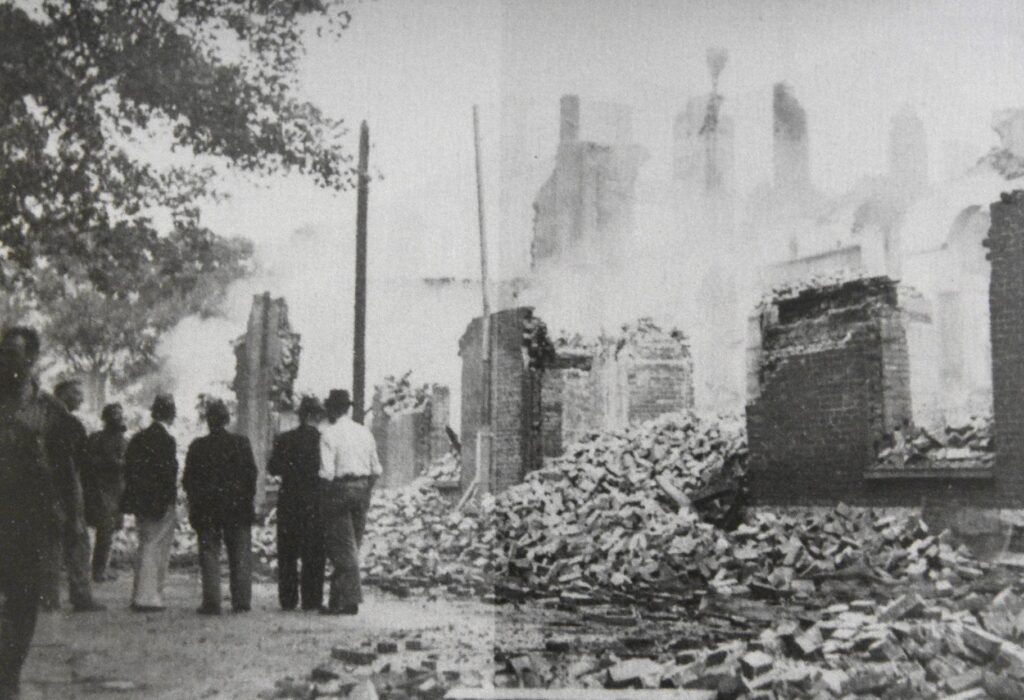
Even after Geiser Manufacturing achieved market share and industry success, they faced challenges. On April 29, 1882, a boiler exploded, and the resulting fire destroyed the Geiser plant. Undaunted, the company quickly set up a temporary plant, then built a new brick facility that occupied an entire Waynesboro city block.
Daniel Geiser died that same year, and Peter went on to achieve greater success. His company mastered other products, including portable saw mills, and built a railroad spur to help ship its threshing machines. Dawson said the company delivered products to customers as far away as Turkey.
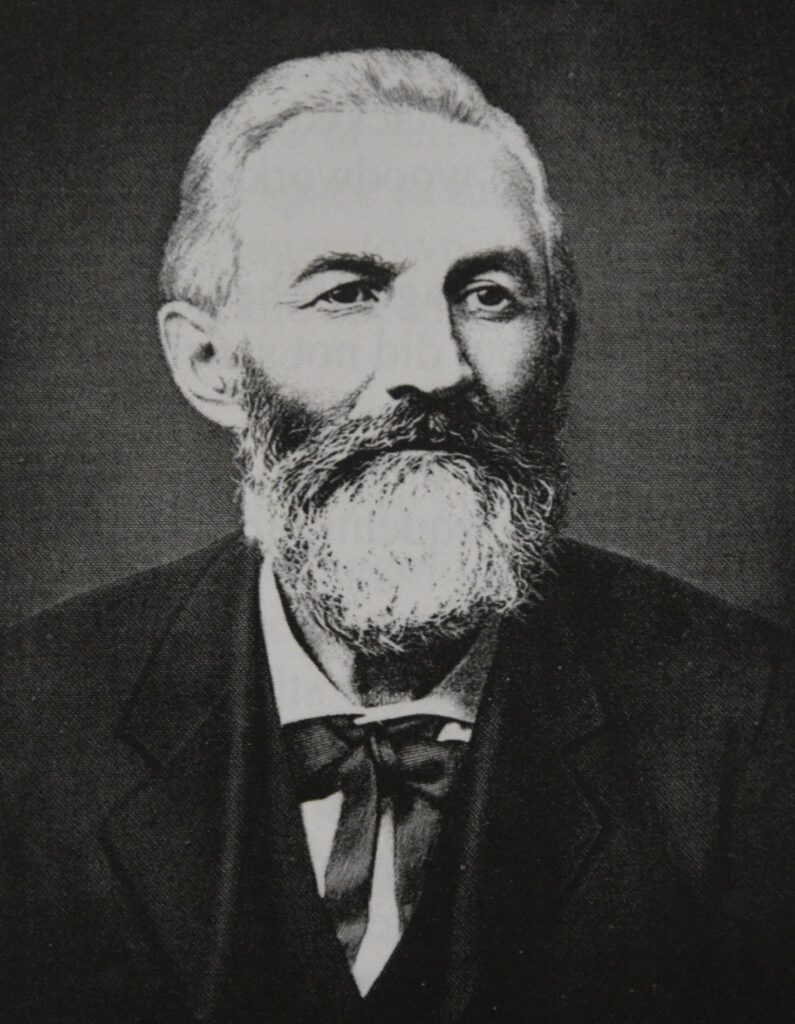
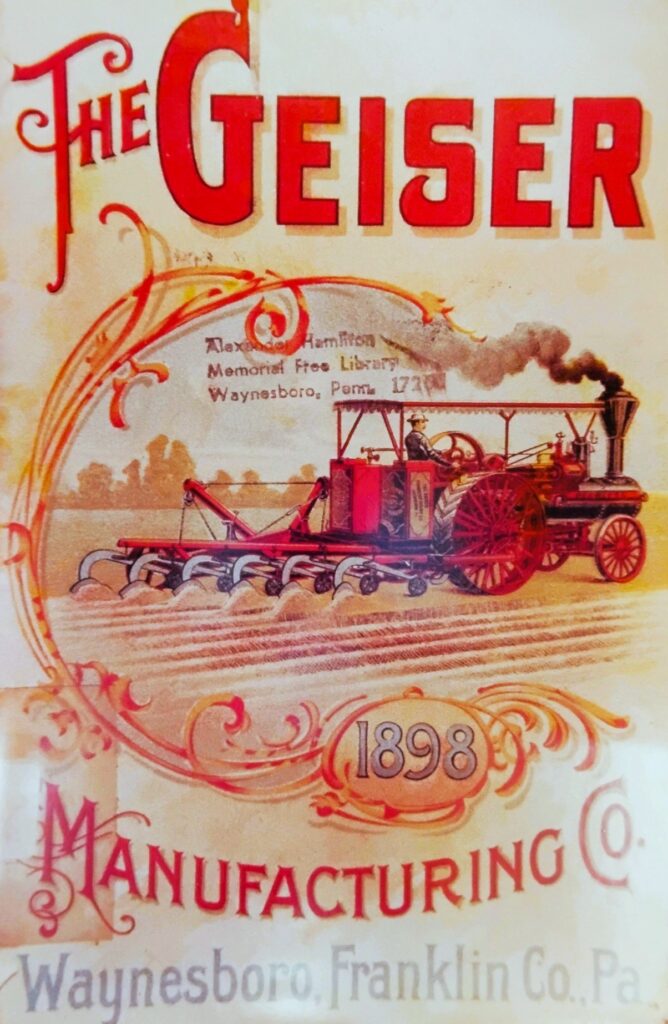
Peter Geiser died in 1901, but the company he created flourished for another decade before starting its eventual decline and downfall.
As steam power gave way to gas and diesel engines, rival industry player Emerson Brantingham bought Geiser in 1912. Dawson pointed out that “E-B” bought the Waynesboro firm more to eliminate a competitor than to build its business. “Unfortunately, the interest in the Geiser brand declined,” Dawson said.
In 1926, Mark Landis, son of industry titan Frank Landis, bought Geiser (with other investors) and tried to revive the company. They hoped local control would restore Geiser to its former glory, but those aspirations went unfulfilled. “The stock market crash of 1929 was too much for the company,” Dawson said, “and in 1936 Geiser went into bankruptcy proceedings.”
Dawson pointed out that Geiser machines were so reliable that people didn’t buy replacements during the Great Depression. After the company went out of business, a second plant fire in 1940 ended the Geiser era in Waynesboro. Dawson described the company’s dramatic exit: “The flames were so massive that they could be seen from McConnellsburg mountain 40 miles away.”
Summing up the Geiser story, Dawson added a postscript. He showed photographs of two Waynesboro Geiser buildings on Second and Walnut Streets that survived to the present day. He also showed aerial images of Geiser’s former Smithsburg property, now home to the Whispering Hills subdivision, which is where Dawson currently lives.
The enthusiastic Industrial Museum audience and Waynesboro Historical Society host, Sheila Eyler, thanked Dawson for his presentation. Everyone in attendance appreciated the research that the young historian had put into the program. Dawson hasn’t selected a future project yet, but his work on Peter Geiser’s life was an impressive first foray into local history.