REMEMBERING PEN-MAR WHISKEY
By Robb Helfrick
In the earliest days of Pennsylvania’s statehood, whiskey served as more than adult refreshment. The drink’s cultural and economic impact was enormous, and in some instances, whiskey was used like currency, a form of liquid gold.
During the state’s early history, Pennsylvania became the nation’s largest producer of an alcoholic spirit known for a popular variety: rye whiskey. When distillers were later faced with threats to their traditions and livelihoods, one sentiment was certain. Whiskey was worthy of a fight.
The United States levied a whiskey tax in 1791. A heavier burden of that tariff fell on smaller producers, and after several years of the government’s hand in their coffers, distillers in western Pennsylvania were furious. Five hundred armed men attacked a tax collector’s home. Many others refused to pay taxes due.
President George Washington took to the saddle and commanded a force of 12,000 soldiers to quash the 1794 Whiskey Rebellion. Washington passed through Franklin County during his transit west.
After the Civil War, tempers cooled, and Pennsylvania’s distilling industry gathered momentum. Franklin County farmers owned an abundance of whiskey-making’s two most important ingredients: surplus grain and a pure water supply from crystal-clear streams. In Rouzerville and Midvale, several springs were tapped, those waters said to contain sweet-tasting minerals.
In 1888, Joseph C. Clugston, an enterprising man with experience as a merchant, miller, and newspaper owner, leased Shockey’s Distillery. The enterprise harvested water from a local source called Indian Spring.
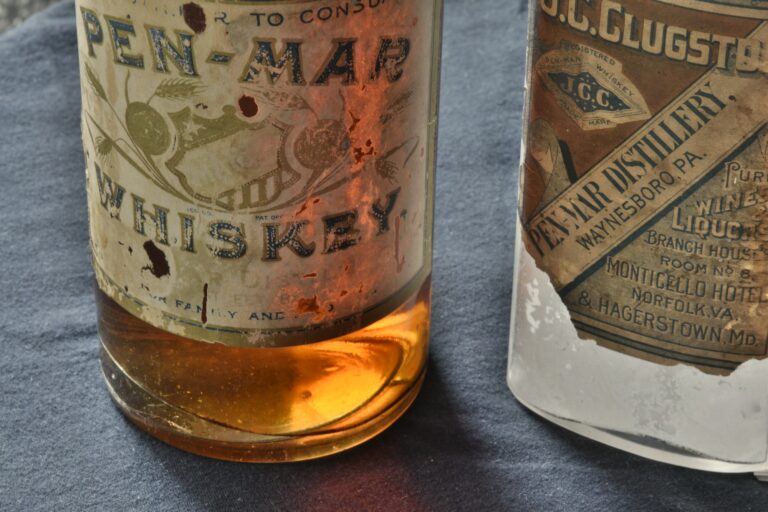
Clugston put a more ambitious plan in motion by 1891, opening a retail package store in Waynesboro and buying a nearby sawmill and warehouse on Cleveland Avenue as a base for his new operation. Ads for his store said: “If you want Pure Rye Double Copper Distilled Hop Yeast Whiskey (pure and unadulterated), call at my new liquor store on West Main Street.” His premium rye whiskey sold for $2.50 a gallon. Soon after, Clugston established other retail outlets in Hagerstown, Baltimore, and Norfolk, Virginia.
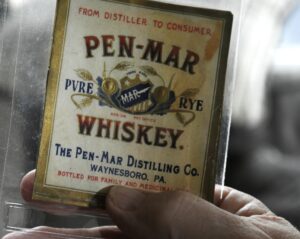
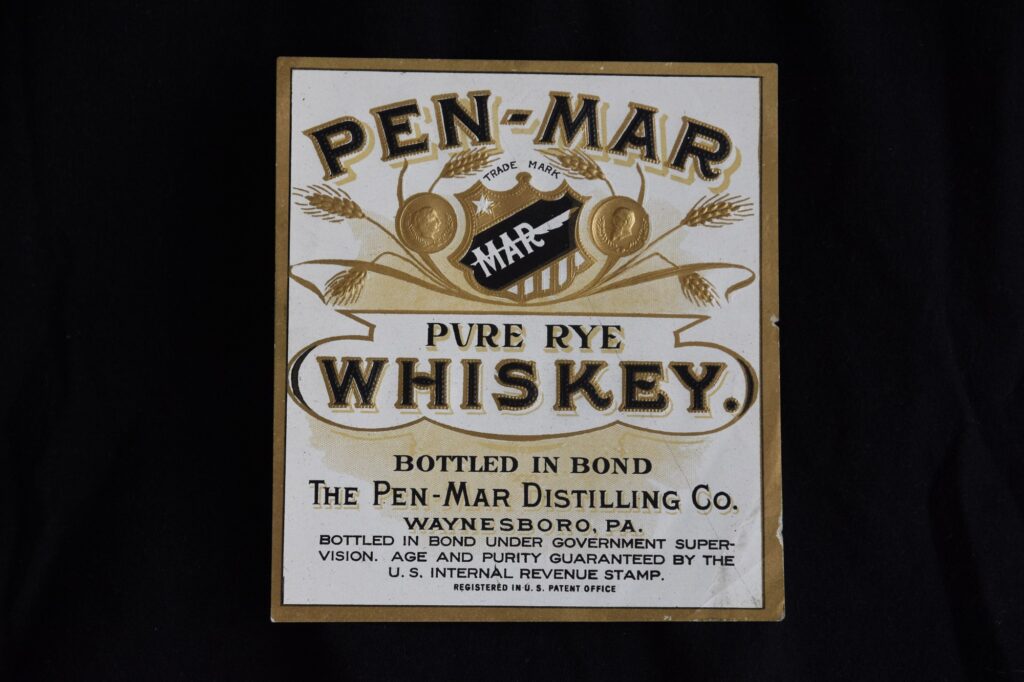
He called his new brand Pen-Mar Pure Rye Whiskey. Clugston may have piggybacked on the popularity of the nearby Pen Mar Park name. The scenic mountain attraction opened a few years earlier, and many rustic inns surrounded the park. The spirits and hospitality industries were closely linked, and Clugston later purchased Waynesboro’s Washington Hotel in 1896.
Clugston customized his new distilling property for optimum efficiency. He installed a new cleaning apparatus that scoured grain to remove impurities. Clugston owned a cooper shop and produced custom whiskey barrels.
At his warehouse, a large steam-powered racking system maintained internal temperature at a toasty 90 degrees. This allowed his product to fully mature in two years.
Clugston was also diligent in keeping his stock plentiful, ready for shipment via a nearby railroad. In 1897, he was the first southern Pennsylvania distiller to bottle and distribute bonded spirits. After years of hard work, Pen-Mar Whiskey became the largest distillery in Franklin County.
When the 20th century began, Clugston suffered a reversal of fortune. First, he was attacked by two employees, who were arrested and punished, but the episode left Clugston shaken. Shortly after the criminal trial, he transferred company ownership to his children.
Fortunately, his family was prepared to take the helm. A short time later, Clugston suffered another setback when his gangrenous left foot was amputated. A chronic illness associated with that incident led to further decline. Joseph Clugston died in 1905.
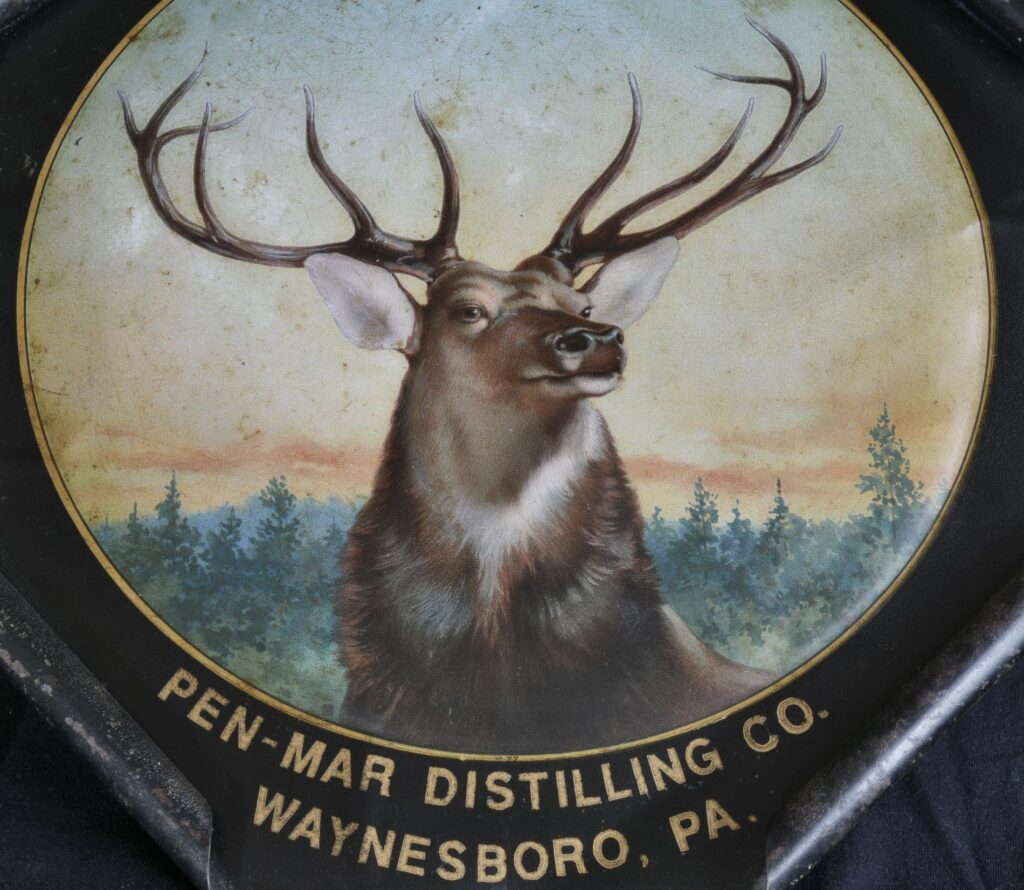
Under the leadership of Clugston’s sons, Frank and John, Pen Mar Distilling grew and prospered. In 1907, the company achieved the highest production output in its history. Their rye whiskey received many accolades for its smooth taste and consistent quality. Pen-Mar Whiskey’s future seemed bright.
However, a storm brewed on the horizon: the temperance movement. The push to limit alcohol consumption began many years earlier, first with pleas for moderation during the 1830s. Teetotalism was later advocated by many religious sects. The Anti-Saloon League was formed in 1893, and by 1900, an estimated one-tenth of Americans signed a pledge to abstain from alcohol.
In the 1910s, a Constitutional movement gained unstoppable momentum. The 18th Amendment was ratified in 1920. 46 of 48 states passed the Amendment (Rhode Island and Connecticut were the only two ‘wet’ holdouts).
Perhaps as a defiant nod to the 1794 rebellion, Pennsylvania was the 45th (and next to last) state to ratify the 18th Amendment. That new law banned the manufacture, sale, and distribution of alcoholic beverages. Prohibition had begun.
With the stroke of a legislative pen, distilleries big and small were rendered illegal. The Pen Mar Distilling Company was forced out of business. An entire thriving industry vanished almost overnight. One loophole in the new law allowed alcohol sales for ‘medicinal purposes,’ but that kept only a few well-connected businesses afloat.
Thirteen years passed before Congress reversed Prohibition. Widespread bootlegging and organized crime had made the statute unenforceable. The 21st Amendment reestablished American industry’s right to distill and sell alcohol. Whiskey was back in business.
However, when legal production restarted in 1933, rye whiskey fell out of favor, and bourbon became the spirit of choice, with Kentucky filling that market niche. Most small distilleries never returned, leaving production to major manufacturers.
The memory of Pennsylvania’s local whiskey distillers seemed destined for obscurity, with Pen-Mar Whiskey another forgotten relic from a bygone era.
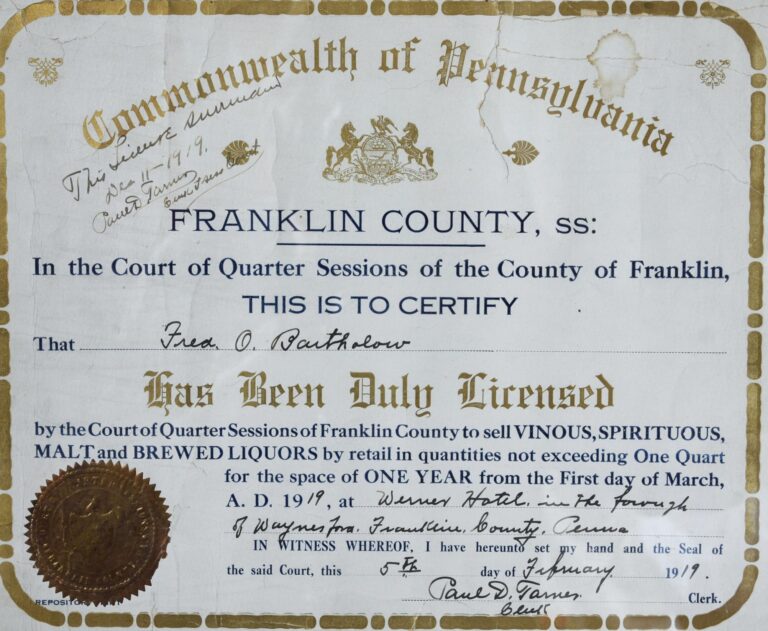
However, the late Wayne Bartholow was a man who helped rejuvenate the memory of Pen-Mar Whiskey. Bartholow was a Waynesboro native who crafted a successful banking career. He also played tuba in the Wayne Band. Wayne was also an avid collector.
His paternal grandfather, Fred, worked in the hospitality business and bartended at local Waynesboro hotels. Fred saved a few keepsakes from his shifts, including bottles of Pen-Mar Whiskey. After he died, some of his souvenirs passed into Wayne’s care.
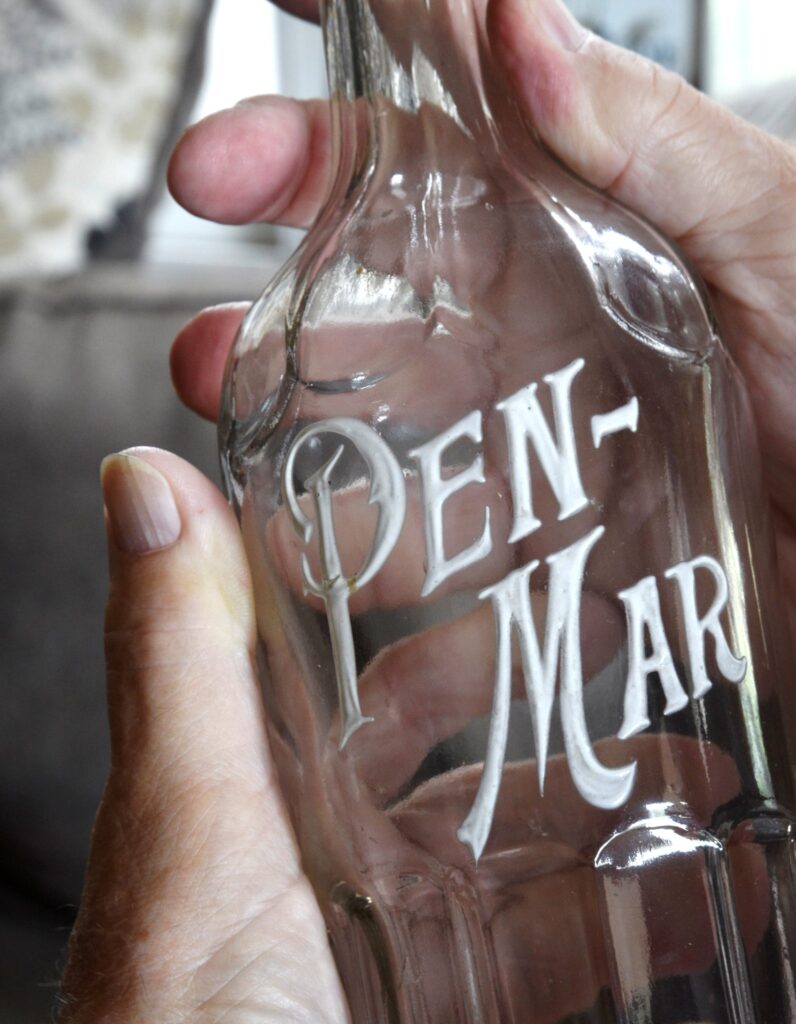
Wayne was curious about the Pen-Mar brand and started researching. His fascination grew, and over many years, he collected a treasure trove of historic artifacts. Wayne owned obvious relics, whiskey bottles, and shot glasses, but also saved a liquor license issued to his grandfather in 1919 and a custom clock with the Pen-Mar logo. Barthalow gave presentations to groups and led local field trips to old distillery sites, teaching a new audience about Pen-Mar’s history.
Today, more than 50 new distilleries have appeared throughout Pennsylvania, offering their unique spirits to a growing legion of fans. One website that offers suggestions for exploration is: padistillersguild.com.
Franklin County’s only operating distillery is Cold Spring Hollow in Mercersburg (coldspringhollowdistillery.com, 717-498-0770). Inspired by local traditions, they create handcrafted whiskeys, bourbons, and other spirits.
The days of local rebellions and national prohibition are over, and the Keystone State appears poised to reclaim its distillery glory days. By tapping into an eventful history, modern spirit-makers continue to quench the thirsts of Pennsylvania whiskey drinkers.