THE LIBERTY BELL PASSED THROUGH THE CUMBERLAND VALLEY DURING A 1902 RAILWAY TOUR
By Robb Helfrick
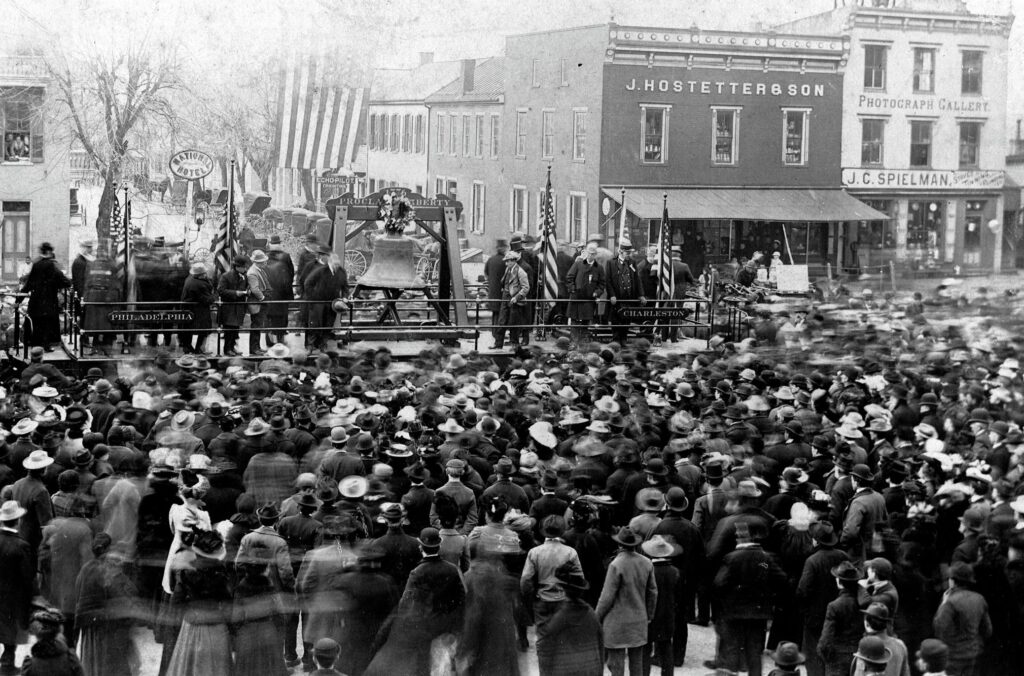
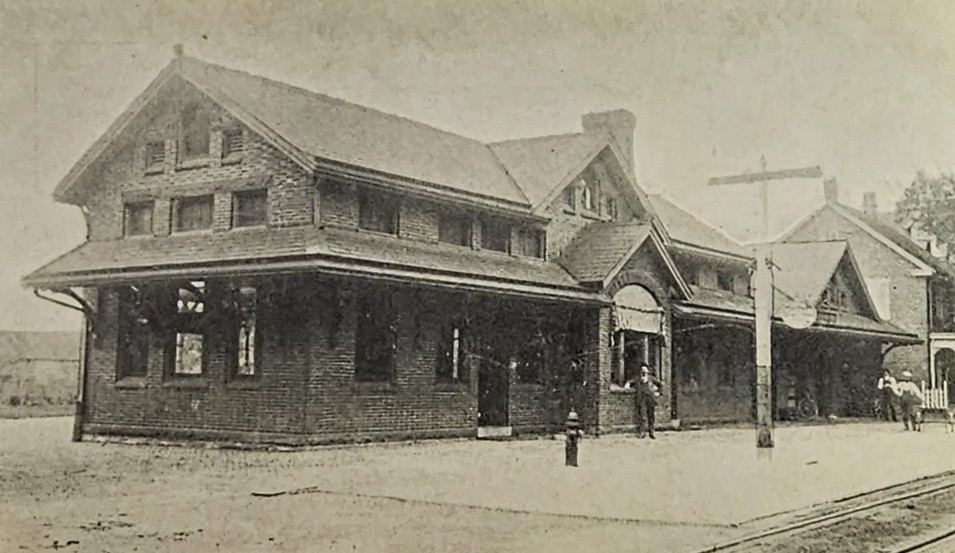
An epic event created vivid memories for Cumberland Valley citizens during the winter of 1902. Franklin County citizens gathered by the railroad tracks to witness history when the Liberty Bell made two whistle stops on January 6th.
The Liberty Bell is an American icon. Throughout its 273-year existence, the bell has chimed a resounding patriotic tone, survived guarded secrecy, been rendered silent, and spurred enduring myths. The Liberty Bell symbolizes America’s success story, but its history contains other fascinating aspects. An unforgettable chapter in this famous bell’s story played out on January 6, 1902, as it passed through Greencastle.
Originally called the State House bell, the Pennsylvania Assembly commissioned the object in 1751. Speaker Isaac Norris ordered it from London’s Whitechapel Foundry. Norris also picked the bell’s inscription: “Proclaim Liberty Throughout All The Land Unto All the Inhabitants Thereof.”
The bell arrived in Philadelphia in August 1752. Its original purpose was to summon lawmakers to the State House building (now known as Independence Hall) and alert local citizens about the latest news. The bell weighed 2080 pounds, measured a twelve-foot circumference at the lip, and stood about four feet tall. The brass bell was 70% copper and 25% tin and also contained trace elements of gold, silver, and zinc in its metallurgical makeup.
Two decades later, despite the popular myth, no evidence exists that the future Liberty Bell rang in Philadelphia on July 4, 1776, when the founding fathers announced the Declaration of Independence.
The State House bell took its first road trip during the Revolutionary War. Pennsylvania authorities worried that invading British armies might melt down the metal bell for munitions, and they secretly hid it in Allentown, Pennsylvania, in 1777. At the Zion Reformed Church, the bell’s protectors concealed the bell in the basement until danger passed.
The bell returned home a year later, and during the next seven decades, it performed its patriotic duty by ringing regular announcements and tolling to mourn the notable deaths of American heroes Washington, Franklin, and Jefferson.
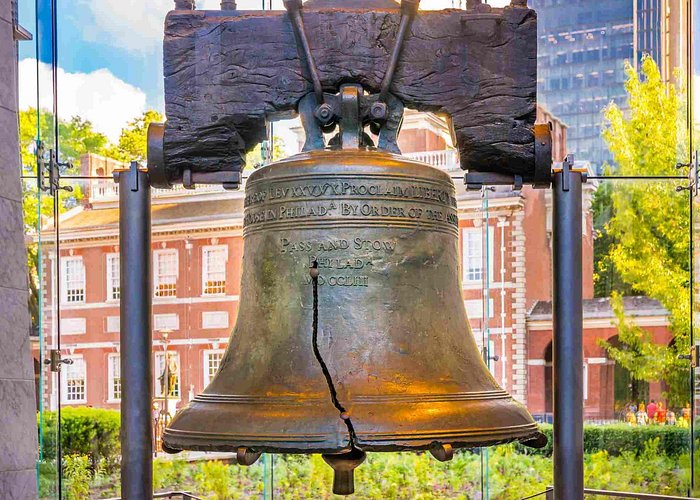
Sometime around 1846, a zigzag crack formed on the hard-working bell. Historians dispute the cause and exact date of this fracture. After this damage, workmen attempted to repair the bell by widening the crack to prevent further spread. This method failed, silencing the famous bell forever. Authorities commissioned another State House bell, placed the now-known Old State House Bell into storage, and later exhibited it only for special occasions.
But as the failed bell faded into retirement, a remarkable reputation developed. An abolitionist newspaper noted the bell’s inscription, which proclaimed liberty to all American inhabitants. Written in an 1837 article, the bell was first called “Liberty Bell,” not in celebration but to protest slavery. In future years, 20th-century Suffragettes and others seeking Civil Rights followed this example. The Liberty Bell not only became an icon of America’s past, but it also symbolized what the nation could attain in its future.
As Americans celebrated their centennial in 1876, the Liberty Bell served as a symbolic centerpiece. After the United States reunited following a devastating Civil War, the newly famous but silent bell was a fitting metaphor for the country it once served, damaged but still intact.
With its growing symbolism, distant Americans wanted to see the bell firsthand, but trips during that era were measured in weeks, not days. If Americans lived too far from the Liberty Bell’s Philadelphia home, maybe the relic would come to visit them. In 1902, that wish came true for Franklin County.
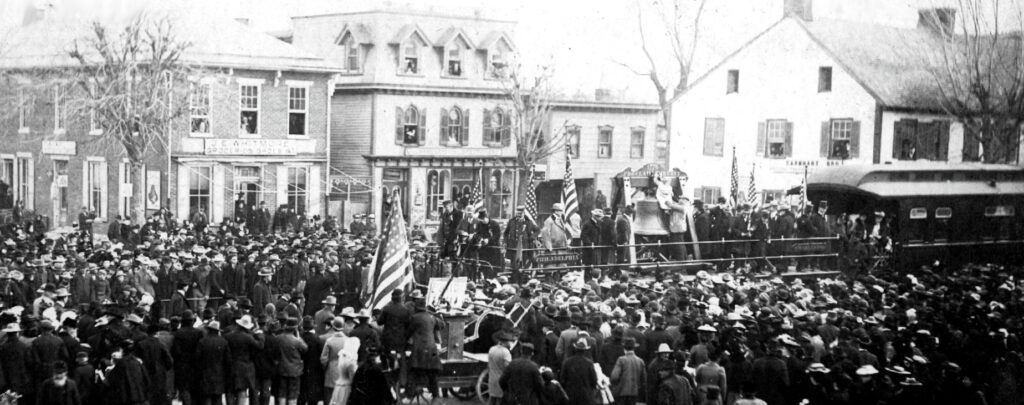
On January 4, the bell left Philadelphia, protected by four muscular policemen and accompanied by onboard dignitaries. Six Pullman cars sat in front of an open railcar that carried the prized cargo. The train’s destination was Charleston, South Carolina, where the bell would serve as the grand showpiece at an exposition.
After arriving in Harrisburg, engineers switched the specialty railroad cars to the Cumberland Valley Railroad tracks and headed southwest. Later that afternoon, at 2:05 pm, the train made a scheduled stop in Chambersburg. An estimated 4,000 people attended the bell’s ceremonial pause, jostling for the best view of the famous bronze icon. Chambersburg’s Mayor welcomed Philadelphia’s Mayor to Franklin County. The seven-car train maintained a strict schedule and left 25 minutes later.
The Liberty Bell arrived in Greencastle at 2:50 pm. A joyful scene developed in the town’s square as residents flocked to welcome the train, dubbed the Liberty Bell Special. Railroad tracks came directly down Carlisle Street through Greencastle’s central diamond during that era. Many citizens peered out of upstairs windows, and others watched from rooftops. Local leaders selected a young girl from the crowd and hoisted her to the train’s open platform, where they photographed her next to the famous bronze bell.
A local newspaper described the momentous event: “For the first time in history, the famous Liberty Bell, which announced to the world the citizens of the thirteen states had declared themselves free and independent of any government but their own, was seen in the Cumberland Valley.”
The Liberty Bell traveled to Boston in 1903 and to St. Louis the following year. The icon embarked on its most ambitious over-rail journey in 1915, a 10,000-mile round-trip to San Francisco. Handlers placed custom springs under the bell’s platform to cushion the fragile relic.
After 1915, the Liberty Bell stayed in Philadelphia, never to ride the rails again. It made five public appearances- three times to celebrate local festivities and twice when moving to a new home. An updated pavilion housed it in the 1976 bicentennial year. A modern structure called the Liberty Bell Center, dedicated in 2003, now showcases and protects the famed object. Today, over a million visitors make a pilgrimage each year. Hand-touching of the delicate bell, once common on its whirlwind touring trips, is now wisely forbidden.
The Liberty Bell is firmly established as an American symbol. The prized object survived tumultuous times as a tolling bell and as a priceless yet flawed artifact. The Liberty Bell created a slice of local history during its American journey, making memorable stops in Franklin County.