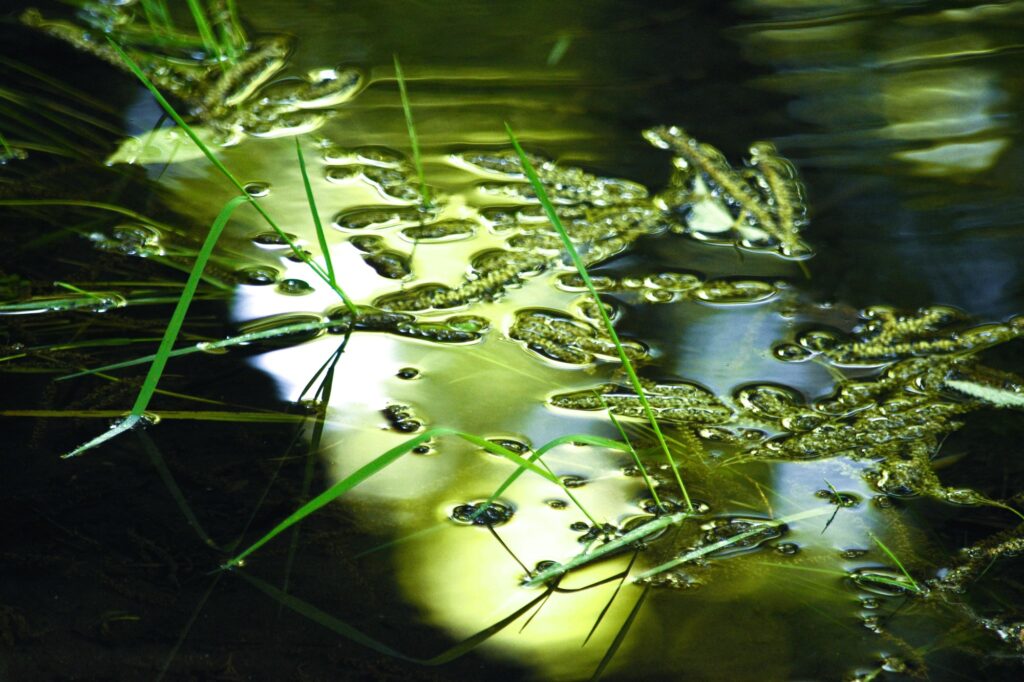
EBBERT SPRING ARCHAEOLOGICAL PARK: LAND OF MAGICAL WATERS
Article and photographs by Robb Helfrick
When archeologists search for hidden truths in ancient landscapes, they often begin near a vital natural feature: water. Aquatic sources serve as liquid gold, fostering the development and survival of plant and animal species. Ebbert Spring is one of these special resources.
At Franklin County’s Ebbert Spring Archaeological Preserve and Heritage Park, potential answers to fascinating mysteries are explored and shared through a unique collaboration. Every ceramic shard or purposely carved stone tool found near this watery location is a tantalizing piece in an intricate puzzle. These artifacts help explain the origins of human civilizations and how they later evolved.
Ebbert Spring flows continuously in Antrim Township, a short distance south of Greencastle. The archaeological park bearing its name was formally opened in 2019, but the lasting significance of this pure water source traces back to humans’ earliest societies. Through a combination of a leading archaeological organization, a curious property owner, and a prominent historic group, the legacy of Ebbert Spring’s landscape is now preserved in perpetuity. It is a story of local history that dates back more than 10,000 years.
Entering this park by a lovely tree-lined lane, human habitation is first evident as a handsome stone house comes into view. But traveling down this man-made pathway is also a journey into an ancient past. For the road also leads to the central feature that made this land tremendously valuable to native species of flora and fauna- it travels to a place where spring water magically emerges from a secret underground world.
The natural geology of local karst landscapes is defined by underlying layers of limestone that are penetrated by water. The porous condition leads to the formation of sinkholes, rocky outcrops, and the development of springs. Ebbert Spring is an example of the latter.
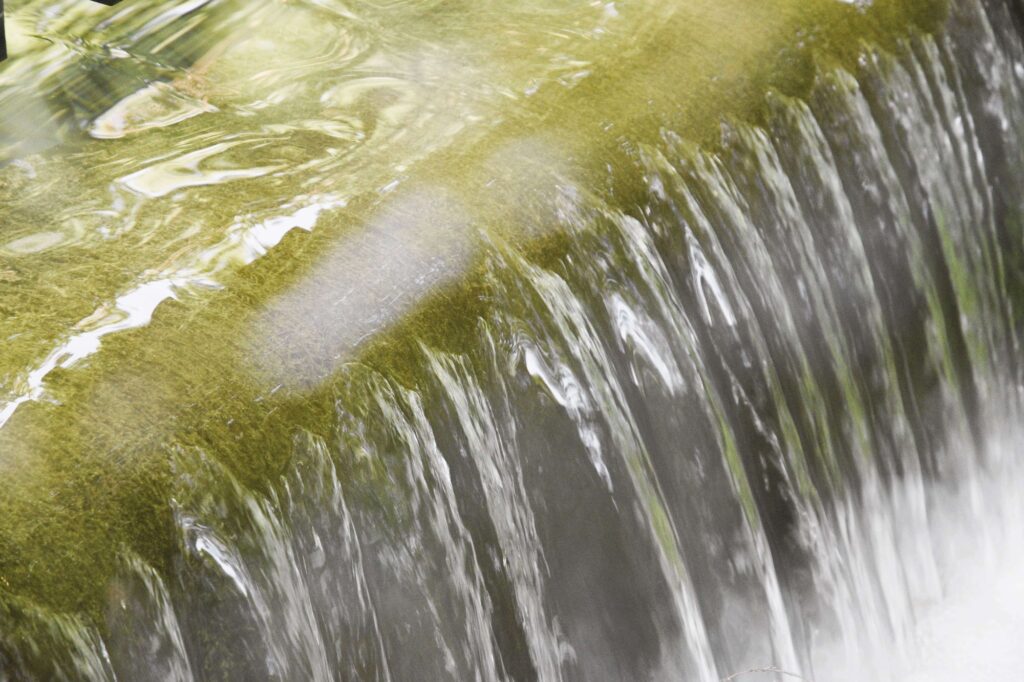
Flowing at a continuous 600 gallons per minute and marked by its constant temperature and high PH level, Ebbert Spring has served as a consistent catalyst for prosperity. From the tiniest insects and simplest plant life to the migrations of early natives and settlers, these remarkable waters influenced creatures great and small.
A three-acre portion of the Ebbert Spring property was acquired by The Archaeological Conservancy (TAC) in 2006, and later, additional tracts were added by 2016. This organization’s mission is to preserve significant sites through land purchases and stewardship. Since 1980, TAC has protected 585 sites across the United States, the only non-profit in North America dedicated to defending irreplaceable resources and their stories.
Kelley Berliner is TAC’s Regional Director for its Eastern Division and a respected archaeologist. Based on her training and research, and bolstered by enthusiastic dedication to these local treasures, Berliner champions Ebbert Spring Archaeological Park (ESAP) as one of Pennsylvania’s most significant prehistoric sites.
Over a 10-year period, TAC developed partnerships for ESAP’s protection with local governments, Pennsylvania preservation agencies, and the Allison-Antrim Museum (AAM). This latter group is led by President Bonnie Shockey, a driving force behind many AAM-sponsored cultural programs. Shockey is recognized as a long-time advocate and curator for Antrim’s historical wonders.
TAC and AAM formed a unique partnership by signing a 99-year lease in 2017, with TAC retaining land ownership and AAM managing the buildings. This beneficial relationship not only ensures the property’s wise preservation but it also offered the public access to this parcel’s fascinating legacy.
Today, twelve acres are preserved at ESAP, including the Allison-Ebbert House and a springhouse with a unique backstory. Multiple improvements were made to the structures and landscape elements to further protect these resources and enhance visitor experiences.
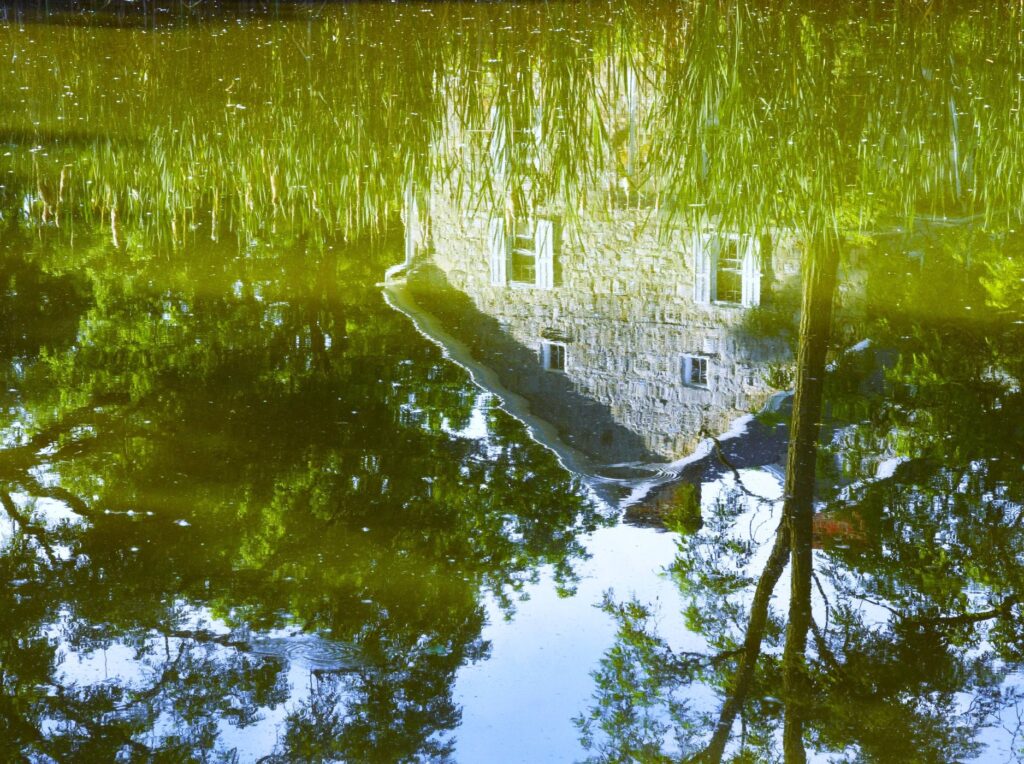
Regarding the stately fieldstone house on the ESAP property, it has been occupied by only four families since its construction in 1756. Historians believe William Allison Sr., an immigrant from Ireland, built the home. The structure is sturdy, with walls three feet thick.
Allison passed the property to his family. One of his sons was John Allison, a Colonel in the Revolutionary War and founder of Greencastle. Allison named his new community and the surrounding township in 1782, inspired by an ancestral fishing station in Ireland.
Two later property owners were the Ebberts (whose name graces the spring) and the Wishards, who occupied this land until 1968. The fourth and final homeowner proved to be the most archaeologically significant. His name was Al Bonnell.
Bonnell was a Navy veteran, an engineer, and a Renaissance man. During five decades living on a future portion of the ESAP property, the inquisitive Bonnell uncovered historic artifacts while digging around his garden. His discoveries later kick-started a formal scientific archaeology process. Bonnell wanted his tract fully protected and further explored to benefit Pennsylvania’s history, and willed the property to TAC.
When the Society for Pennsylvania Archaeology unearthed more artifacts on these grounds, starting in 2003, they were amazed by an unearthed collection that contained thousands of items that included ceramics, animal bones, tools, and decorative pieces.
This portfolio broadened archaeological knowledge, since these found pieces reflected several defined eras, including the Paleoindian Period, as well as the Archaic, Woodland, Contact, and Historic Periods. The Paleoindian era marks a period when humans lived in small mobile groups from 10,000 to 16,000 years ago.
Other items left behind included 100 unique projectile points (aptly named for past property owner Bonnell) and additional finds that increased awareness of how these artifacts were created, used, and chronicled ancient lives. In addition, archeologists analyzed several ESAP property features, which included storage pits, fire hearths, and postholes.
The archaeological lessons learned were significant. These ESAP artifacts redefined the understanding of how prehistoric people lived in the Great Appalachian Valley region. Earlier, most experts suspected that dense human inhabitation occurred around larger waterways such as the Potomac River. But evidence collected at ESAP suggested freshwater springs were also home to those civilizations.
Additional findings further improved studies. One example is how early European settlers migrated and possibly traded goods with Native Americans during the Contact Period. The large volume of farming implements found on the grounds suggests that early natives practiced a long agricultural tradition at the ESAP site.
No archaeological excavations are currently underway at Ebbert Spring, and amateur digging for artifacts is strictly forbidden. The collection previously discovered here is now housed in a climate-controlled environment at the Allison-Antrim Museum.
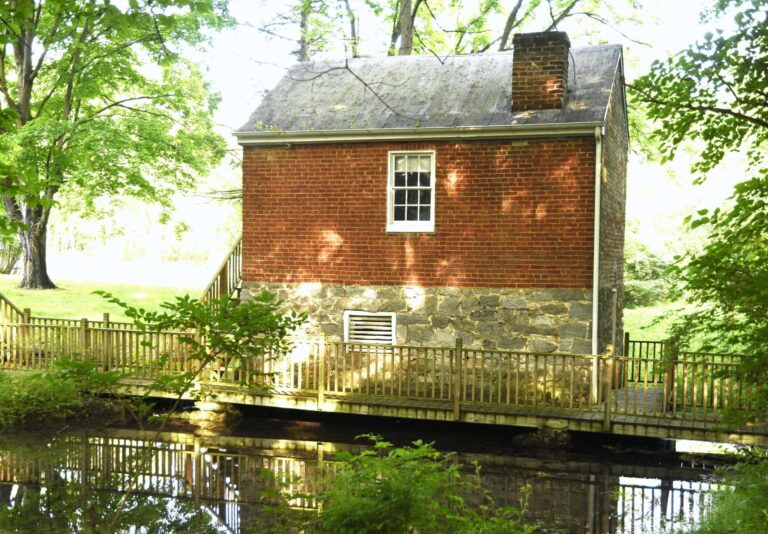
The charming brick springhouse found onsite was also subject to archaeological interpretation and yielded a surprising theory. This tame-looking reconstructed building might also have served as a frontier outpost.
During the mid-1750s, the Pennsylvania Governor called for a series of defensive forts during the French and Indian War. Many wealthy landowners from that era built fortifications on their properties.
Archaeological evidence found at Ebbert Spring (gunflints and fragments of musket ramrods) suggests the springhouse likely served different purposes during peacetime and war. Today, visitors can enter this serene structure and hear the spring’s waters trickling through its open flooring.
The springhouse is also an idyllic spot to imagine this property’s past, and remember Ebbert Spring as the main catalyst for all that came before. This is the chief reason why this landscape remains so lush today. After its waters filter through this tiny springhouse, they bubble onward, surrounded by a woodland brimming with songbirds like Blue Jays and Catbirds.
Behind the stone house, a manmade pond attracts aquatic insects and reptiles. Wildflowers hug the shoreline, with floral bouquets leaning over blue water. All over the Ebbert Spring’s property, water is the predominant backdrop for a thriving ecosystem.
Ebbert Spring Archaeological Park has walking trails and a series of kiosks that interpret the site’s human and natural history. This information ties the property’s components together with pictures of found artifacts, which provide visitors with a thought-provoking archaeology lesson.
ESAP is an open-space research and heritage park, accessible every day from dawn to dusk, located at 12633 Molly Pitcher Highway (Route 11) in Greencastle. The front gate is typically closed to vehicle traffic, with parking nearby, so a short but scenic stroll is necessary to reach Ebbert Spring and the surrounding structures.
For more information about the park and its history, visit the Allison-Antrim Museum website (greencastlemuseum.org/ebbert-spring-park), or learn about The Archaeological Conservancy online at: thearchcons.org.
Ebbert Spring Archaeological Park is a local oasis that serves as an important conservation sentinel. Despite mankind’s technological advancements, clean water remains the most essential ingredient for our survival and the continued health of the natural world.
The artifacts found here suggest that ancient civilizations respected that resource, and the intrinsic beauty witnessed on ESAP’s modern grounds attests to the continuing gift of its magical waters.