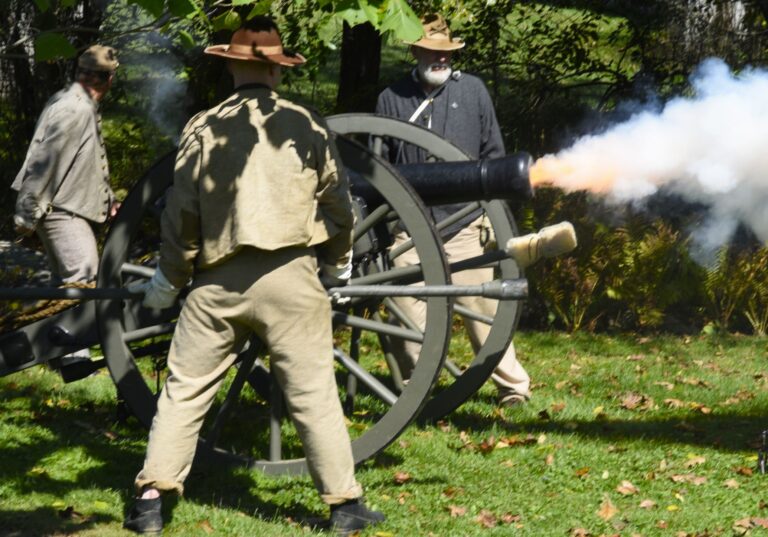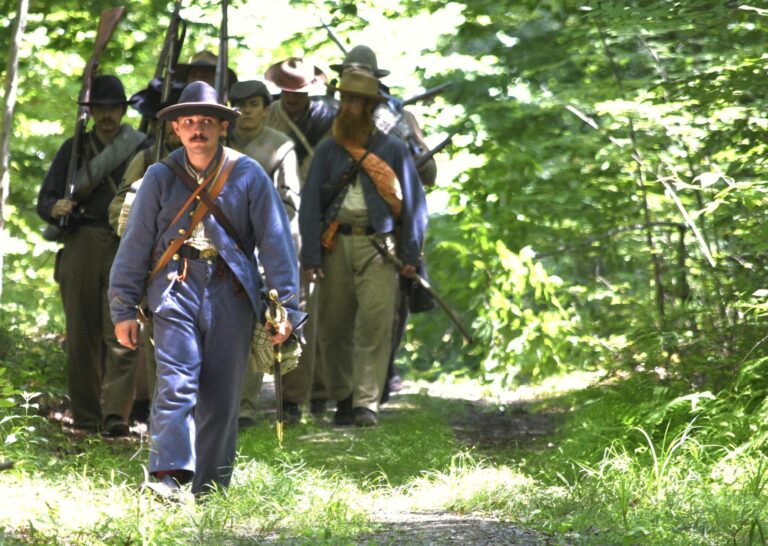
Lee's Confederate retreat from Gettysburg led to the Battle of Monterey Pass
Article and Photographs by Robb Helfrick
On July 4th, 1863, 50,000 defeated Confederate soldiers under General Robert E. Lee’s command initiated a complex escape route from Gettysburg. When Confederate columns retreated from the battlefield, their wagon trains reached a combined length of 60 miles. This massive Confederate retreat had a significant impact on local and Civil War history since it led to a chaotic nighttime battle at Monterey Pass.
A few weeks earlier, Lee made a calculated gamble when he invaded the North in June 1863. This daring was a trademark of the unpredictable Southern general, a trait that previously paid off with a string of brilliant victories.
However, some historians believe Lee overestimated his soldiers at Gettysburg, and that misplaced confidence may have instigated his defeat there. After that epic battle, Lee needed a well-orchestrated plan to ensure his army would survive.
The logistics of the Gettysburg Confederate retreat were staggering. Traveling with a gigantic army through enemy territory, the rebels had to feed and supply tens of thousands of men while constantly in motion. They foraged for every scrap of food they could scavenge from the Pennsylvania countryside. The Rebels herded cattle, hogs, and sheep, and rummaged for other rations from terrified northerners.
Also stowed in retreating wagons were supplies to wage war, including ammunition, which, after Gettysburg, was in short supply. All told, moving that many men and materials after a devastating battle loss was an incredibly challenging and dangerous mission.
Another major liability: the Confederates ferried many wounded soldiers, and they suffered riding on springless wagons, jostled on rough dirt roads leading out of Gettysburg. Primitive local roadways rarely provided a smooth track but were made nearly impassible in July 1863 after heavy downpours and damaging wagon traffic.
With so many miles of men and material, one route couldn’t provide sufficient space for travel. Lee split his army into two sections. The first column traveled northwest toward Cashtown, while the second headed southwest toward Monterey Pass. The goal: reach the Potomac River on the western side of South Mountain as quickly as possible, and then cross the water into the safety of Lee’s native Virginia.
General George Meade commanded the Union Army. At that time, he was the latest military leader in a long line of generals appointed by President Lincoln. When the Gettysburg battle began, Meade had been in charge for only three days. Despite suffering over 23,000 casualties, Meade was still victorious at Gettysburg, since Lee lost even more men during the Civil War’s bloodiest battle.
As Lee started his retreat, Meade took a cautious approach. The Union commander wasn’t sure of Lee’s intentions. Did the crafty Southern general plan to fortify the mountain passes, entrench, and challenge Meade to another major battle? Or was Lee’s intention to simply escape back into southern territory?
Meade’s primary mission was to protect the cities of Baltimore and Washington from attack and force Lee out of northern territory. Uncertain, Meade waited for a day, then asked his men to pursue Lee’s long wagon train to clarify the Confederates’ movements.
As the chase began, Union cavalry and other regiments harassed the Confederates’ southern column on their march toward Fairfield. Several skirmishes erupted as southerners valiantly protected vital supplies and their wounded men.
All along the route, at places like Black Horse Tavern and the Weickert Farm, local properties became Confederate military hospitals due to a monstrous number of Gettysburg casualties. At several locations, southerners who died from battle injuries were buried in a pasture or yard. Years later, some remains were reinterred and moved south, to rest forever in hometown graves.
When the wagon train reached Fairfield, a Civil War traffic jam formed, stalling movement and leaving the Confederates vulnerable. Federals lobbed shells into town, as local citizens ran for cover. At this juncture, historians recall fascinating stories of civilians caught in war’s crossfire.
One couple, the McCrearys, sheltered in their Fairfield basement as cannonballs flew overhead. There, during this frenzied Confederate retreat, the couple’s first son was born. They christened him with a middle name that honored Union General “Uncle John” Sedgwick, who commanded a nearby unit.
With cannon fire serving as proper forward motivation, the mammoth Confederate column of General Richard Ewell finally snaked out of Fairfield and headed uphill toward Monterey Pass. Heavy rain pelted the escaping army and turned the mountain roads into a quagmire.
Riding from Emmitsburg, Maryland, Union Brigadier General Judson Kilpatrick, with his comrade Brigadier General George Armstrong Custer, raced with the cavalry toward Monterey Pass, hoping to cut off the Confederate retreat. They arrived after dark, during a violent thunderstorm. During the late hours of July 4th and into the early morning of the 5th, a dramatic nighttime Civil War battle raged around Monterey Pass. The fate of the Confederate retreat and the southerners’ ultimate survival hung in the balance.
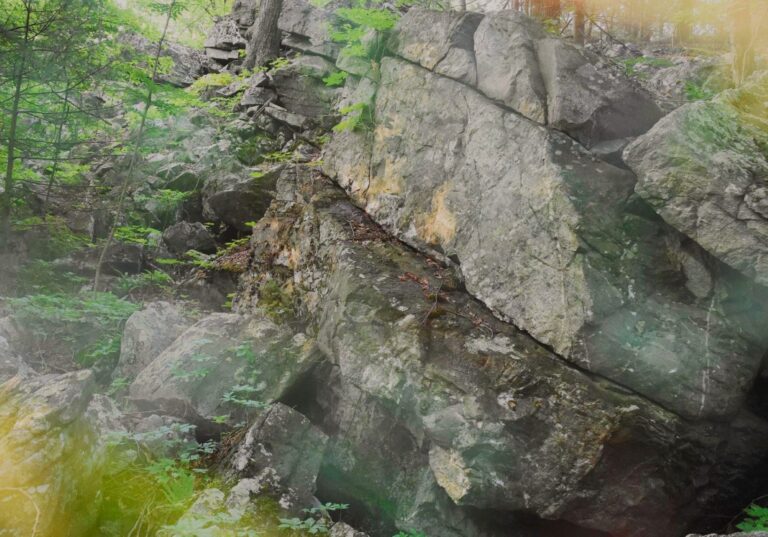
The fighting was marked by confusion on both sides. The rocky and rugged terrain made fighting in darkness, punctuated by flashes of lightning and driving rain, extremely chaotic.
When the Monterey Pass battle concluded, Kilpatrick, Custer, and their men failed to halt Lee’s retreat. They disrupted and harassed it by capturing almost 1500 Confederates and burning or commandeering many wagons. The battle also spilled over into neighboring Maryland territory, making it the only Civil War contest fought on both sides of the Mason-Dixon Line.
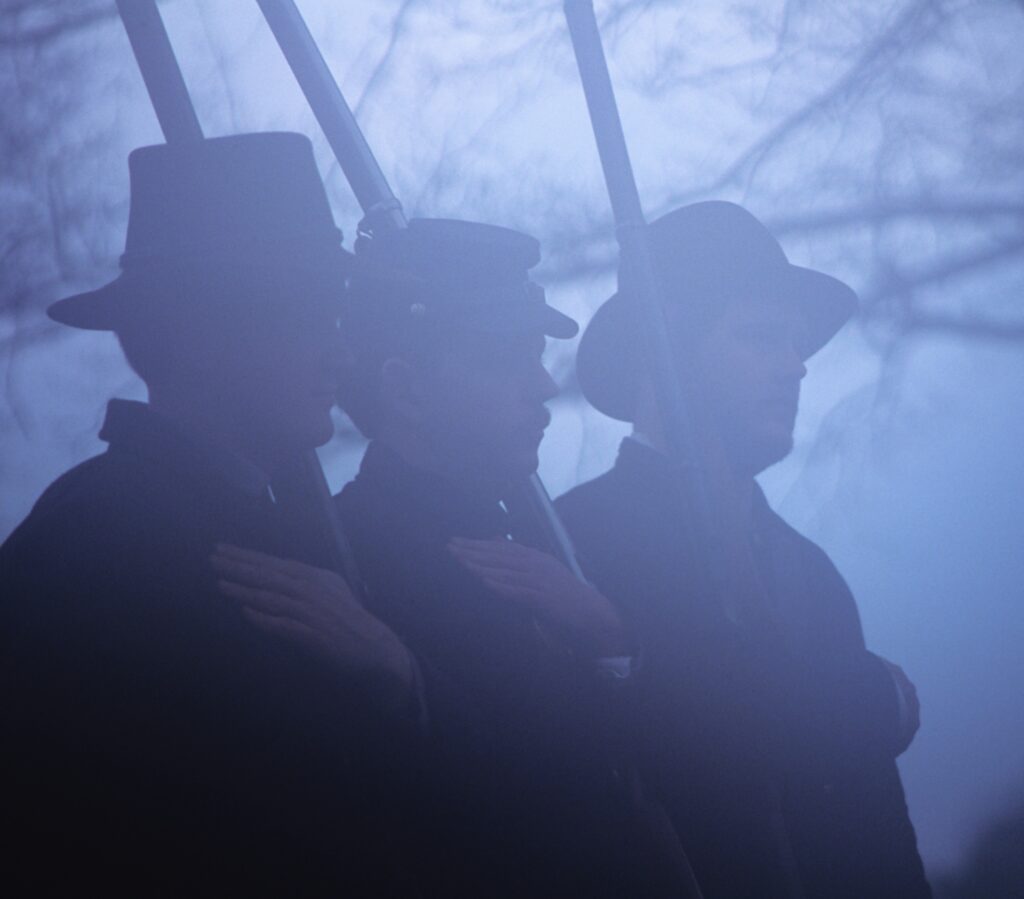
Lee’s escape plan eventually succeeded. Some have speculated whether Union General Meade was too timid in his pursuit. Could he have destroyed Lee’s army before they crossed the Potomac at Williamsport, and ended the war in 1863? In reality, the Civil War raged for another 21 months after Monterey Pass.
Surprisingly, a smaller portion of Lee’s army returned to Pennsylvania a year later. On July 30, 1864, a unit under General Jubal Early’s command burned Chambersburg after a ransom demand went unpaid. Another Confederate retreat followed, but this time, the Union army went after invading Confederates with greater vengeance, since civilians suffered the brunt of damage from that catastrophic southern return to northern territory.
Today, Gettysburg’s epic battle garners worldwide recognition and study. However, Monterey Pass possesses many interesting stories that will enlighten history lovers. Preserved within its scenic mountaintop grounds, the battlefield contains a first-rate museum and hosts seasonal events. The Friends of Monterey Pass continue with ambitious plans to improve the park and share its significant heritage.
Monterey Pass Battlefield is located in Washington Township at 14325 Buchanan Trail East, in Blue Ridge Summit. The park is a must-see destination for Civil War enthusiasts or anyone curious about local history. To learn more about other upcoming events, visit the website (montereypassbattlefield.org) or call 717-762-3128 for hours of operation and other general information.