
WAYNESBORO FIRE CHIEF GRIFFIN DISCUSSES HIS FIRST YEAR OF DEPARTMENTAL LEADERSHIP
By Robb Helfrick
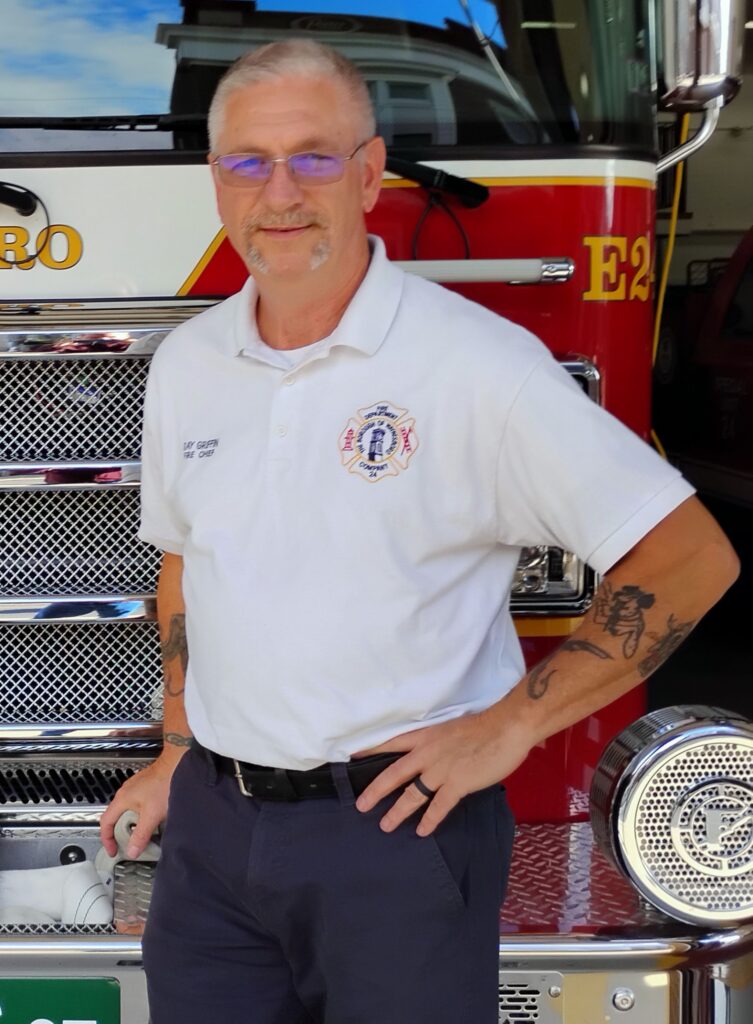
Fire Chief Ray Griffin came to Waynesboro with over 40 years of firefighting experience, hired in July 2024 to head a department that faced significant challenges. Retired and living in Hagerstown at the time, Griffin recalled when he received the offer to lead in Waynesboro. “There was no hesitation when I got that call.”
Fifteen months later, Chief Griffin offered candid comments during an interview, discussing his background, the nature of firefighting, his recruiting philosophy, and the progress the department has achieved during his leadership.
Chief Griffin also discussed his thoughts on rebuilding the relationship with the Waynesboro Volunteer Fire Department. The WVFD separated from the Borough of Waynesboro before Griffin became fire chief.
Griffin grew up in a family of firefighters. “My father was a fireman, my uncle, my cousins, and most of the men in our family were too. That’s how we’ve made a living.” Griffin keeps a picture in his office of his father, son, and himself, all in dress uniforms, when his son graduated from the fire academy. His son, Brian, is a firefighter in Loudon County, Virginia.
Chief Griffin built his career in multiple locations. “I’ve been in the fire service for 45 years, in Maryland, Virginia, and now Pennsylvania. I’ve worked in seven different departments, five different counties with four different municipal agencies, and it’s been different in each place.”
In Washington County, Maryland, the county controlled all its firehouses. In Pennsylvania, boroughs and townships manage their operations separately, and Griffin adjusted to the change since he experienced a similar situation while working in Virginia. He now works with the Franklin County Fire Chiefs Association, a group of approximately 18 leaders who meet regularly to find common ground when working together.
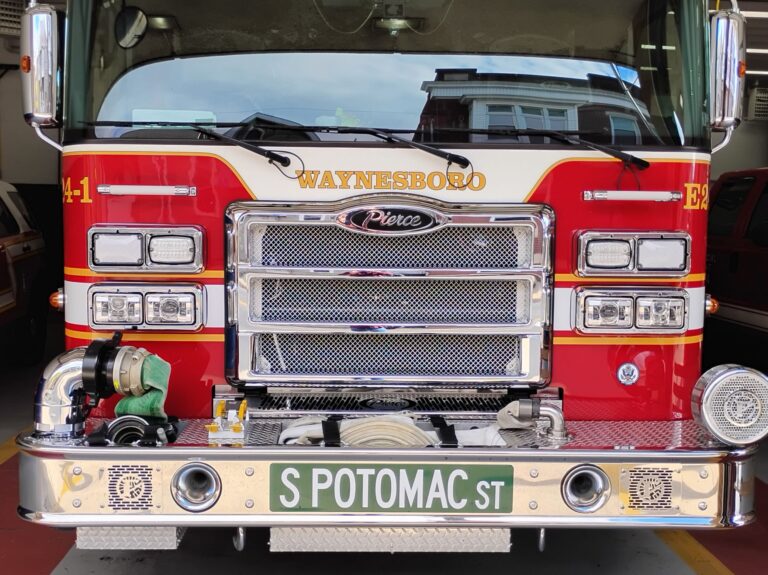
All firehouses in Franklin County have the capacity to handle small fires, but cooperation is necessary for larger blazes. It’s vital that these fire stations work together- assistance often comes from stations in nearby Maryland. “We all fight fires the same way,” Griffin said, “but when you divide up the duties, it’s important that you respect other departments and cooperate. We rely on each other.”
Once in Waynesboro, Griffin developed a five-year plan and immediately began implementing his goals for the fire department. He’s encouraged by the positive developments since arriving in town. Griffin appreciates the support of the borough council and the community. He set benchmarks to mark his progress and said, with their help and cooperation from others, “We are way ahead of my timeline.”
Waynesboro’s paid firefighting force is budgeted for six full-time firemen. Two full-time firefighters work a rotation of three shifts, with each lasting 24 hours. The position requires a long workweek (56 hours), and their schedule is supported by a part-time staff that rounds out the four men who man each firetruck. When Chief Griffin arrived, only three full-time firefighters were on board, with under a dozen part-timers, all working in a stressful situation due to the split with the volunteers.
Now, the Waynesboro Fire Department is fully staffed, and the part-time talent pool has increased to 24 men. Many of the newest part-timers once fought fires in Waynesboro and have now returned.
Griffin mentioned the challenges of recruiting and retaining quality personnel for Waynesboro’s Fire Department. He acknowledged that in the past, younger recruits were often lured away by larger, more urban fire departments. With greater resources, these units can pay higher salaries and afford more expensive firefighting equipment.
Chief Griffin’s strategy since arriving in Waynesboro was a hiring shift from younger recruits toward career firefighters. These veterans have often already served in urban departments and fulfilled a desire to work in the fast lane. Now, with invaluable experience under their belts and ties to the local area, some have gladly said goodbye to long work commutes and are content to live and serve in Waynesboro.
One local example is a retired firefighter from the Fairfax, Virginia, fire department who lives in Gettysburg. “He was tired of the commute to Northern Virginia,” Griffin said, “But not tired of being a fireman.”
Along with his strategy for attracting older, more experienced firefighters, Griffin also sees the benefits of the next generation of first responders. He mentioned the recent hiring of a newly trained firefighter. “I’m glad we hired him. He’s a highly motivated and intelligent young man.”
Griffin said this new firefighter doesn’t fit the mold of other young recruits who have left Waynesboro for greener pastures. This fireman has a young family, and his childhood friend was hired as a Waynesboro police officer. Again, Griffin noted the benefits of local ties to community and family.
When asked what type of person excels in firefighting, with its dangerous working conditions and unpredictable timing, Griffin said firefighters typically have Type A personalities. They thrive on adrenaline but also seek a team atmosphere. “They’re competitive, take-charge, move-forward types of people,” Griffin said. “There’s a unique pride in being a fireman.”
When Griffin became Fire Chief, the annual firefighting budget was $1.3 million. With a goal of reducing costs without cutting services or safety, he was determined to maximize his local resources.
The first budget Chief Griffin submitted was for $990,000, a significant decrease. Some of the cost savings came from minor categories, while other reductions were achieved by utilizing existing equipment for new or multiple purposes. “We’re doing more with less,” the Chief said.
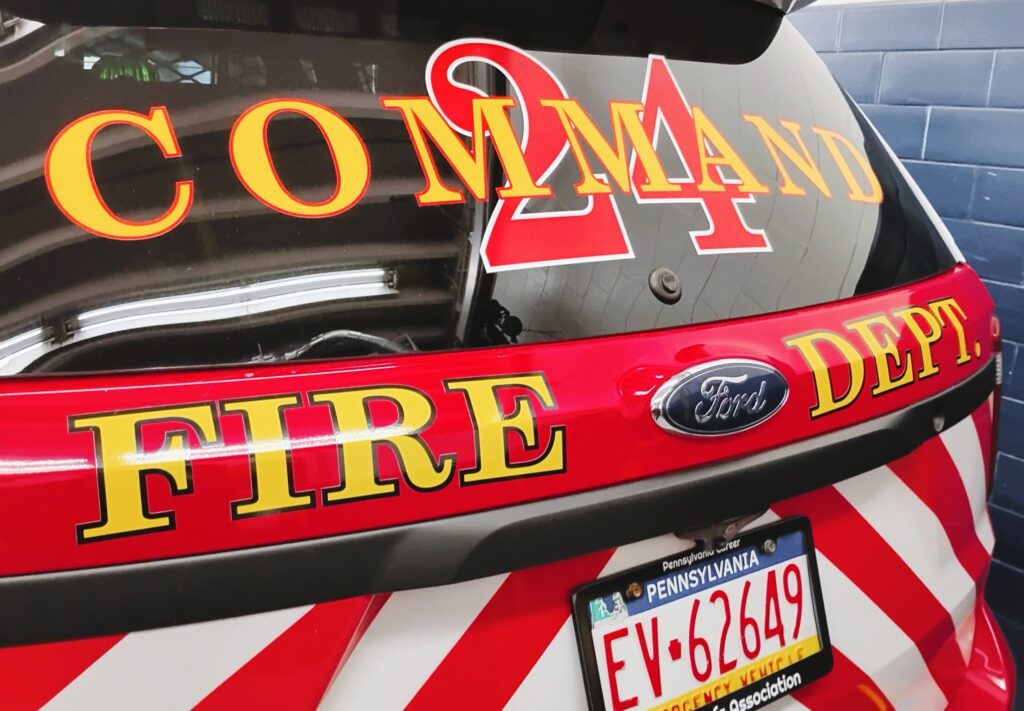
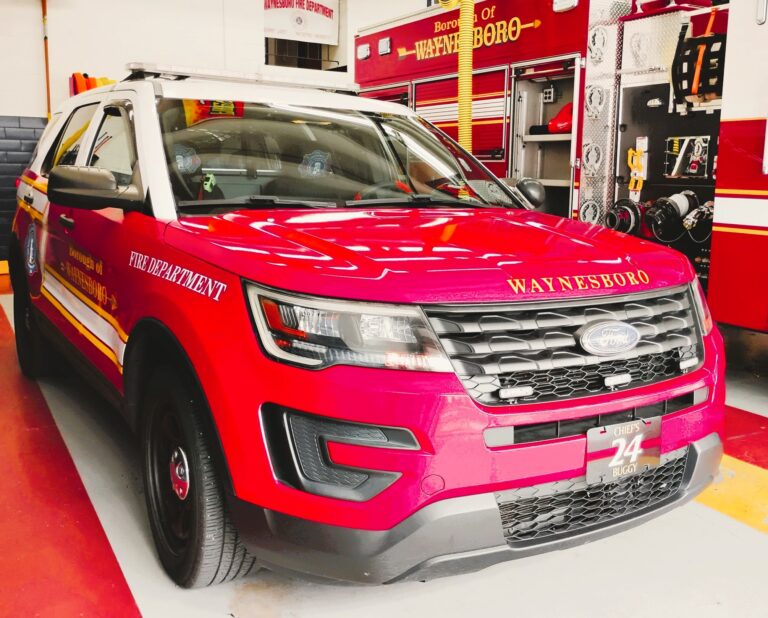
The department received a new command vehicle in July, but it wasn’t a new SUV. Instead, the borough repurposed one of its police cruisers as a fire vehicle. “This enhances our operations tremendously,” Griffin said. “Now we have a vehicle with the tools that a fire chief needs for running incident command.” Another new vehicle handles brush fires in addition to medical calls, a single resource that now functions like two vehicles.
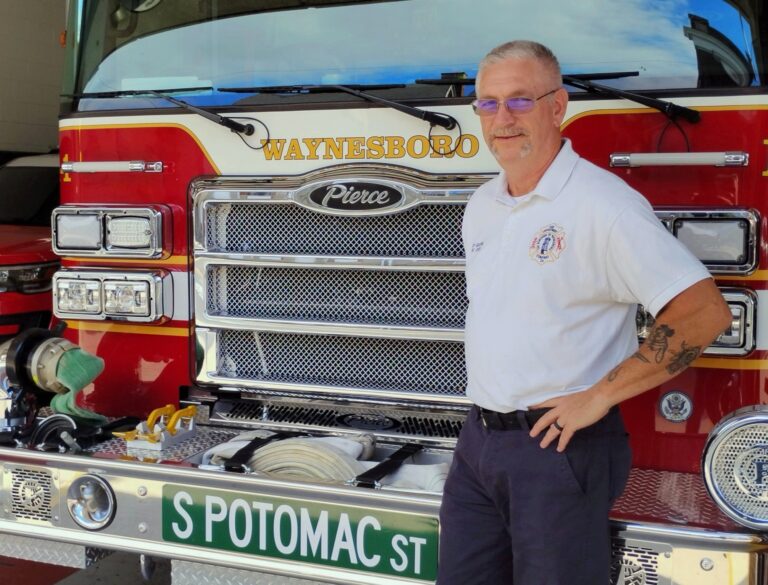
Headquartered in a Potomac Street fire station (built in 1967), Griffin admitted the building’s limited space wasn’t ideal, but his department was making the best use of it and functioning efficiently there. “This firehouse is actually pretty nice for its age.”
Concerns exist about the structural integrity of the floor, but Griffin said he doesn’t stay awake at night worrying. Instead, he’s initiated the conversion of the old social hall downstairs into a training room. The department can upload realistic images of any building in the borough to run scenarios for fire preparations. The room will also have props for physical training.
Outside the building, WFD plans to utilize a new water line extension to conduct training near the borough maintenance facility on Ninth Street. “We can conduct training there without disrupting the public and be in a safer spot for our people,” Griffin said.
For several years, the borough’s government has been developing a plan for a new public service building. At one point, this structure was designed to be a combined fire/police/EMS facility, with several locations considered.
That plan remains in limbo, and as with all major infrastructure projects, securing adequate funding will be a critical component. The end result could potentially be a new stand-alone fire station instead.
Until that decision is made, Chief Griffin will concentrate on running the department with the facility he was given. “I know the borough doesn’t have a big city pocketbook. I don’t ask them for things they can’t afford.”
Perhaps Chief Griffin’s biggest challenge when he came to Waynesboro was the friction that existed with the volunteers, who had separated from the borough. “I was well aware of the situation here when I arrived,” Griffin recalled.
The Chief mentioned he had worked on both sides of firefighting in both paid and volunteer positions, and that’s why the borough thought he’d be a good fit. Griffin had friends within the volunteers, and the previous Waynesboro Fire Chief was also a friend, so he was hearing about the situation from both sides.
The new Chief welcomed the challenge. “I felt I had the tools, the personality, and the mindset to improve the situation,” Griffin said. “Not to fix it, but to at least make it better.”
Griffin mentioned that between himself, John Beck (the volunteer’s Fire Chief), the borough manager, and the community, the relationship between the volunteers and the paid borough staff has moved in a positive direction. “I believe those tensions, from my observation, have relaxed a little bit,” Griffin said.
Chief Griffin compared the now separate local fire departments to a falling out between family members. After initial difficulties, they realize they have common values and a shared heritage and find a way to make peace between themselves. Looking toward the future, Griffin said, “I think at family dinners there won’t be any problems at the table.”
Griffin sees the volunteers as vital partners. He believes the split allowed the volunteers to flourish autonomously by managing their fundraising and equipment. Both organizations have the same goal: public safety. “We’re on the same team,” Griffin said. “It’s in the community’s best interest that we help each other.”