A new book spotlights the significant legacy of Waynesboro's Black community
By Robb Helfrick
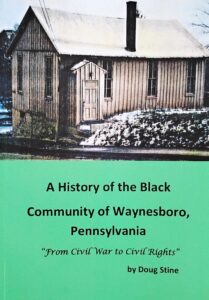
Doug Stine’s new book shines a penetrating light on an overlooked yet important historical chapter of Waynesboro. “A History of the Black Community of Waynesboro, Pennsylvania” details that legacy, from the Civil War through the Civil Rights period and beyond. This is Stine’s first book, and writing as a dedicated historian, he directed his efforts toward a significant topic.
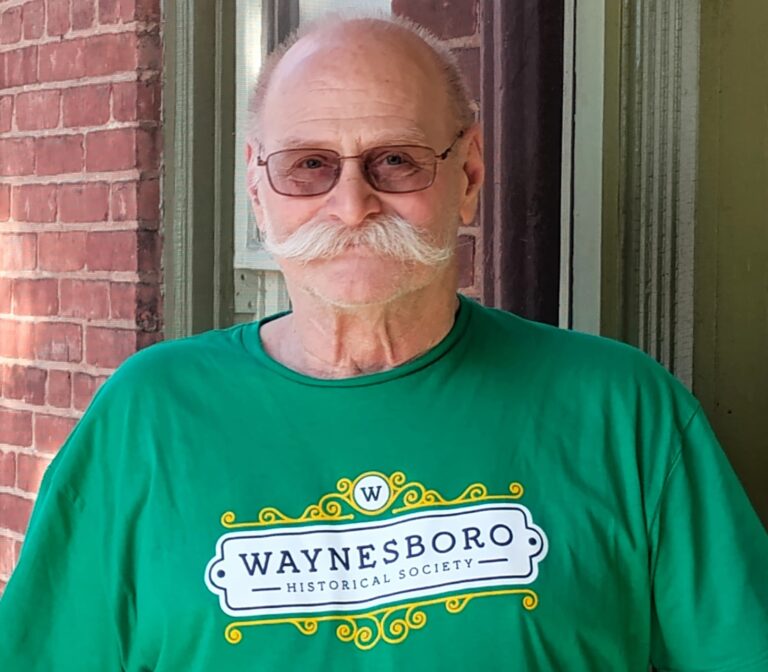
Stine is a lifelong resident of Waynesboro who spent a 44-year career at Volvo North America (Mack Trucks) working as a draftsman designer. However, history was a constant thread throughout Doug’s life as he belonged to several local historical groups and led tours at the Waynesboro Historical Society’s Oller House. “Telling stories is how you learn history,” he said.
Beginning in the 1990s, Stine learned from notable Waynesboro historian Larry Dean Calimer (1938-2022), who mentioned the concept of a Waynesboro African American history book. At that time, Stine was committed to his busy career, but the book idea never left him.
Thirty years later, before he started his project, Doug realized that little was published about Waynesboro’s Black history. The author felt compelled to tell that story, saying in his book’s forward, “This book needs written.”
The result is a 108-page anthology of the trials, triumphs, and tribulations of Waynesboro’s Black citizens through a historic period. While Stine focuses on the Civil War to Civil Rights years, he also pays special attention to one aspect of local African American society that “has remained so constant and crucial to the Waynesboro Black Community.”
Stine was referring to the St. Paul A.M.E. Church, which has been a fixture in town since 1890. The author researched the history and stories of past and present congregants to weave a multi-faceted fabric of Waynesboro’s Black story. Proceeds from his book will benefit St. Paul A.M.E Church.
While writing the book, Doug utilized multiple resources, including past census records, newspaper accounts, and some of Calimer’s research. He expertly compares national tragedies, such as slavery, which he calls an “ugly scar in America,” with regional historic events, like the Underground Railroad. This paints a layered portrait of how those difficult and heroic times affected the daily life of local Black residents before and after the Civil War.
Stine also provides context by describing the origins of how Black individuals were treated as second-class citizens. “Waynesboro was not immune to the practice of discrimination, racism, and segregation,” Stine said.
Census records were incomplete in America’s early years (no addresses were listed), but Stine sifted through those numbers and explains what that data signifies, while tracking how the Waynesboro Black population rose and fell during certain time periods.
The author also mixes in accounts of the town’s industrial heyday and how Black workers were denied the training they needed to compete with whites in that employment sector during the late 1800s.
Stine’s book contains many heart-wrenching stories about how Waynesboro’s Black residents lived through turbulent times. From the late 1880s to the 1920s, impoverished residents lived in an area now known today as the Rotary Parking Lot. “These homes were poorly constructed wood frame tenement houses or log cabins rented at that time for as low as two dollars a month,” the author wrote.
Stine describes the first alley south of Main Street (now Gay Street), then known as “Gas Alley.” Another Black neighborhood on Mulberry Street was razed to make way for the Elder Avenue development.
Stine doesn’t shy away from difficult subjects in his book. He writes about the Ku Klux Klan’s first appearance in Waynesboro on May 24, 1925. During this period, 416 “Klans” were chartered in Pennsylvania. The hate group sponsored 300 members who marched in Waynesboro that day. The Record Herald noted that “Many saw the Klan parade Sunday on Main Street, where hooded Klansmen marched before a big crowd and attended a revival service.”
The Klan returned to Waynesboro two years later for an even bigger event, and a historical picture in Stine’s book shows 500 hooded men marching, a sobering sight that recalls the overt racism that tarnished that era. The book also pictures KKK members attempting to hand out literature locally in 1993, and mentions that in January 2014, Washington Township reported Klan propaganda was distributed on Martin Luther King Day.
Through all those trials, Waynesboro’s Black community’s religious faith served as its anchor. Stine returns often in the book to the men and women of St. Paul’s A.M.E. Church to listen and learn from their stories.
Stine interviewed several people born before 1950 to gain new perspectives about life as a Black resident in Waynesboro many decades earlier. “I’ve heard before of food-serving establishments refusing to serve Black customers, but always thought it was only down in the deep South,” Stine wrote.
One story told to the author described the following scenario during Waynesboro’s past. “There was only one restaurant that a Black person could go to and sit down and eat, and he was shoved off into a little corner way in the back.”
During the 1940s, segregation practices also prevented Black military veterans from joining service-related organizations like the American Legion. For that reason, the Phoenix-Stoner American Legion Post Number 198 was created in Waynesboro in 1948.
That chapter, composed solely of Black veterans, was community-oriented and had many annual events for its members and their families. “The Phoenix-Stone American Legion was a fixture on Wayne Avenue from its founding in March of 1948 to September 1973, when it just seemed to vanish,” Stine wrote.
The architectural base for Stine’s contemporary research of Waynesboro’s Black community was built on the solid foundation of St. Paul’s A.M.E. Church. The book’s cover and back cover feature vintage and contemporary photographs of the two structures, which date from 1890 to the present day. “The original church building served the congregation for 66 years until May 27, 1956,” Stine wrote.
The newer church now stands on a small hill overlooking King Street. Stine describes the building’s groundbreaking and provides a listing of all previous ministers who led worship services at the church. The book also shows contemporary pictures of its members.
Stine shares stories of some of Waynesboro’s most notable Black citizens through the years. This includes the history of some of the most prominent families, such as the Snivelys. Moses Snively was the patriarch, a man born in Georgia.
Marcella Snively Waltz (1922-2018) made a “real impact and difference with families in this town,” Stine said. A social worker in Franklin County’s first Head Start program, the author lauded Waltz, writing: “If there was ever a person in Waynesboro to be considered a saint, that person would have to be Marcella Waltz.”
The book also highlights some notable Black men who excelled in artistic, athletic, and military pursuits. Phillip “Chip” Lowman is an accomplished artist who grew up in Waynesboro. James “Footsie” Brightful (1921-1974) was a standout football player who played for the Waynesboro Tigers.
Albert “Albie” Spotswood (1946-2020) was also a phenomenal athlete, “best remembered as a high-performing member” of WASH’s championship football teams from 1962-65. Spotswood later served honorably in the U.S. Army.
Highlighting a prominent and national historic chapter, George Steven “Pigeye” Waltz Jr. (1919-2009) was a military pilot during World War II. Stine describes the legendary life of a man who was born, raised, and died in Waynesboro: “It’s not every place that can say they had a real Tuskegee Airman born and raised in their town,” he wrote.
Stine also thanked Waynesboro’s Kay Snively Washington, citing her as a key individual in his research and coordination within St. Paul’s A.M.E. Church. “Kay has contributed greatly to this book,” Stine said. “She not only became a great new friend but turned out to be a perfect resource person.”
Stine’s book offers a wealth of other historical information that describes the triumphs and tribulations of Black life in Waynesboro over many years. The town’s succession of newspapers (From the Village Record to the Record Herald) is a treasure trove of past articles and events that help document the community’s African American history. These published accounts in Stine’s book enhance its attention to detail.
A History of the Black Community of Waynesboro, Pennsylvania is a worthwhile addition to the area’s historical archive. Stine has created an interesting volume of organized facts and stories that educate Waynesborians about Black life from past to present.
One woman of color, quoted in Stine’s book, related her personal experience. She said while some polarization still exists among the races, relations between the two have improved over the years. “I’m older, and I’ve seen these changes,” she said. “We have come a long way.”
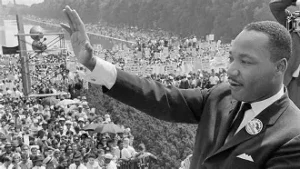
That hopeful opinion mirrors the wise statement that opens Stine’s book, quoted from a 1964 speech delivered by Martin Luther King, Jr.: “We must learn to live together as brothers, or perish together as fools.”