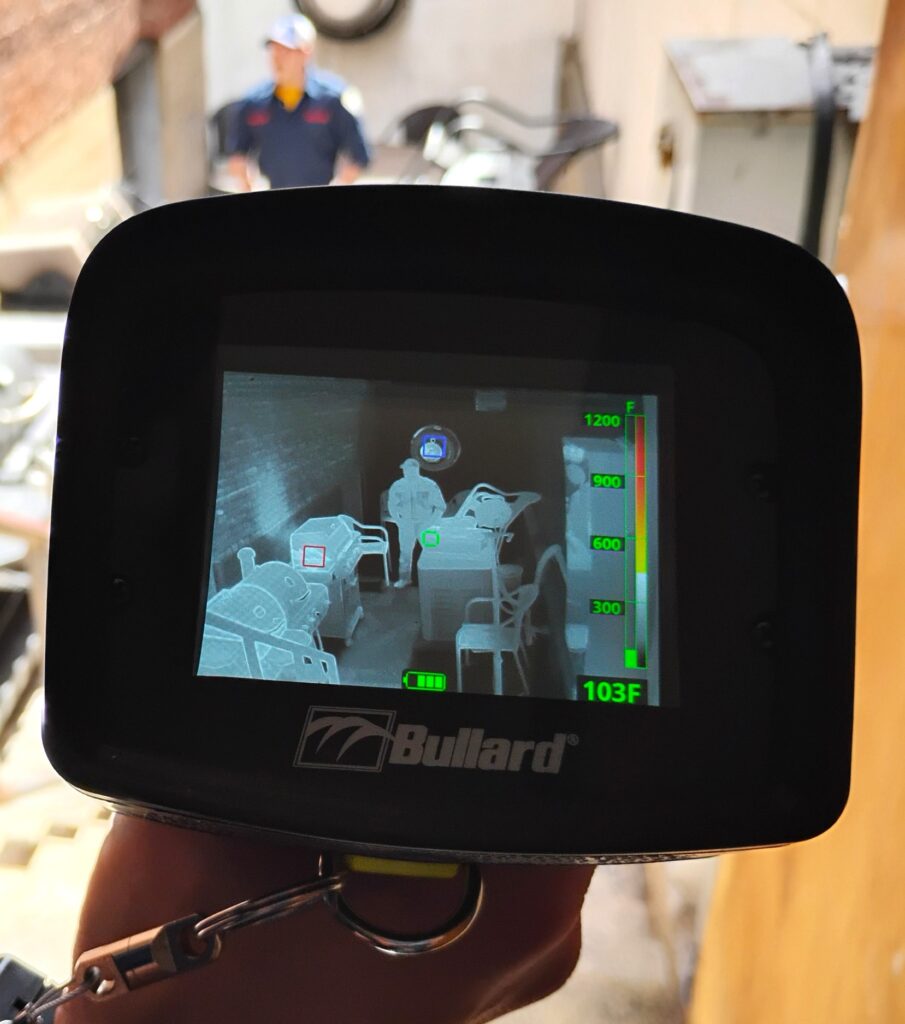
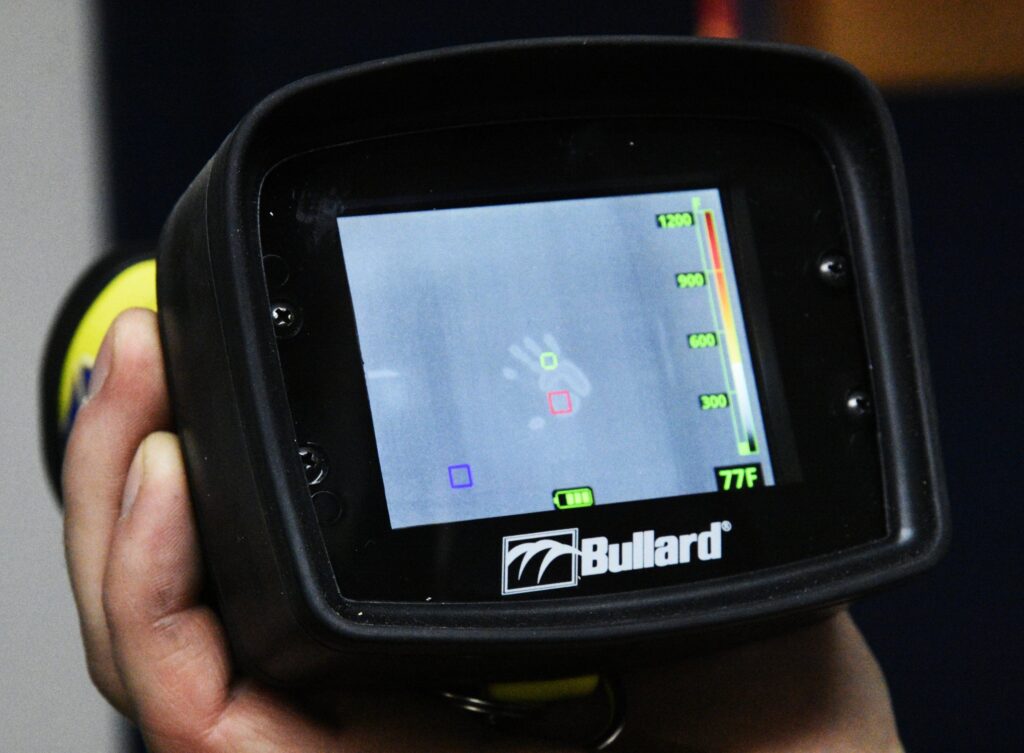
What exactly is a thermal camera, and how does it perform these life-saving functions? A visit to the Potomac Street fire station offered an education into the equipment’s operations and multiple uses.
Thermal cameras differ from traditional picture-taking devices. A typical hand-held camera captures visible light, while a thermal “imager” can detect infrared radiation emitted by objects, allowing it to “see” heat.
The device then converts this information into images that a user can comprehend. While this equipment can be utilized for non-dangerous applications (such as home inspections or HVAC checks), a thermal camera is especially helpful in situations where lives are at risk.
When firefighters arrive at a fire scene, real-time conditions can sometimes be difficult to detect. Before thermal cameras were developed, firefighters typically circled a structure’s exterior looking for visible signs of smoke or flames. However, those clues often remained hidden within the building. Now, a thermal camera can quickly detect hot spots.
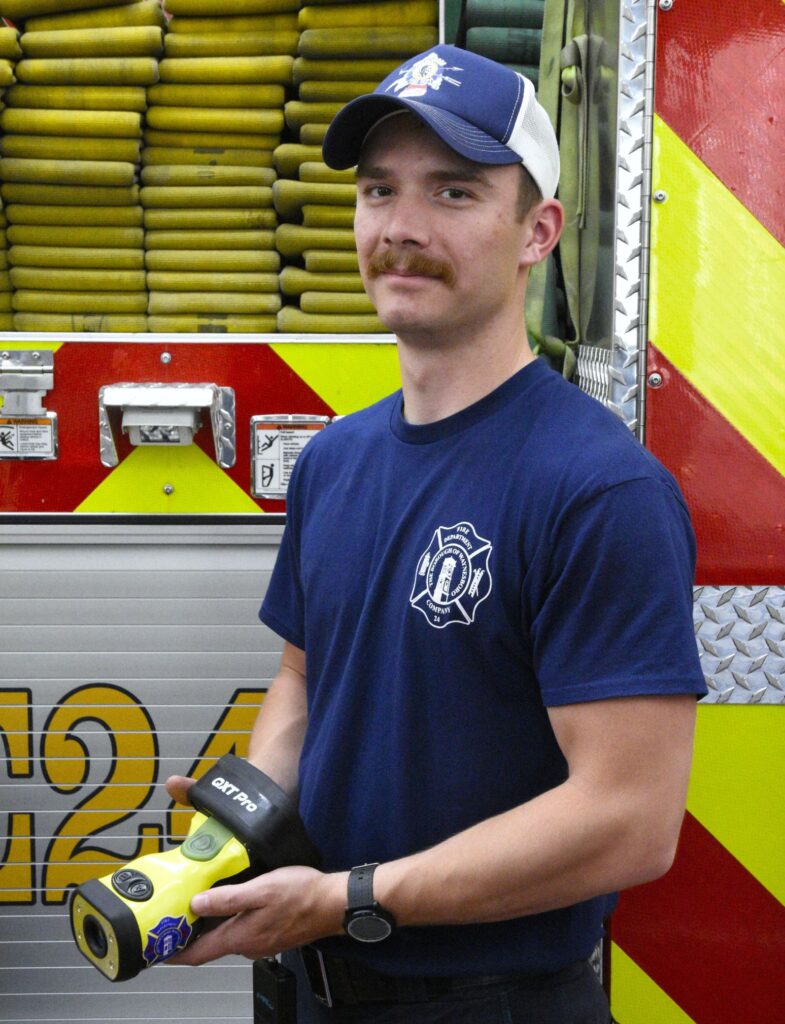
At the fire station, Waynesboro firefighter Travis Martenas is the Chairman of the Equipment Committee. He was responsible for putting the new thermal camera into service and for helping train other firefighters who will use it. Both Martenas and Chief Griffin previously attended educational seminars and conducted other studies on thermal equipment.
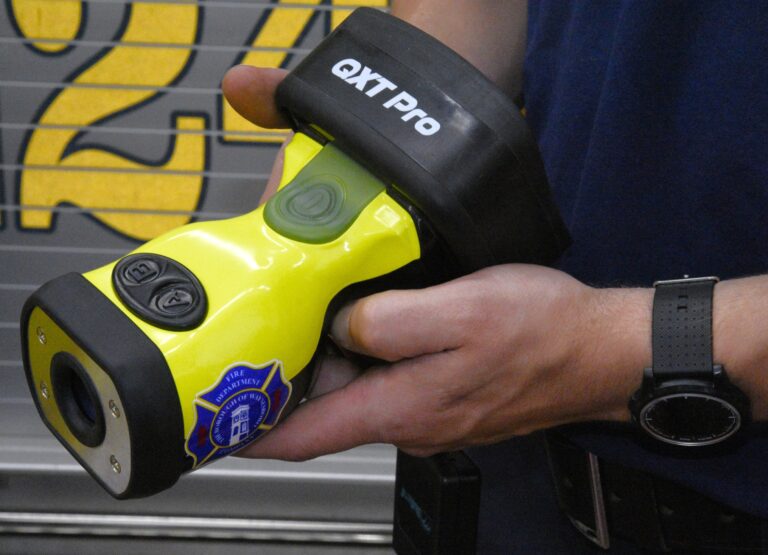
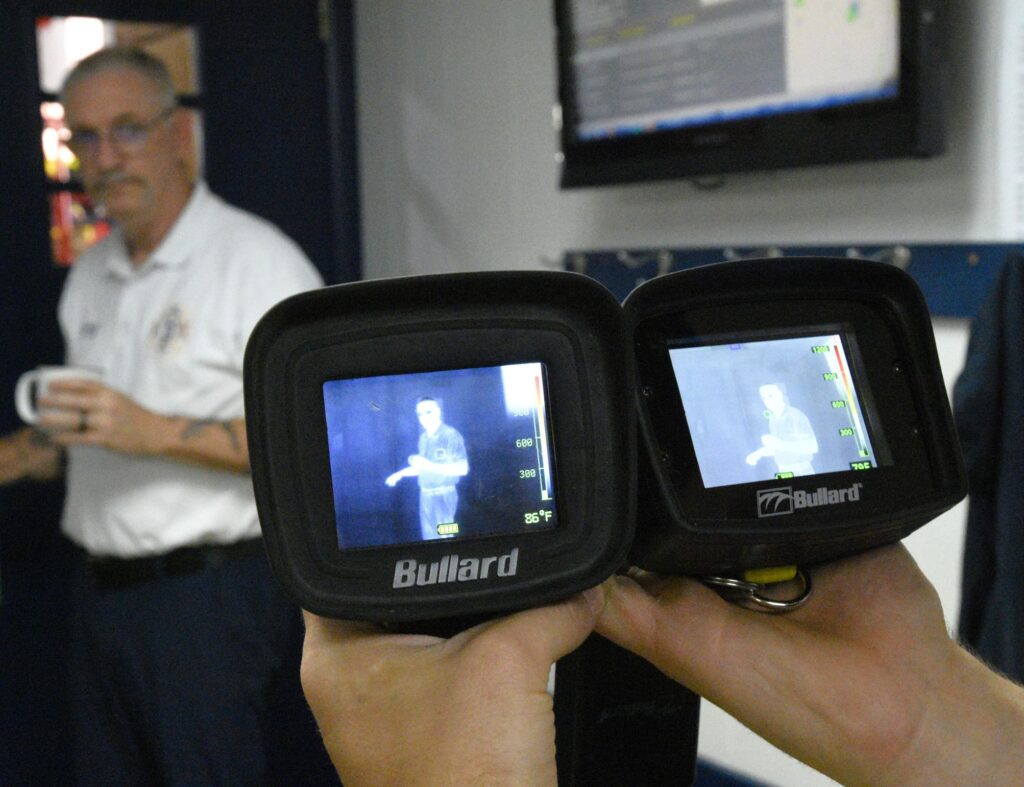
Martenas brought out the new Bullard “QXT Pro Thermal Imager” and demonstrated its upgrades. Compared to an older model the department had used (both made by Bullard), he demonstrated the variance in resolution. As he held the cameras side-by-side, the disparity on the screen between the newer and older models was striking. “The picture is much better, you can definitely see the difference,” Martenas said about the newer camera.
As Martenas demonstrated the camera’s functions, he explained how the colors that the user sees change as heat is measured in 300-degree increments. The hottest spot is always marked by a red square.
When Martenas pointed the camera at two firefighters seated indoors, their outlines glowed on the screen, since they were the greatest heat sources in that room.
However, in a space filled with fire and smoke, a human will often be the coolest object in a room and appear lighter than the fire. In that instance, a firefighter must readjust an interpretation of what’s seen on the camera’s screen.
“You can imagine the difference in an emergency situation,” Travis said, noting that reduced visibility in a dark, smoke-filled room makes the thermal camera a “looking glass” into an obscured scene.
Martenas mentioned that a thermal camera has uses beyond a typical hot-burning fire. He described how one firefighter’s life was saved when he noticed a chain link fence was “hot” on his thermal camera’s screen. That fence was electrified by downed power lines, and that deadly scenario was invisible to the naked eye. “There are so many applications for this equipment,” Martenas said.
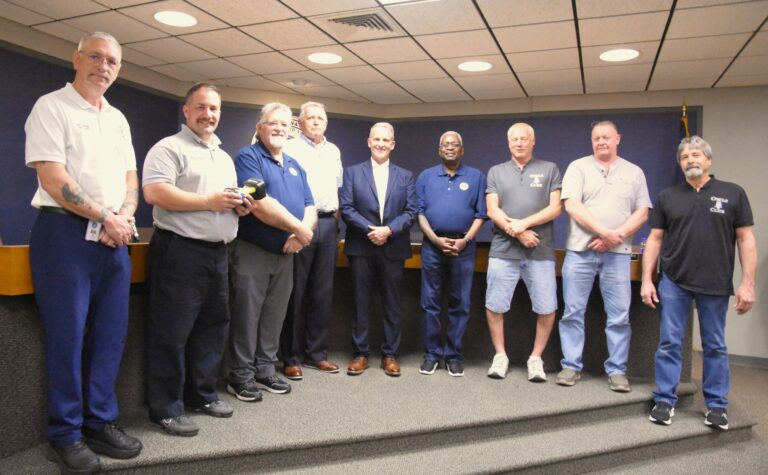
The Bullard thermal camera is extremely sensitive to heat. To demonstrate, Chief Griffin stood and placed his hand flat on a wall’s surface. Then, he walked away. A minute later, Martenas pointed the camera at that spot, and the Chief’s handprint was still visible. “It’s an amazing tool,” Griffin said.
To show how the camera reads a much hotter heat source, Martenas took it outdoors and started a propane grill. As the cooker heated up, the thermal device recorded its steady progress from warm to hot. The familiar red square marked the highest temperature spot.
As he held the camera easily in one hand, Martenas said, “This model is more ergonomic,” comparing it to the first department model. He also noted that the new camera had a faster refresh rate and moved more easily from low to high temperature conditions, which will assist firefighters when making quick decisions in the field.