WAYNESBORO SHADE TREE COMMISSION HOSTS A TREE WALK AT ROTARY PARK TO HELP ACHIEVE AN ARBORETUM DESIGNATION
By Robb Helfrick
On a crisp fall afternoon, the Waynesboro Shade Tree Commission welcomed citizens to a Tree Walk at Rotary Park on October 24.
The walk’s main objective was to further the process for officially designating the park as an arboretum. The event was also an educational experience, as local environmental activists and tree professionals led visitors through the green space on West Ninth Street.
The concept for the Rotary Park arboretum originated from Shade Tree Commission board member Austin Lally. He researched a possible designation and found that the park could qualify if several requirements were met and planning phases were completed.
The first prerequisite for establishing an arboretum is the presence of 25 tree species. Rotary Park contains 28 varieties. Another qualifying step is holding a public event, and the Tree Walk served that purpose. Lally summed up the noble concept of an arboretum by saying the designation denotes a “Museum of trees.”
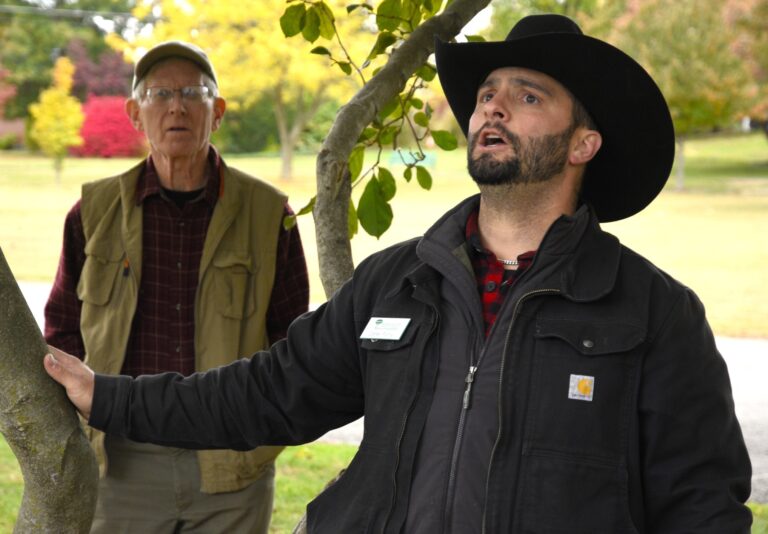
Certified Master Arborist Derek Furry of Bartlett Tree Experts led the Tree Walk. Furry graduated from Penn State Mont Alto’s forestry program.
Furry began the Tree Walk presentation by introducing Tom McCloud, the longtime Shade Tree Commission Chairman. McCloud is a Pennsylvania Certified Horticulturalist who possesses many years of tree care experience.
Rotarian Dr. Bob Zimmerman also spoke about the park’s creation back in 2005. The Rotary Club decided to create a heritage project and organized a plan to lay out the park and finance its construction.
The land parcel had originally been slated for housing many years earlier, but development never occurred. Instead, the Rotarians built the $140,000 park by planting trees and paving walkways within a 5-acre space.
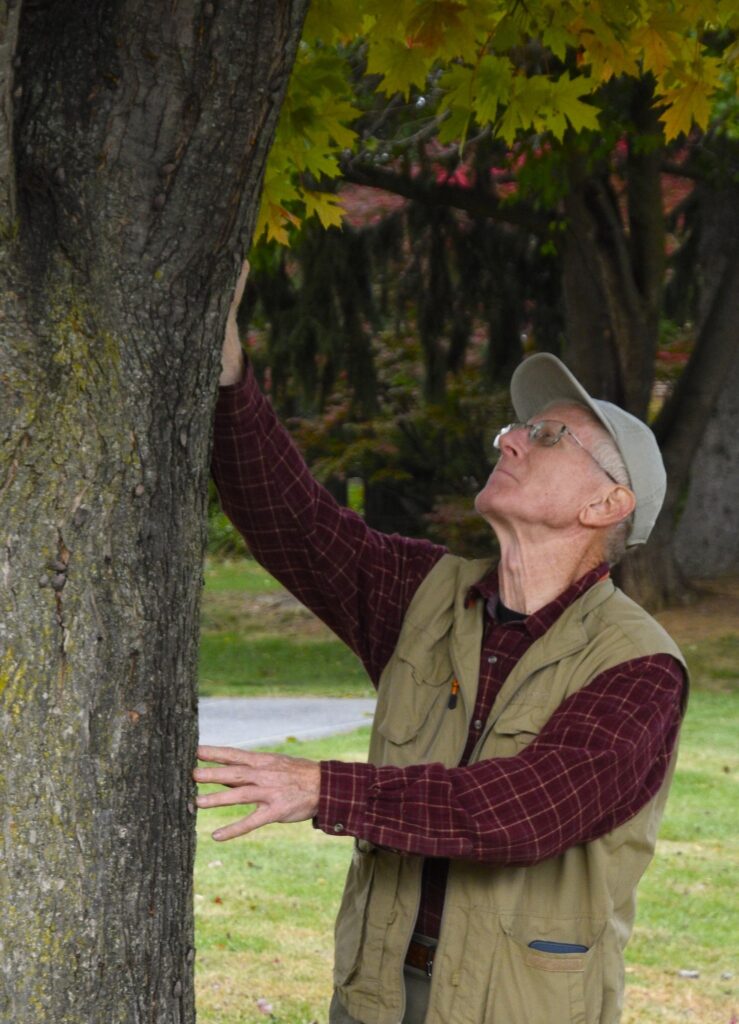
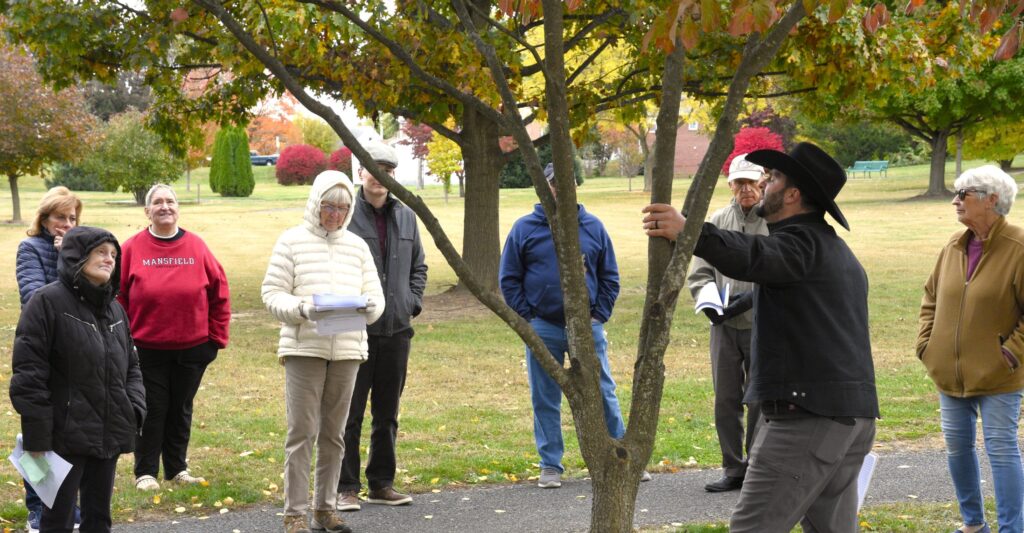
After soliciting three volunteers to help with the Tree Walk, Furry started the park ramble. He utilized his good humor and professional tree care background to guide 25 visitors into the park. “I’m passionate about trees,” Furry said. As the tour ensued, the tree expert showed boundless enthusiasm for his profession.
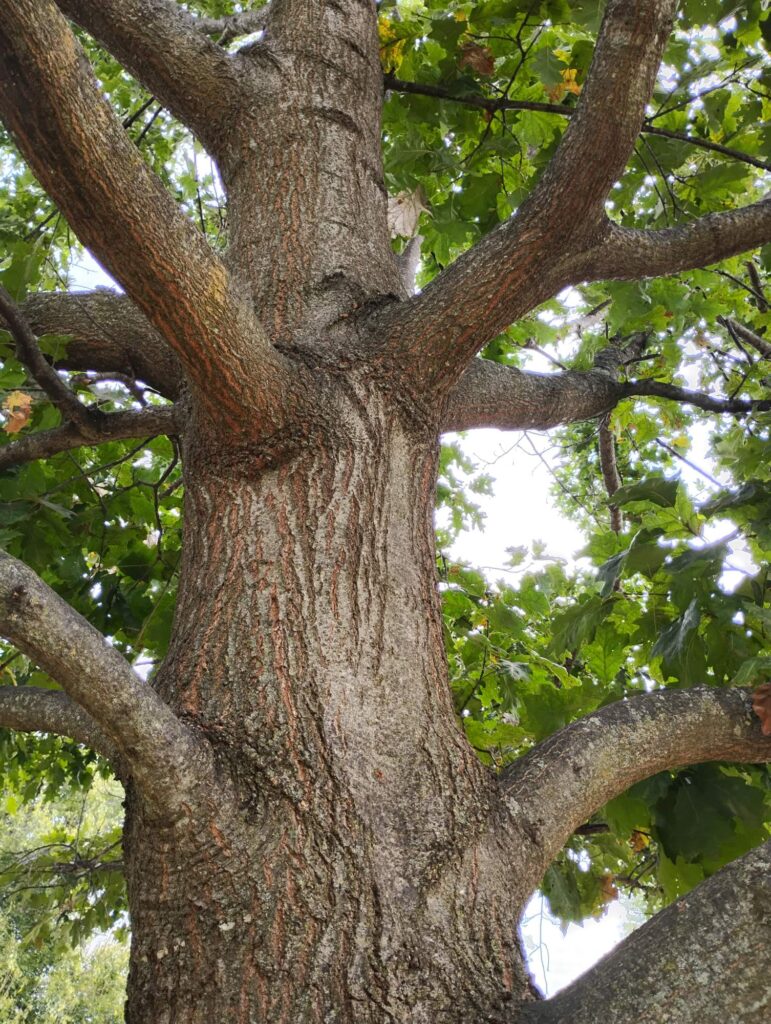
Furry highlighted three specific tree species, the red maple, the flowering dogwood, and the river birch, challenging participants’ knowledge about those specimens found in Rotary Park.
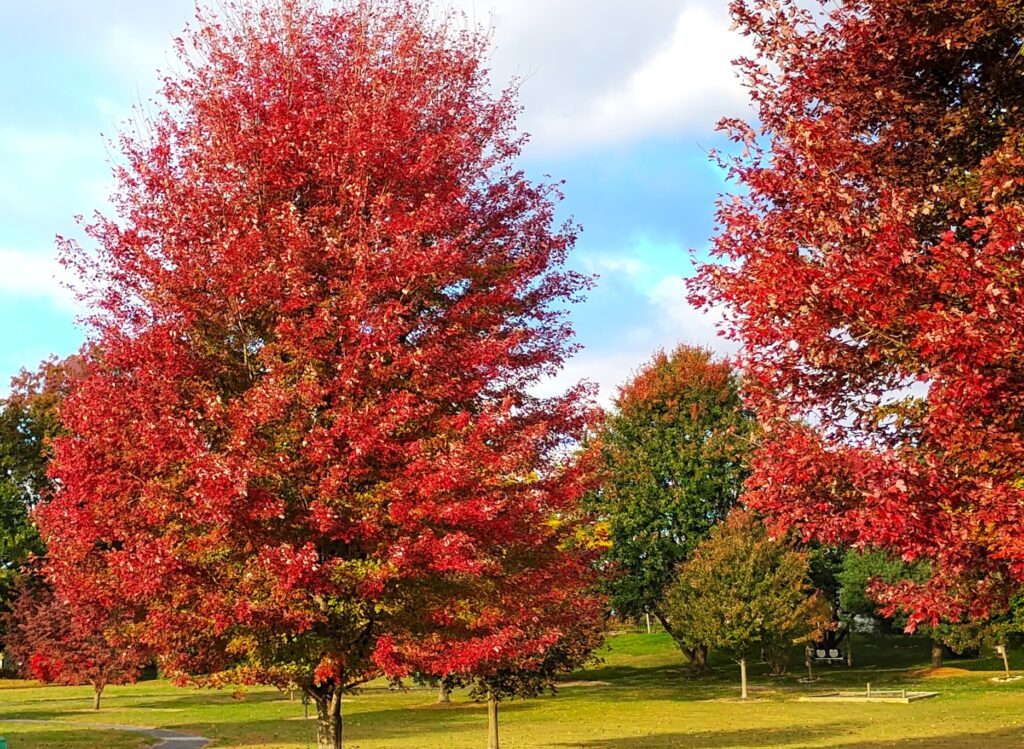
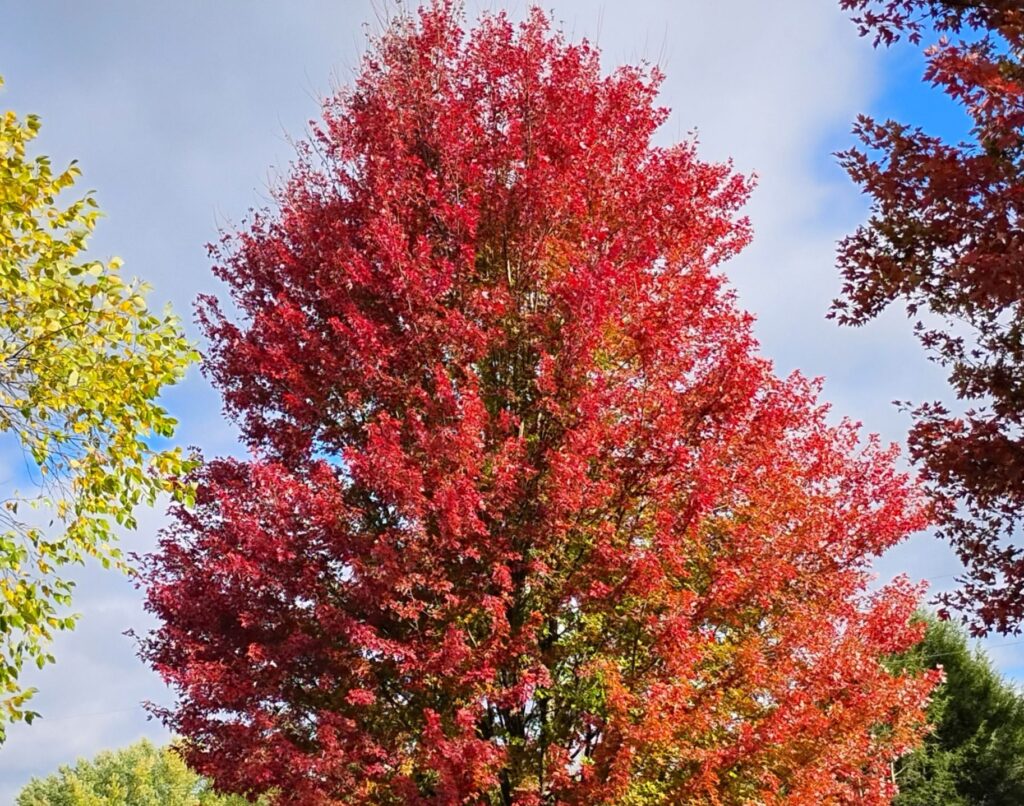
Red maples are a hearty and common species. They grow quickly and showcase vibrant color during autumn and are already turning a crimson hue at Rotary Park.
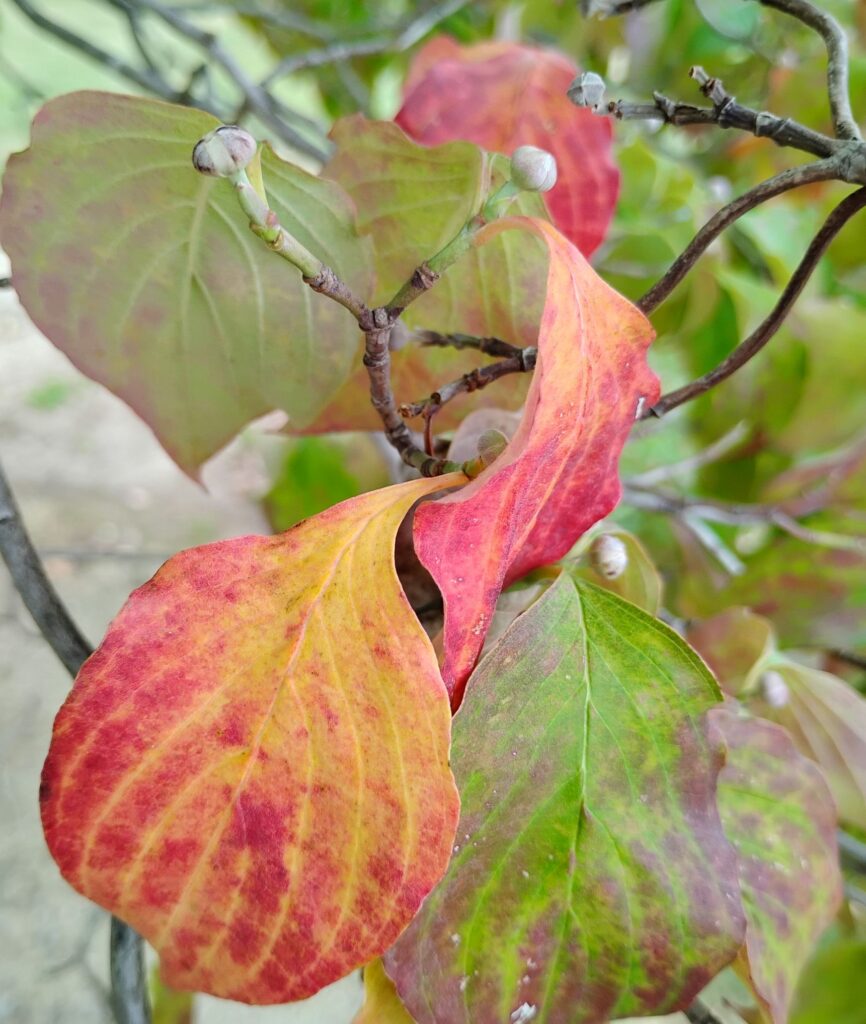
Dogwoods bloom with delicate white blossoms in spring and then its leaves turn red in the fall. Furry described them: “This is as American as you can get,” he said about the cherished native tree species. Dogwoods thrive in smaller spaces and are known for their hard wood and distinctive block shapes that decorate its bark.
River birches have bark with a flaky, paper-like texture and tend to grow near natural water sources. This species grows fast, and its branches can often extend too far outward, requiring cabling to support the weight of multiple trunks that lean in a yard or park setting.
Furry pointed out an important distinction regarding urban trees. They grow and survive in conditions opposite to those in natural forest settings. Often sitting in a solitary spot, a single park/yard tree is more susceptible to wind. Without close neighbors, it will fill the space it occupies, often creating poor lower branch structure. Furry described methods to combat those vulnerabilities.
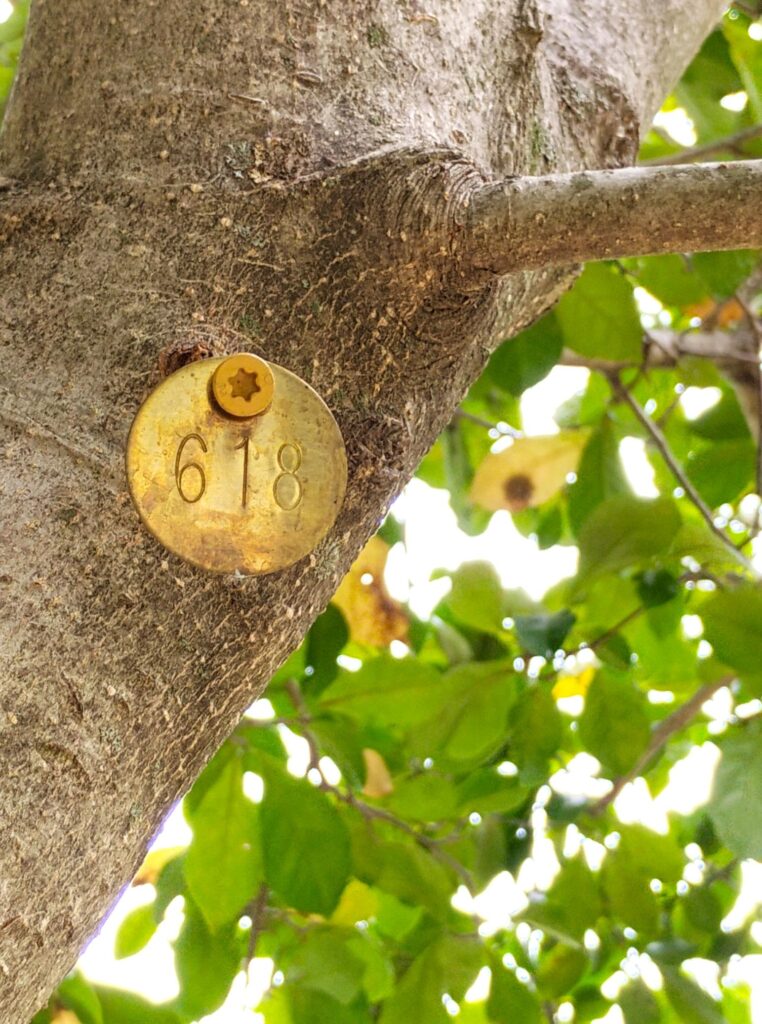
Rotary Park’s tree species had already been tagged with small brass medallions, another arboretum qualification. These gold buttons encourage visitors to learn more about specific trees (using a smartphone in real-time) with an aerial-viewpoint map displayed at arborscope.com.
Utilizing the Arborscope system (link found below), anyone can identify a specific park tree, learn its current condition, and report damage or other important information to local officials.
Furry paused at trees throughout the park, highlighting health issues that trees face, which often go unrecognized by homeowners. He also described the unique natural functions and botanical backgrounds of each tree.
The tour leader also gave professional insight into how Bartlett cares for trees, including root care, selective pruning, and strategies for picking the right tree species for the space it will occupy.
Furry stopped at a serviceberry tree and announced it as a favorite species. The small tree blooms early in spring and produces edible fruit.
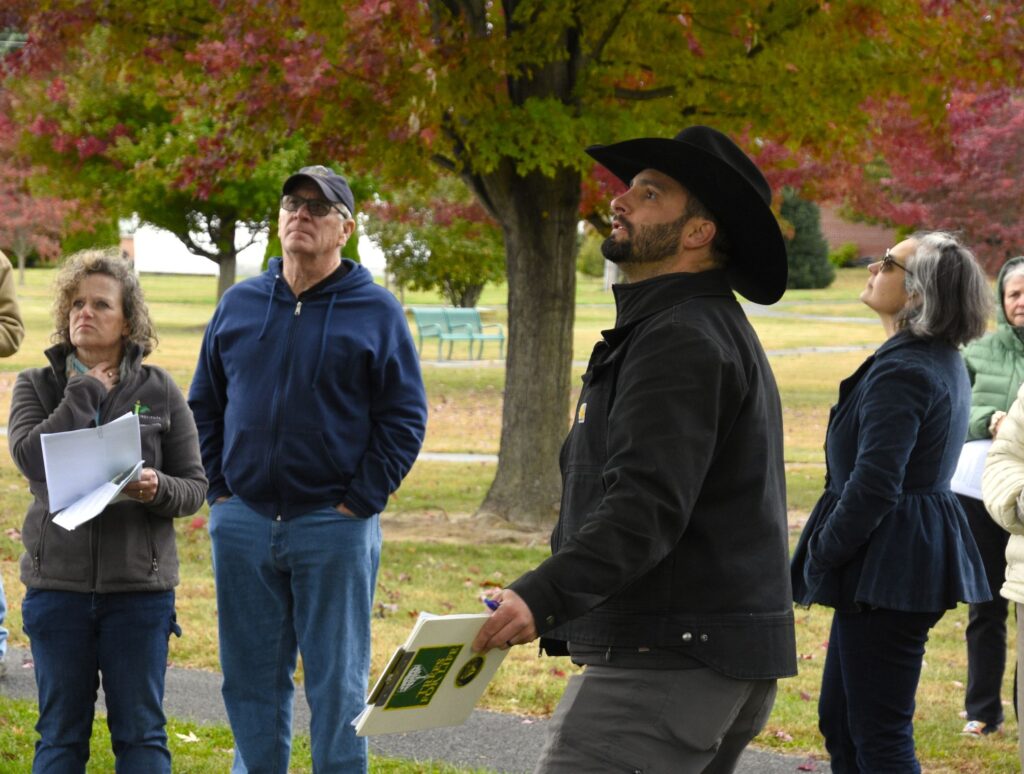
After discussing the variety of other trees found in the park, including Norway Spruce (Furry likes to climb them), star magnolias, weeping cherry trees, and tulip poplars, visitors gathered under the park’s pavilion. Helpful pamphlets displayed there offered advice for tree care and promoted intelligent environmental stewardship.
Also available at the Tree Walk was Bartlett’s Tree and Shrub Care Plan for Rotary Park. This detailed summary (another arboretum requirement) highlighted current and future needs for the park. These recommendations included soil care, tips for increasing overall plant health, and suggestions for mulching, pruning, and planting new trees. This comprehensive blueprint will help Rotary Park thrive as an arboretum.
At the conclusion of the walk, Furry and McCloud stressed that trees offer many benefits to homeowners and communities. Leaves from trees filter the air by removing dust and other particles, absorb carbon dioxide and various other pollutants, and release oxygen.
Deciduous shade trees cool homes in summer and allow the winter sun to heat homes after they lose their leaves. Trees help cool the environment, store rainwater, and reduce storm runoff.
Trees also have communal benefits. They complement architecture by guarding privacy or hiding objectionable views. They provide wildlife habitats in urban environments. Trees beautify their surroundings, offering serenity and tranquility, which promotes stress reduction.
The economic benefit of trees makes them a smart investment. A home landscaped with trees can have a value up to 20% higher than a house without them. Evergreens can serve as a windbreak in winter, which can lower heating bills.
At Rotary Park, paved pathways, the pavilion, benches for relaxing, and children’s play equipment enhance its green space. The park is open from sunrise to sunset every day. Autumn is the optimum time to visit the park, with the vibrant annual display of changing leaves already underway.
When the park becomes an arboretum, it will be only the second such designation in Franklin County to date; the Mont Alto campus of Penn State is the only other location. Austin Lally said achieving arboretum status will “Put this spot on the map.” Then, Rotary Park will provide an enhanced experience for everyone- both in person and also for online study. The lessons learned during the arboretum process will prove invaluable to Waynesboro nature lovers who will enjoy a museum of trees.
Click below to visit the Arborscope Rotary Park tree map.