FRANKLIN AND WASHINGTON COUNTIES: SHARED HISTORY ACROSS THE MASON-DIXON LINE
By Robb Helfrick
Over the past 250 years, Franklin County, Pennsylvania, and Washington County, Maryland, experienced parallel histories as neighbors living astride the Mason-Dixon Line.
These two counties were once positioned on America’s frontier, and prominent early settlers utilized the same natural resources and enterprising grit to carve similar legacies.
Neither state territory began with its current county name. As the American map shifted away from colonies after the revolution, U.S. States created new counties as they shrunk geographic units to allow citizens easier access to governmental county seats.
Washington County was once part of Prince George’s County, and then later Frederick County. Fittingly, in 1776, a split-off territory was named for Revolutionary War hero and eventual first President, George Washington. This patriotic choice proved popular, as 31 states later honored Washington with a county designation. Washington is the most common county name in the United States. Maryland boasts the distinction of naming the first county for patriot George Washington.
Franklin County followed a similar pattern when naming its territory for founding father Benjamin Franklin. Franklin is the third most popular honoree in the nation, with 25 counties named for the Pennsylvania statesman.
Franklin County was once part of Lancaster County and later contained within Cumberland County in 1750. Cumberland County was eventually split, and part became Franklin County in 1784.

Washington and Franklin Counties have notable geographic shapes. Washington County appears as an exact replica of the state of Maryland, as if the county boundaries were intentionally drawn as a tribute to its motherland.
Franklin County is shaped like a giant arrowhead with its point directed north, a symbolic homage to its ancient Native American population. This Pennsylvania county encompasses a much larger territory (773 square miles) than its southern Maryland neighbor, as Washington County contains 467 square miles.
Despite differences in land mass, the two counties’ evolving population growth has been nearly identical. In 1800, Washington County had approximately 19,000 residents; so did Franklin County. Franklin surged ahead by 1900, with 55,000 citizens, while Washington’s growth lagged 6,000 behind.
However, Washington County vaulted ahead by the year 2000 with a population of 132,000, edging out the Pennsylvania county by three thousand. After the 2020 Census, the race for population bragging rights became a dead heat. Franklin County’s estimated 156,000 residents now best Washington County by only a few hundred people.
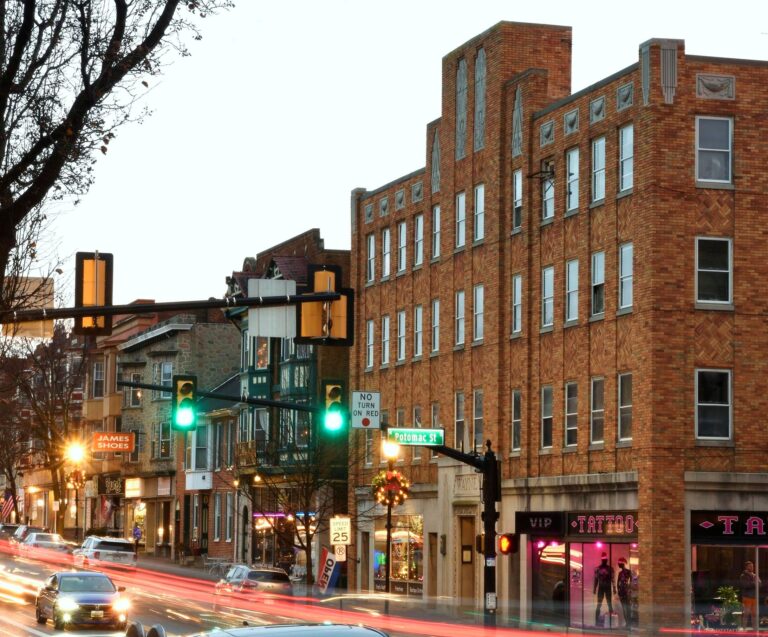
Looking back at the settlement of county seats Chambersburg and Hagerstown, their two founding fathers also had similar backgrounds. Both men, Jonathan Hager and Benjamin Chambers, were hard-working immigrants with pious religious beliefs. They possessed the willpower and resources to protect their families and build their businesses.
Jonathan Hager was born in Germany in 1714 and arrived in America in 1736. Three years later, he purchased 200 acres in the Maryland colony and developed his property near two freshwater springs.
Hager built a formidable stone house with 22-inch-thick walls, not only to keep his family warm during winter, but also to protect them from potential frontier Indian attack. Hager was a volunteer Captain of Scouts during the French and Indian War.
Hager’s original settlement was called Hager’s Fancy, but his town’s first official name was Elizabethtown, named for his wife. Eventually, “Hager’s town” proved more popular and became the town’s legal name in 1814. Hager played a vital role in the area’s development. He helped secure his namesake community as the eventual county government center. Hager was also active in Maryland politics. For his longtime leadership, Hager is celebrated as the “Father of Washington County.”
Hager was killed while supervising the construction of the Hagerstown Zion Reformed Church in November 1775. He had donated the land for the building, now the oldest church still in use in Washington County. Hager is buried in that churchyard.
In 1707, Benjamin Chambers began life in Ireland and came to America in 1726. Once in the southern Pennsylvania colony, Chambers quickly went to work building a Grist Mill and Saw Mill at Conococheague Creek and Falling Springs. His water-powered enterprises proved successful, and he later secured a 400-acre tract from the William Penn family.
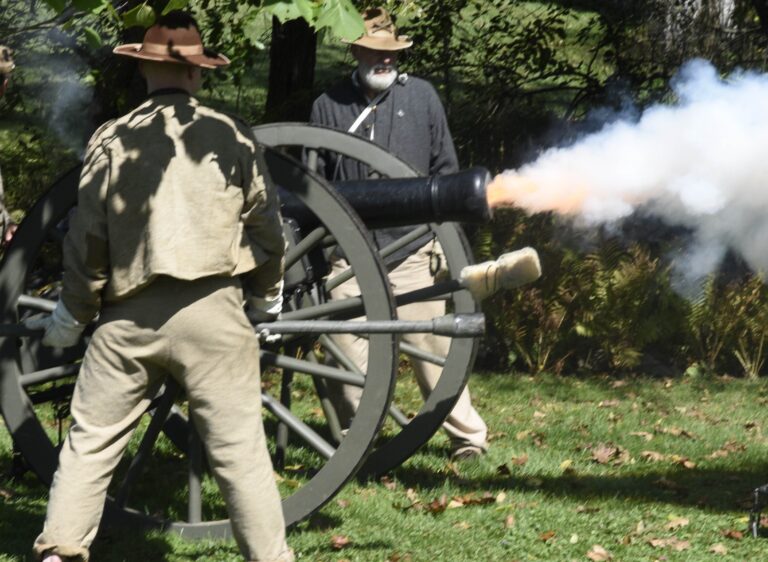
Chambers sought protection for his family and business, and later built Franklin County’s Fort Chambers, complete with a stockade and mounted 4-pounder cannons. He also fought in the militia during the French and Indian War. For valuable service during the revolution, George Washington gave the Chambers family a pair of silver-inlaid pistols.
In 1764, Chambers platted the town that carried his name. Chambersburg thrived and became Franklin County’s seat of Government.
Chambers was a religious and civic-minded man who founded the Falling Springs Presbyterian Church. To encourage worshippers of other denominations, he also provided land for two other Chambersburg churches, the Zion Reformed Church and First Lutheran Church.
The only tribute Chambers required for these land grants was a simple request: that all three congregations donate a rose each year as a perpetual rent payment. That flower was the emblem on Chamber’s family crest.
Over 250 years later, this trio of churches still honors that tradition every June, with each presenting a single flower to a Chambers descendant. Benjamin Chambers lived a long life, dying at age 80 in 1787. Those three annual roses are placed on his grave at Chambersburg’s Falling Springs Presbyterian cemetery.
While Hagerstown and Chambersburg flourished in the 1800s, both towns endured a tragic episode during the Civil War. Confederate General Jubal Early sought to avenge the Union army’s destruction in Virginia by ransoming entire towns near the Mason-Dixon Line. He extorted $20,000 from Hagerstown, and the city was saved.
But once in Northern territory, Early’s price on Chambersburg’s fate inflated to a much higher demand: $500,000. Given too little time to raise that sizable ransom, rebels torched Chambersburg on July 30, 1864. Unfortunately, much of Chambersburg’s historic architecture was lost, including 550 structures and the original Franklin County Courthouse. Inspired perhaps by the memory of their intrepid forefather, Chambersburg residents rebuilt their community.
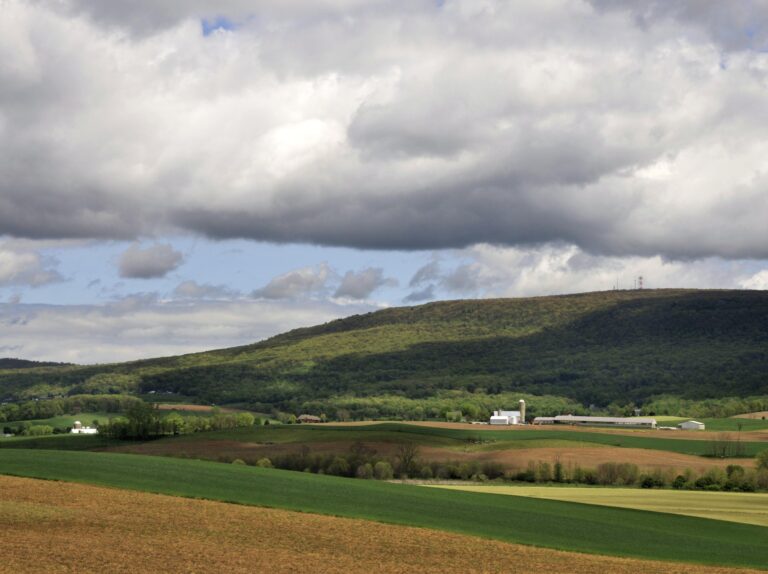
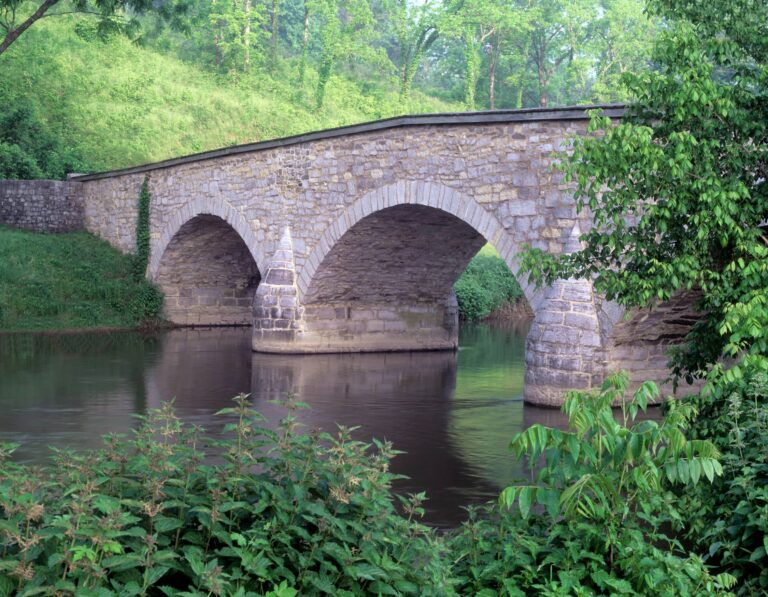
Franklin and Washington counties share a picturesque Cumberland Valley setting. In both locations, handsome stone arch bridges span Antietam Creek. The crystal clear waters flowing underneath them drain into the mighty Potomac River.
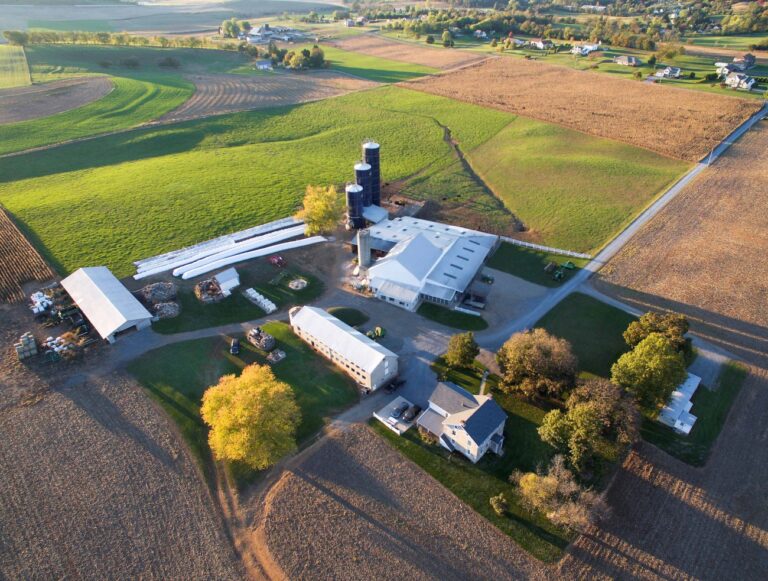
Old barns and rustic homes dot an undulating rural landscape, with panoramic views of South Mountain. Both counties have strong agricultural traditions, with bountiful harvests thanks to fertile soil and a moderate climate.
Aside from their topography, Washington and Franklin also share many cultural and demographic traits that make them appear like children from a common parent.
Both counties hold conservative political values, and those beliefs are reflected in local and national election results. The last time Washington County voted for a Democratic Presidential candidate: 61 years ago, in November 1964 for Lyndon Johnson. Franklin County’s last time voting liberal in a national election was that same year. Registered Republicans heavily outnumber Democrats in each county and conservative candidates routinely garner 70% or more of the votes.
Franklin and Washington Counties were once at the frontier’s edge, and today each has a renowned historic roadway signifying that American urge to travel west. The famous Lincoln Highway (U.S. Route 30) was the first transcontinental roadway, completed in 1913. This early engineering marvel passes through the heart of Franklin County on a journey from the Atlantic to the Pacific.
In Maryland, Route 40 bisects Washington County. Called the National Road, it was the first federally funded highway in U.S. history. Begun in 1811, the “Road that Built the Nation” took travelers west on a groundbreaking macadam and cobblestone pathway.
Today, tourists journey to these two counties and enjoy prominent historic sites. Washington County has three National Parks, including the legendary Antietam Battlefield.
History lovers visiting Franklin County appreciate the birthplace and boyhood home of America’s 15th President, James Buchanan. Both counties were also prominent stops on the Underground Railroad.
Outdoor enthusiasts challenge their fitness levels on the Appalachian Trail, which passes through rugged alpine terrain in both counties.
All told, Washington and Franklin Counties are vital provinces boasting fascinating stories and shared attributes. Commerce and culture pass freely between these Maryland and Pennsylvania territories, as comfortably as stepping through a welcoming doorway. Neighboring county residents, in some places only a few yards apart, represent two symbolic regions, one population considered northern, the other southern; but they fraternize like family.
Perhaps, like the men they were named for, Washington and Franklin Counties enjoy an easy friendship based on mutual respect and common ground, like brothers living on shared land.