MEMORIES OF WALTER REED’S INSPIRING LIFE LINGER IN THE BLUE RIDGE
By Robb Helfrick
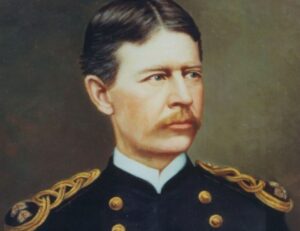
Walter Reed lived a remarkable life. His inspiring journey into medicine and science took him throughout the United States and also on a dangerous mission to Cuba. Reed left behind a legacy still celebrated today, noted for a milestone career as a biomedical researcher and remembered as a kind and devoted family man.
Reed adored the natural world and never felt totally at peace within cities. After decades of travel and hard work, when it was finally time to own his first property, Walter Reed bought a 12-acre local tract in the Blue Ridge Mountains. He built a home for his family there, but unfortunately, he had limited time to enjoy it.
Walter Reed was born in Virginia in 1851. The fifth child of a traveling Methodist minister, Walter grew up in North Carolina. Later, after his father remarried, the family moved back to Virginia. While living in Charlottesville, Walter decided to pursue a medical career, and at age 17 became the youngest graduate to earn a medical degree from the University of Virginia.
Still a teenager, Walter Reed didn’t rest on that accomplishment. After attaining a second M.D. at New York University’s Bellevue Hospital Medical College, Reed joined the U.S. Army Medical Corps in 1875. He took his new bride, Emily Lawrence Reed, to the west, and the couple started a family there. Son Walter Lawrence Reed was born at Arizona’s Fort Apache in 1877, and daughter Emily entered the world in 1883 while the Reeds were stationed in Nebraska.
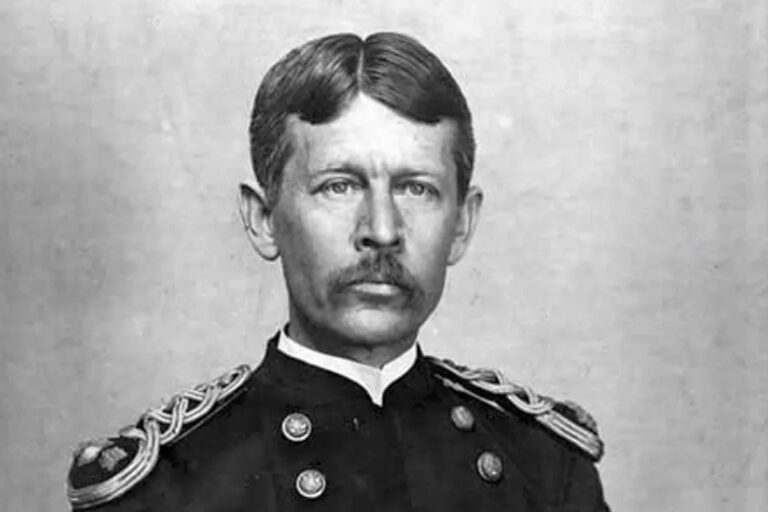
Reed’s daughter, Emily, known as Blossom, recalled her parents’ fond reminisces about witnessing vivid sunsets in the desert southwest. Blossom also developed a passion for nature, inspired by her parents and their travels. The family moved back east in 1893, following Walter’s upward career arc. Reed became a Professor of Bacteriology at the George Washington University School of Medicine at Washington, DC’s U.S. Army Medical College.
When the family arrived at DC’s swampy landscape, Reed was drawn into investigating the cause of a Yellow Fever outbreak. That disease decimated many city populations in the 1800s, and thousands died. The exact cause of the horrible disease was unknown. Many experts believed the affliction was caused by drinking river water, but Reed disproved that theory through his research in Washington.
Another theory about Yellow Fever suggested that a pest in the natural world caused the disease’s contraction and spread. That particular belief had many skeptics. To solve the mystery, Walter Reed traveled to Cuba, where Yellow Fever was prominent, to lead a team of medical researchers. Reed followed this tropical path to eventual worldwide acclaim.
Cuban epidemiologist Carlos Finlay had proposed that Yellow Fever was carried and spread by mosquitoes. Reed and his team used willing humans as test subjects, purposely infecting them with the disease. Jesse Lazear, an assistant and friend of Reed’s, eventually died from Yellow Fever. Throughout this dangerous work, Reed worked closely with Finlay to prove the mosquito transmission theory was indeed correct. As a result of Reed’s experiments and confirmed discovery, thousands of lives were saved in the years ahead.
After this medical breakthrough, Reed still lived in the muggy summer climate of Washington, DC. But the future looked bright for the Reed family. Some speculated Walter Reed would be the next U.S. Surgeon General or win a Nobel Prize for his research.
Seeking a break from urban life and anxious to own a retreat in nature, the Reeds bought their first property in 1899. They chose a secluded lot in Cascade, Maryland, near the Pennsylvania border town of Blue Ridge Summit.
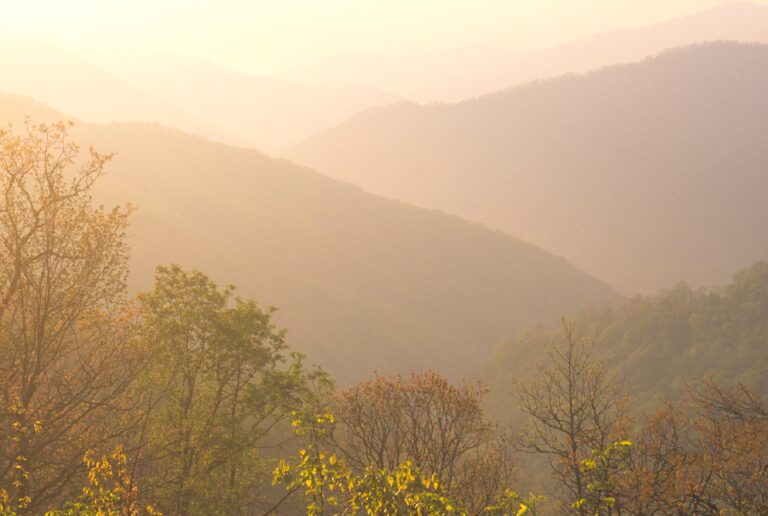
At the turn of the century, this mountaintop area became a summer haven for prominent East Coast families and travelers, serving as a second home or vacation destination. Many hotels sprang up in the shade of Appalachian forests. The mild alpine climate provided welcome relief from the lowland heat and humidity.
The Reeds spent several summers building their new home. They named it “Keewaydin,” which reportedly was a Native American term meaning “west wind.” The charming house was constructed on a hillside with native stone and wood, sporting brown shingles. The front façade faced west and presented a memorable impression, with certain house portions extending forward, while other sections receded. Porches were included on both the ground and second levels, designed to enjoy grand vistas of the surrounding Cumberland Valley.
The interior presented a rustic appearance, with an open-beam ceiling and a large stone fireplace. Blossom Reed remembered a motto hung above their hearth that read: “Love ever by my fireside and peace within my door.” With its many windows, the house offered views toward a lush exterior landscape. Four bedrooms were situated upstairs, with the Reeds’ light-filled master bedroom located in the front.
The Reeds put equal thought and toil into the home’s grounds. A walk through a grape arbor led to a terraced garden. Walter and Emily Reed cleared undergrowth to plant flower beds, vegetable gardens, and fruit trees. Two rose arbors bore red and pink blooms. Boys in big farm hats helped build stone walls to mark the property’s boundaries.
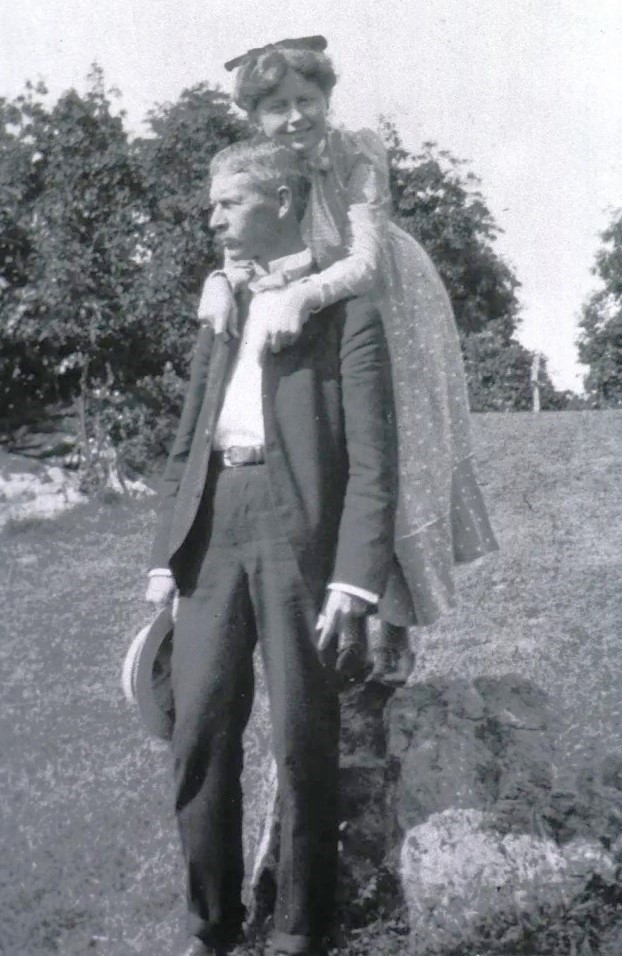
Blossom wrote about her parents’ love for each other and for nature. “Our garden affords a walk for lovers. My father holds my mother’s hand and calls her sweetheart. I watch them and wonder will I ever be so happy when I grow up?”
When the house was finally completed, the Reed women spent their summers at Keewaydin, with periodic visits by Major Reed, who worked tirelessly at his Washington laboratory. He wrote letters to his “darling girls” often, saying to his wife Emily in one note: “I hope you have been able to see the valley. I am anxious to return to the summit.” Walter’s weekend visits thrilled his wife and daughter. Then on Mondays, the pair waved a sad goodbye as he stood on the train platform, preparing to trek down the mountain and return to his necessary duties in DC.
On each visit to the Blue Ridge, Walter Reed and his family made grand future plans for their home. Walter proudly surveyed his first property and envisioned summers filled with friends and family. They would raise chickens and pigs, own horses and a cow, and work happily in their landscaped gardens. When the last days of September brought a tinge of fall color to the mountains, the Reed family packed suitcases and reluctantly returned to their Washington apartment.
In the autumn of 1902, teenage Blossom Reed prepared to make her debut. She would wear a white dress decorated with satin ribbon edged with pearls. But Blossom became deeply depressed. An interior voice spoke to her, and Blossom experienced a disturbing premonition. “Something dreadful is going to happen on the 17th of November,” she heard. That voice trapped inside her head interrupted her dreams, and when November arrived, Blossom grew restless and afraid.
Walter Reed suffered a ruptured appendix on November 17th and was taken from his Washington office to the Army Hospital. Blossom kissed him as he lay on a stretcher. The two Reed women comforted each other for five long nights, praying for Walter’s recovery. On the sixth night, Blossom rushed to her father. “I looked down on a face wrought with pain,” she remembered. “His hands were cold. I knelt at his bedside as he whispered, ‘Little daughter,’ his last words on earth.” Walter Reed died on November 23, 1902, at age 51.
Blossom returned heartbroken to Emily, her mother too distraught to leave home. “I am 19 now and must be a brave woman and help take care of my mother,” Blossom wrote about that terrible night. Walter Reed was buried on a scenic hillside in Arlington National Cemetery.
The next summer, the Reed women returned to Keewaydin. On that mountain property, they felt closest to Walter’s departed soul. A neighbor greeted them and bowed his head. “He was a grand man,” he said, “I can’t think about him without crying.”
Emily and Blossom’s deep affection for a devoted husband and tender father never dimmed. The house remained in the family until 1921, when it was sold to a new owner. But the Reed women never permanently left the Blue Ridge. Keewaydin survives today, 126 years after being built by the slim, well-mannered Doctor.
Walter Reed was honored as an American hero. In 1912, the Walter Reed Medal was posthumously awarded to him and to later honorees for research in tropical medicine. Earlier in 1909, Walter Reed General Hospital was founded in Washington, DC. This institution later became the Walter Reed National Military Medical Center, a famed healthcare facility where veterans and U.S. Presidents receive the finest medical care.
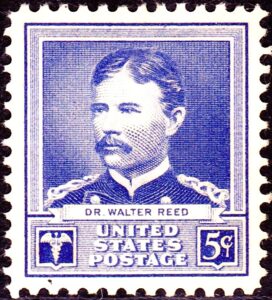
A U.S. postage stamp also celebrated Reed’s accomplishments. A Broadway play (with a later film adaptation), a PBS documentary, and biographies have all honored Walter Reed’s contributions to medical science and public safety.
But Walter Reed’s family story didn’t end with his death. His son, Walter Lawrence Reed, achieved great success in the U.S. Army, achieving the rank of Major General. The two Emily Reeds, with the daughter known as Blossom, continued their love affair with the Blue Ridge and contributed to local society in future decades.
After her birthday was locally celebrated for many years, Emily Reed died at Blue Ridge Summit in July 1950, at age 94. Blossom Reed died 14 years later, also in Blue Ridge Summit, aged 81. Both Emily’s are buried next to Walter Reed at Arlington National Cemetery.