HARBAUGH CHURCH: PRESERVING ARCHITECTURE AND SPIRITUALITY FROM A BYGONE ERA
By Robb Helfrick
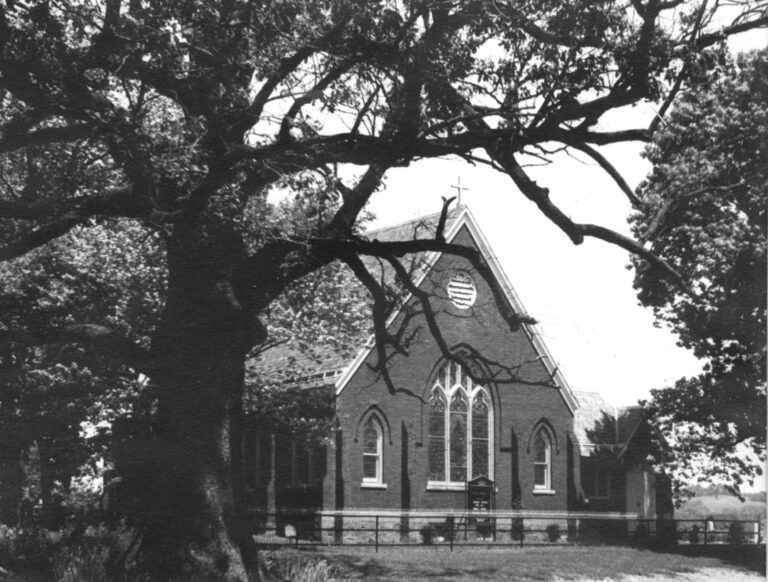
Devout Christians built Harbaugh Church amidst rolling fields of fertile farmland. Surrounded by orchards in a picturesque Appalachian valley, this Washington Township architectural landmark is still a striking structure, 133 years after it first welcomed the faithful.
The building’s enduring presence has been a blessing for the community. However, keeping Harbaugh Church standing took more than divine help. It survived because generous individuals and a dedicated organization recognized its importance and took action to save it.
On this Franklin County pastoral site, locals built a simpler first church in 1846. Farmer George Harbaugh donated the land. His two brothers, Jacob and Henry, were ministers, and the latter presided over services at this first Harbaugh Church. During the same era, a cemetery originated on the four-acre grounds. The congregation was affiliated with the Reformed Church.
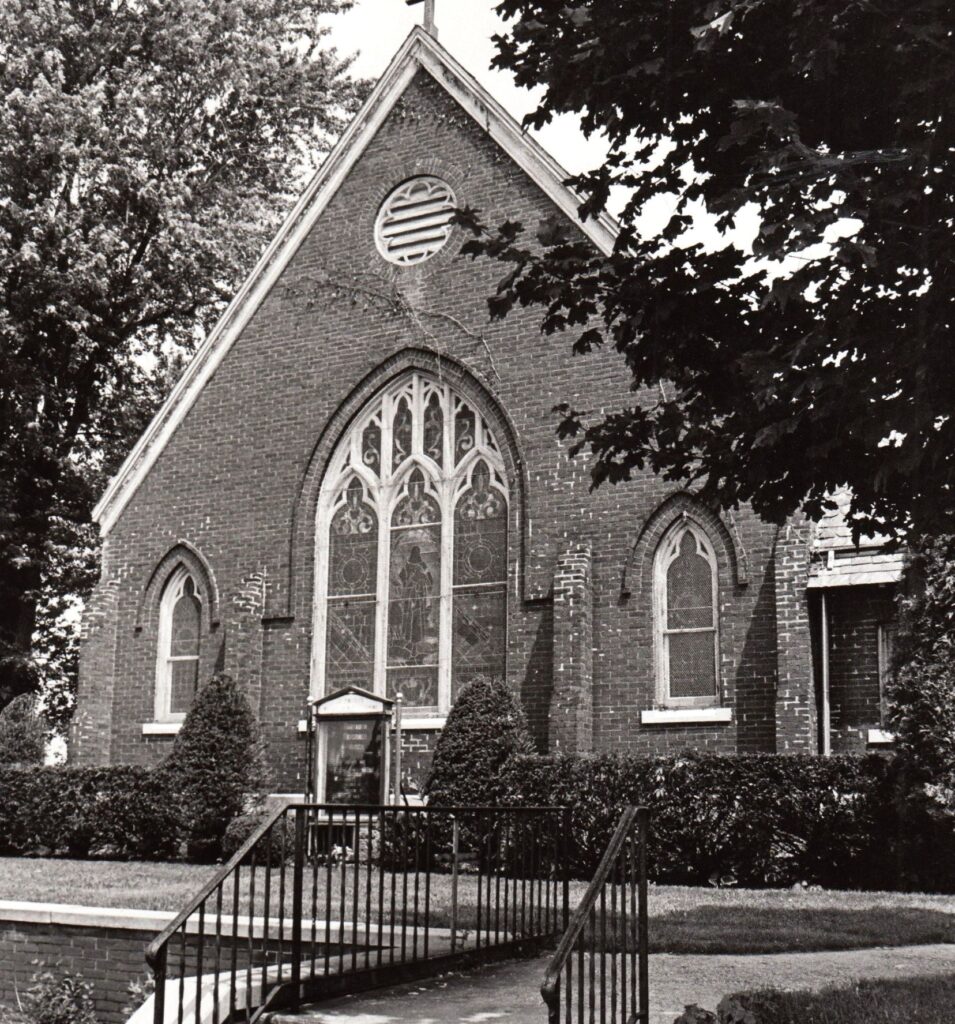
Later, after pastor Henry Harbaugh’s death, the thriving congregation requested a larger and more ornate place to worship. They built the present Late Gothic Revival-style structure in 1892. The brick building is 1 ½ stories tall and features a gabled roof, brick buttresses, and lancet stained glass windows.
For the next 74 years, people gathered at Harbaugh Church for baptisms, weddings, funerals, and weekly prayer. While active services remained constant, the religious denominations changed occasionally.
By the 1960s, Harbaugh was one of two local churches serving the same denomination. In 1966, the parishioners voted to consolidate, and the other, much larger building was narrowly chosen as the unified church site. The congregation abandoned Harbaugh Church.
The church sat empty for 17 years, braving the elements during a lonely exile. Rainwater invaded the interior, and vandals attacked the structure’s exterior. The building, surrounded by more fields than people, seemed forgotten and headed for eventual destruction.
However, in 1983, the church was sold for a single ceremonial dollar to the Waynesboro Historical Society. That wise transaction started a two-decade process to rescue and restore Harbaugh Church.
The first step: replacing the steep-pitched slate roof to keep intrusive rainwater outside. After protecting the interior, extensive work brought the church’s interior sanctuary back to its former luster.
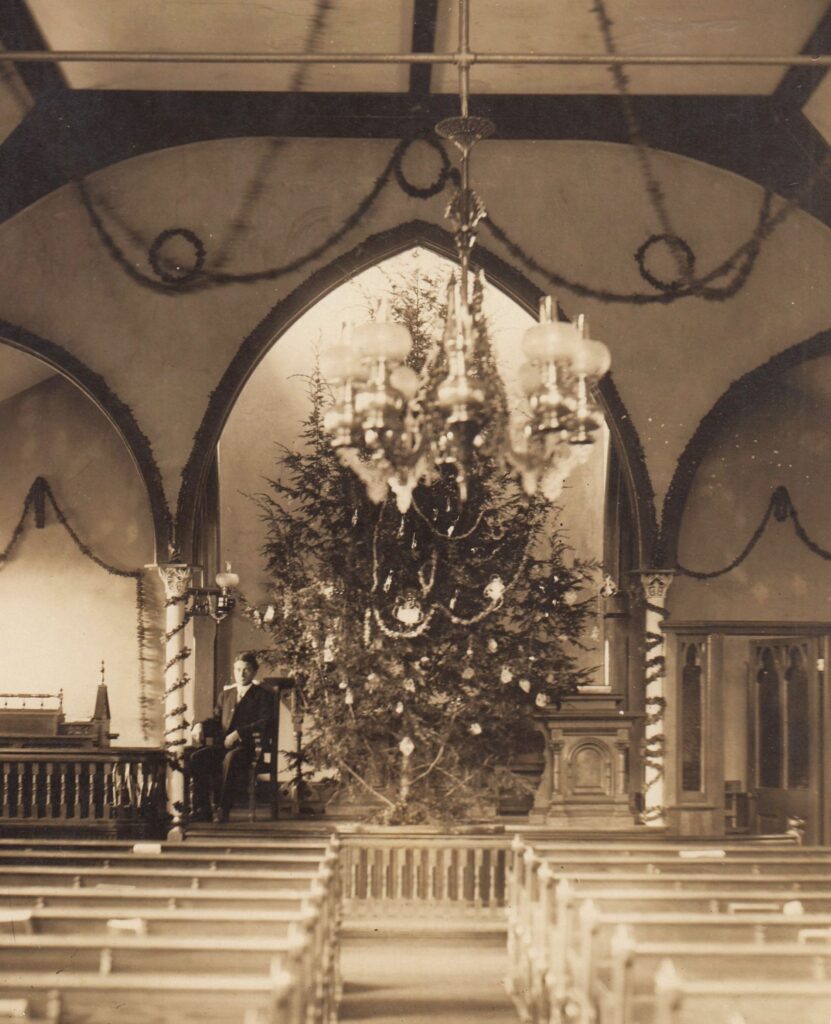
The original pews were still on site and refinished. Some of the light fixtures were gone, but others remained. The removal of dirt and grime caused by years of neglect revealed beautiful wood finishings. WHS restored the altar and repaired and cleaned the stained glass windows.
This work took years since fundraising was a constant undertaking, and these multiple projects cost over $125,000.
With the collective effort of the Waynesboro Historical Society’s members and community patrons, the church’s restoration was completed by 2002. That same year, the building was honored as a National Register of Historic Places (NRHP) landmark, one of only three churches in Franklin County to earn that distinction.
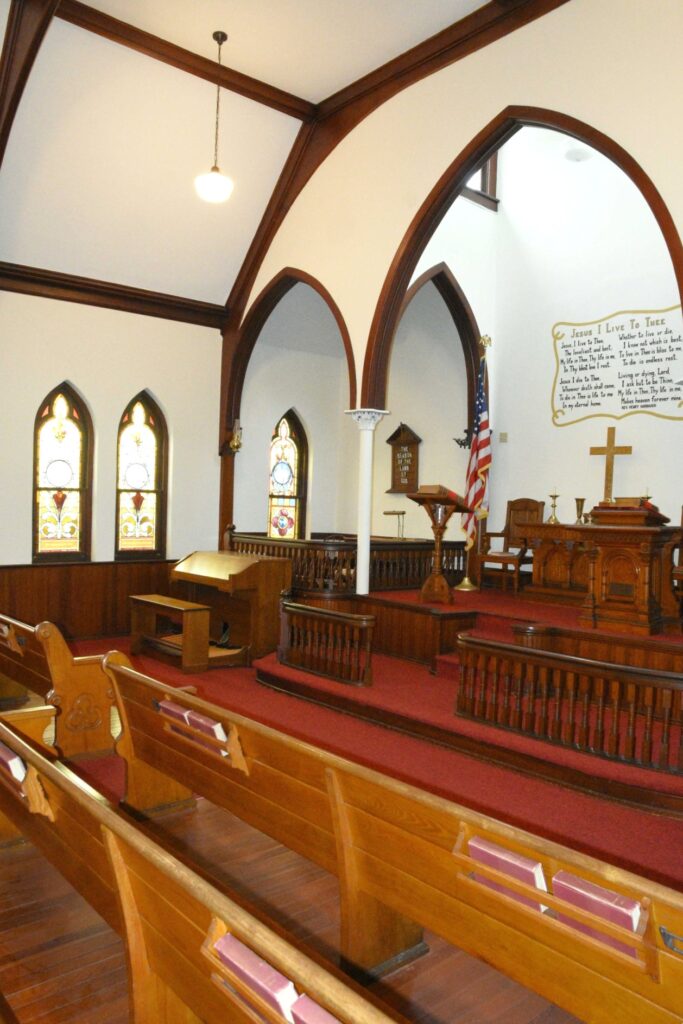
Today, inside Harbaugh Church, the result of that diligent preservation effort is easily appreciated. Visiting the sanctuary is a journey back to a simpler era. Quiet reverence infuses the small church. Eyes focus on ancient religious symbols situated among architectural details. This combination enhances the tranquility felt here, serving as an open-arms invitation to a unique spiritual experience.
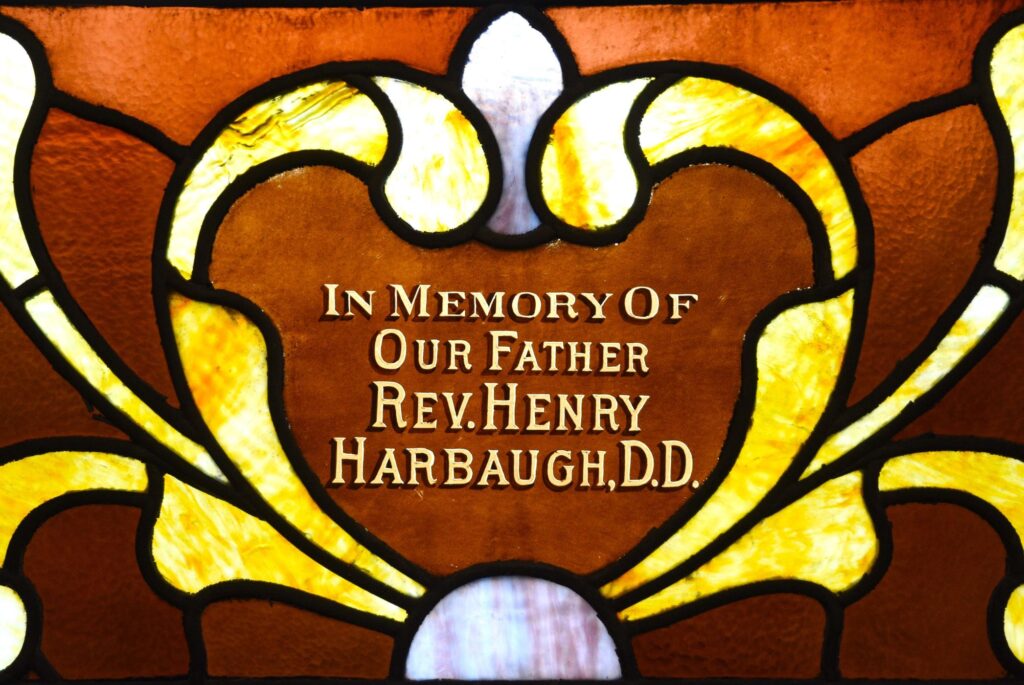
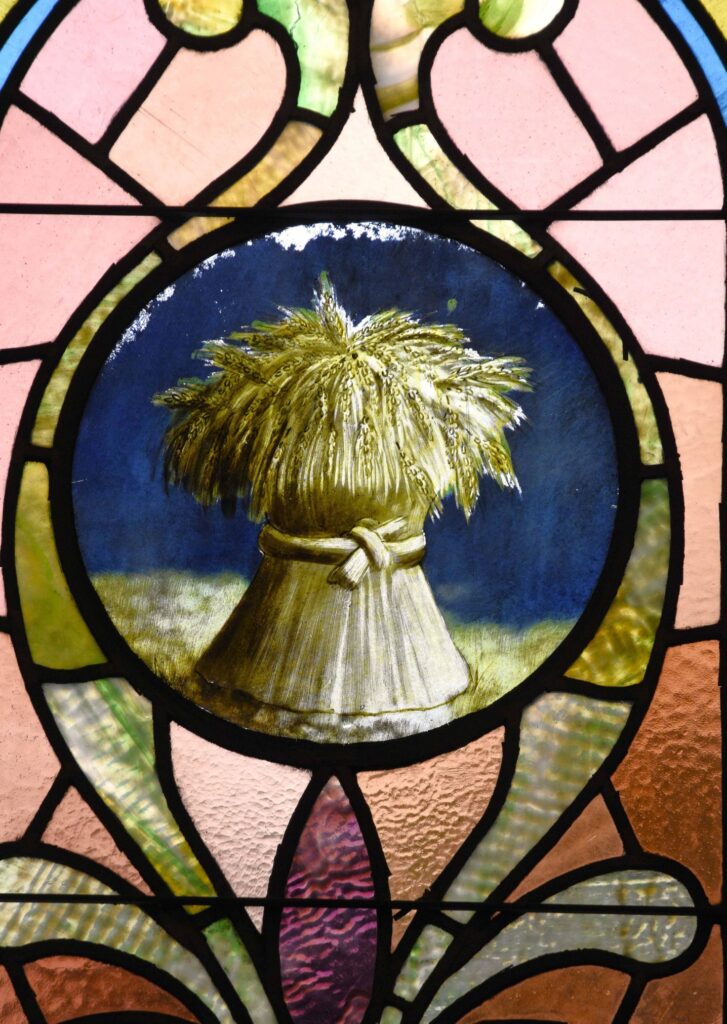
Like many churches from this timeframe, the stained glass windows are a treasure. With vivid hues and artistic design, these portals illustrate symbols of Christian faith. One window honors the church’s founding pastor. Unique items pictured include fashionably dressed angels and golden harvested wheat. Light passes through these glass artworks, imbuing them with a heavenly glow.
After exploring the church’s interior, the restoration work at Harbaugh Church appears finished, a job well done. However, after the bulk of any renovation work is completed, all organizations realize one daunting fact: a preservation project is never fully finished.
Older buildings require constant care, and these fixes incorporate complicating factors such as highly specialized repairs and protecting structural integrity, all while retaining the building’s original architectural character.
Harbaugh Church’s slate roof recently needed additional repairs, and in 2017, a charitable donor contributed $30,000 to help protect and stabilize the church’s vulnerable exterior windows.
The Waynesboro Historical Society’s mission is more difficult since it preserves two other NHRP sites in addition to Harbaugh Church. The organization’s headquarters are at Oller House, a grand Victorian home on Main Street which is open for weekend tours and historical research. WHS also owns Welty’s Bridge, a handsome stone-arched span (now closed to vehicle traffic) that crosses historic Antietam Creek.
Groups or organizations may rent Harbaugh Church for weddings, baptisms, and funerals- the latter two are free. The building is also suitable for lectures, family meetings, or small concerts. The church can comfortably accommodate up to 100 people. Although Harbaugh Church lacks running water, a restroom, or air conditioning (it has heat), the space is still a charming location for a memorable event.
The cemetery remains an integral part of the church’s legacy, and family members still visit departed loved ones and tend to their plots. Peter Rouzer, namesake of nearby Rouzerville, is buried here.
The Harbaugh Cemetery Association owns and maintains this resting place. This second non-profit’s responsibilities allow WHS to concentrate on maintaining the church building.
For three-quarters of a century, Harbaugh Church enjoyed its heyday. No matter the denomination, people worshipped under its protective roof. Then, the church was given a second lease on life.
The restorative success at Harbaugh Church teaches an important civics lesson. These brick-and-mortar structures should be saved not only for unique architectural features but also for the intangible emotions created inside. These qualities evoke and preserve memories from a bygone era.
WHS is sponsoring a Christmas celebration at Harbaugh Church on December 6 at 3 pm. Rev. Mark Ruzika from the Church of the Apostles will conduct the service, accompanied by organist James Heefner. For more information, call the church (717-762-4113) with any questions.